ABSO Team
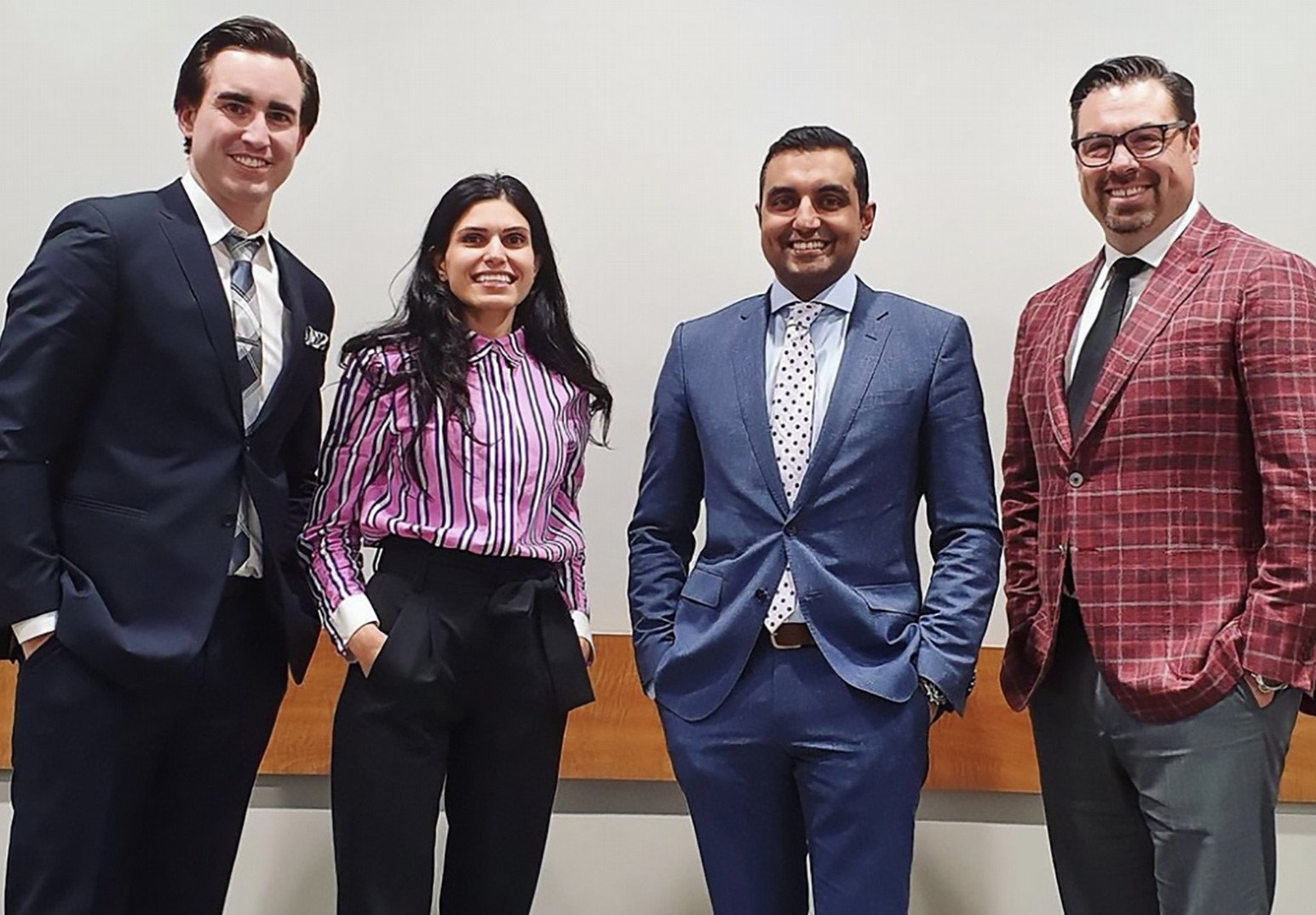
Precision Surgery and Collaborative Science: Alberta Breast Surgical Oncology Leads New Era of Innovation
A transformative shift in surgical precision, clinical scheduling, and patient comfort is taking shape across Alberta's healthcare network. At the focal point of this transformation is the Alberta Breast Surgical Oncology (ABSO) group, a collaborative team of fellowship-trained surgical oncologists whose clinical work spans the University of Alberta, Alberta Health Services (AHS), and Covenant Health.
While ABSO surgeons operate within both academic and public healthcare systems, their research model connects bedside clinical practice directly with cross-departmental scientific inquiry. As the group prepares for major clinical and academic rollouts, its integrated approach is redefining how breast cancer care is delivered and evaluated throughout the region.
News Focus: Magseed Tech Deployment and ABSO Clinical Research
The central news driving this clinical evolution is the upcoming regional deployment of Magseed, a state-of-the-art, wire-free tissue localization technology. Led by Dr. Lashan Peiris—Associate Clinical Professor in the University of Alberta's Department of Surgery, Clinical Lead for the Comprehensive Breast Care Program in the Edmonton Zone, and Surgical Site Lead at the Cross Cancer Institute—the initiative represents a major departure from legacy surgical techniques.
Historically, patients undergoing breast-conserving surgery (lumpectomy) for non-palpable tumors required the insertion of a traditional "hook-wire" on the morning of their operation. This technique necessitated tight same-day coordination between radiology and surgical departments and often resulted in physical discomfort and anxiety for patients as they waited for surgery with an external wire in place.
Magseed fundamentally alters this pathway. The device is a tiny, non-radioactive magnetic seed—roughly the size of a single grain of rice (5 mm)—that is placed into the targeted breast tissue or lymph node using a fine needle under local anesthesia days or weeks prior to the scheduled procedure. Once inserted, the seed remains unnoticeable and secure, allowing the patient to go about normal daily activities without fear of displacement.
In the operating room, the surgeon uses a specialized magnetic detection probe (Sentimag). The probe generates real-time audio signals and precise visual distance readings, guiding the surgical team straight to the seed and enabling exact, complete tissue removal while conserving surrounding healthy tissue.
The clinical deployment extends far beyond major urban hubs. Magseed is being introduced across multiple facilities, including the Cross Cancer Institute, Misericordia Community Hospital, Sturgeon Community Hospital, and rural healthcare facilities such as Hinton Healthcare Centre—where general surgeon Dr. Igor Mihajlovic emphasizes that wire-free localization drastically reduces the need for rural patients to travel into Edmonton on the morning of surgery.
Crucially, ABSO will leverage this deployment to drive high-impact clinical science research. Under Dr. Peiris's leadership, ABSO will systematically collect and analyze real-world clinical data generated throughout the Magseed rollout. The prospective research will evaluate key health-system metrics, including operating room time efficiency, tissue re-excision rates, margin status accuracy, and patient-reported outcomes regarding comfort and anxiety reduction.
This project builds directly on ABSO’s ongoing health-systems evaluation portfolio, which includes provincial quality-improvement studies on re-excision rates after breast-conserving surgery co-authored by ABSO surgical oncologists Dr. Azadeh Nikoo Rajaee and Dr. David M. Lesniak alongside Dr. Peiris and biostatistician Dr. Sunita Ghosh.
Oncoplastic Surgery: Preserving Tissue and Optimizing Margins
Oncoplastic breast surgery combines oncologic resection principles with plastic surgery techniques to allow general surgeons to resect larger or complex tumors without compromising aesthetic outcomes or margin safety. General surgeons specializing in oncological surgery are increasingly focused on research that maximizes breast conservation and reduces the need for full mastectomies.
Dr. Lashan Peiris, Dr. David M. Lesniak, and Dr. Azadeh Nikoo Rajaee lead research evaluating retrospective clinical and oncological outcomes following complex partial breast reconstructions. By reshaping adjacent breast tissue immediately after tumor excision, these surgical approaches minimize cosmetic defects, ensure clearer pathological margins, and significantly lower local recurrence rates.
Complementing this, resident researcher Dr. Ryerson Seguin evaluates long-term quality-of-life outcomes in patients undergoing complex oncoplastic surgery. His studies demonstrate that patients undergoing breast-conserving surgery for tumors that would otherwise necessitate a total mastectomy experience equal or superior quality-of-life and body-image outcomes compared to those who undergo full breast removal. Furthermore, studies on provincial health delivery co-authored by Dr. Alexander Poole highlight standardized clinical pathways that ensure patients across Alberta have access to oncoplastic conservation techniques regardless of geographical location.
Reconstruction: Plastic Surgery Innovations
For patients who require a total mastectomy or extensive tissue removal, the Division of Plastic Surgery advances post-oncologic reconstruction to restore form, balance, and quality of life. Plastic surgeons across the University of Alberta network lead clinical outcomes research comparing autologous tissue flap transfers (using a patient's own tissue) against implant-based reconstruction techniques.
Clinical Professor Dr. Martin J. Giuffre evaluates long-term safety, implant durability, and aesthetic outcomes after oncologic surgery. His collaborative work explores technological integration into recovery, including virtual reality-based upper-limb rehabilitation protocols designed to restore range of motion following reconstructive procedures.
Practicing plastic surgeons across partner sites—including Dr. James Wolfli, Dr. Lisa Korus, Dr. Marc Shaw, and Dr. Diana Wong—focus research and clinical protocols on refining microsurgical techniques, optimizing patient-reported outcome measures (PROMs), and evaluating local fat-grafting methods to correct contour deformities. Additionally, plastic surgery resident Dr. Taylor Onysyk recently presented multi-center research at the Canadian Society of Plastic Surgeons analyzing clinical reconstructive outcomes across large cohorts.
Minimizing and Treating Surgical Complications: Lymphedema and Recovery
A major focus across both surgical oncology and physical rehabilitation is preventing and treating post-treatment side effects, particularly breast cancer-related lymphedema—a chronic swelling of the arm caused by disruption to axillary lymph nodes during cancer staging or treatment.
Assistant Professor Dr. Moein Momtazi specializes in microsurgical approaches to prevent lymphedema before it develops. His published research highlights immediate lymphovenous bypass performed concurrently with axillary lymph node dissection. By micro-surgically connecting severed lymphatic channels directly to small veins in the armpit during primary surgery, fluid drainage is preserved, significantly reducing upper extremity lymphedema rates.
Surgical de-escalation research also plays a pivotal role in complication management. General surgery resident Dr. Heidi Joyce is executing a prospective Master of Science study in Clinical Epidemiology to evaluate how different surgical approaches to axillary node surgery—such as targeted axillary dissection, sentinel node biopsy, and complete node dissection—impact arm function, lymphedema incidence, and overall quality of life in Canadian patients.
Beyond the operating room, multi-disciplinary care strategies address post-surgical recovery:
Physical Rehabilitation: Dr. Margaret McNeely (jointly appointed in Physical Therapy and Oncology) leads clinical trials, such as the DREAM trial, testing decongestive progressive resistance exercise coupled with adjustable compression wraps to treat established lymphedema.
Systemic Guidelines: Medical oncologist Dr. Karen King contributes to updated national clinical practice guidelines regarding lymphedema screening and early intervention models.
Perioperative Pain Management: At Sturgeon Community Hospital, Dr. Sue Kupper, Dr. Jennifer Andruchow, and anesthesiologist Dr. Simone Derzi evaluated IV lidocaine infusions during surgery to reduce acute pain, minimize opioid use, and prevent chronic post-surgical pain syndromes.
Broad Cross-Disciplinary Research Initiatives
ABSO's initiatives represent just one strand of a dense, cross-disciplinary research ecosystem at the University of Alberta and its partner institutions.
Collaborative clinical trials and research with breast cancer surgeons span anesthesiology & pain medicine, radiation, medical oncology, diagnostic imaging, radiopharmaceutical sciences and rehabilitation medicine include:
Population-based research examining adjuvant radiotherapy options for early-stage breast cancer.
linical trials evaluating systemic therapies and lifestyle interventions during chemotherapy.
Targeted PET radiotracers, creating novel molecular imaging probes to identify aggressive breast cancer subtypes like triple-negative breast cancer.
Trials testing targeted progressive resistance exercise programs to manage lymphedema.
Optimizing pain management for breast surgery patients clinical trials.
Connect with Our Research Team
If you are a prospective graduate student, surgical resident, research collaborator, or community partner, complete the form below to connect directly with our research teams.