Building spaces, elevating voices
Donna McKinnon - 8 October 2026
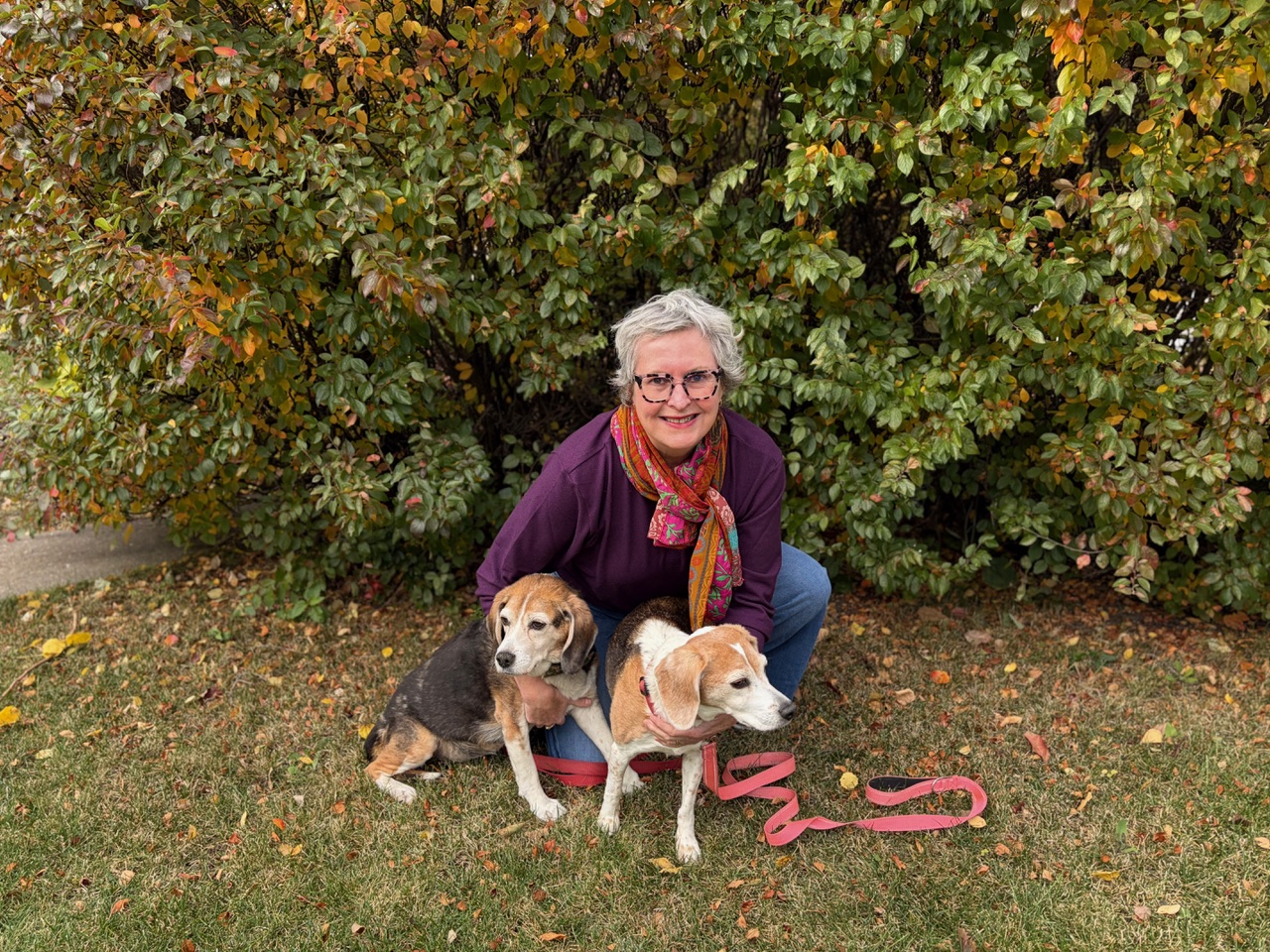
For nearly three decades, Dr. Lise Gotell’s work has reshaped how Canadian law understands consent and justice. An internationally recognized feminist legal scholar, Gotell has dedicated her career to elevating the voices of sexual assault survivors.
Originally from the Maritimes, Gotell trained as a political scientist at Carleton and York Universities before joining the U of A in 1997. Since then, her scholarship challenging traditional notions of consent has directly informed landmark Supreme Court of Canada cases, clarifying critical protections around bodily harm with profound implications for survivors of gender-based violence. She has also been a driving force behind the creation and advancement of Women’s and Gender Studies (WGS) into a thriving department.
This commitment to aligning rigorous academic inquiry with public advocacy has earned her the 2026 University Cup — the U of A’s highest distinction, awarded to faculty who exemplify sustained excellence across research, teaching and service. For Gotell, a former Landrex Distinguished Professor, the service aspect stems directly from her approach to scholarship.
The power of praxis
“The kind of career pattern that I've had is perhaps one that is very common to women academics who have tended to take on heavier burdens of both teaching, academic leadership and advocacy," she says, acknowledging early feminist scholars like Susan Boyd, Elizabeth Sheehy and Dallas Cullen who “forged the field”.
“Their concept of praxis — translating feminist theory into action — has really been a touchstone for me. Our academic work and our advocacy work as feminists to improve the lives of women and girls can never be separated and are always influencing each other. In the context of my own field, research and advocacy work are part of the same package.”
As an educator and mentor, Gotell has dedicated much of her career to shaping the undergraduate experience, a commitment recognized in 2011 with the Rutherford Teaching Award. Reflecting on her teaching practice, she emphasized two main pillars: developing practical research skills and cultivating disciplined, open-minded inquiry.
“A principle that has informed my teaching is the importance of contestation and respectful debate within the classroom,” she says. “There's this tendency, especially for younger students, to think that once they've arrived at their own position, everybody else is wrong. I want students to understand that the world is a complicated place, and that we can learn from perspectives with which we might disagree.”
Academic rigour is only half the equation for Gotell, who insists that her students learn how to project their scholarship into the public sphere. “I really prioritize the importance of communicating your research in spaces where it will have an impact, including skills like how to write a good op-ed. In turn, students have also taught me, and because of those interactions I've revised my own positions over the years.”
Building a department
Over her tenure at the U of A, Gotell has served in key administrative roles — most notably as chair of WGS (2011–2018), a department established in 2013 largely through her visionary guidance alongside one of her mentors, Dr. Jo-Ann Wallace. She has also served as Vice-Dean and Acting Dean of Arts, consistently working to expand and safeguard academic spaces across the faculty, particularly for critical gender research.
“Lise has built WGS to what it is today,” says current chair Dr. Talia Welsh. “Anchored by her selfless dedication to our field, she has helped us move from a program to a department with a flourishing undergraduate major and minor and a nationally unique MA in Gender and Social Justice. Her mentorship and supervision of countless WGS and GSJ students has shaped feminist activism and research in Canada and beyond. We owe her an enormous debt."
Over time, the department has grown increasingly inclusive and intersectional, actively embracing racialized and gender-diverse scholars — a progress she has championed while ensuring the field remains institutionalized at the U of A. Holding these leadership positions has, for Gotell, always been inextricably linked to her core belief in the public role of higher education.
“It’s not good for us as academics to remain within the ivory tower,” she says. “We are beneficiaries of really wonderful careers with a lot of public support, and I think that we have an obligation to give back across all of the fields that represent this great university. I've always tried to operationalize that in terms of my own career."
A lasting legacy
Though officially in phased retirement, Gotell continues to maintain active research and supervisory roles, while serving on the steering committee for the National Association of Women and the Law, adding that she now has “more time to walk the beagles” with her partner, Adien.
“I am thrilled to be recognized with this award, and extremely humbled, especially when I see past recipients, including those from the Faculty of Arts,” she says.
For Gotell, the University Cup’s unique value lies in honouring every dimension of an academic career — a recognition she hopes will inspire other scholars, who, like her, have that “particular package of research, activism and advocacy” to put themselves forward. Yet, when reflecting on her greatest career highlights, she returns to her real-world impact on Canadian law.
"I've always been extremely grateful when my research has led to measurable improvements in the law that will really affect the well-being of women,” she says. “To have that work — and the long history of feminist advocacy behind it — honoured with the University Cup is profoundly meaningful.”
Learn more about Dr. Gotell in this video.