GSJ student Aaron Kimberly wins award
15 April 2026
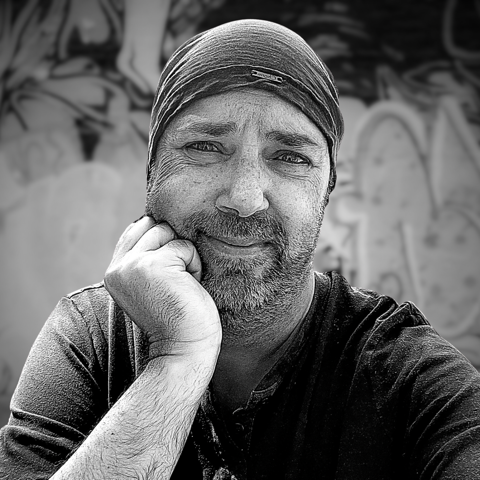
Aaron Kimberly (pronouns: any) is completing the GSJ program this summer. His work looks at how violence against transmen is understood across clinical, legal, and social settings.
Before entering the program, Aaron spent seventeen years working as a psychiatric nurse. During that time he worked in several places, including a psychiatric stabilization unit at St. Paul’s Hospital in Vancouver, the BC Provincial Tertiary Eating Disorders Program, a youth clinic called Foundry Kelowna, and later the School of Psychiatric Nursing at Brandon University. In those roles he worked closely with people living with trauma, dissociation, and suicidality. Much of the work involved helping patients put difficult experiences into words.
Aaron has lived as a transman since 2006. That experience, together with his nursing career, shaped the questions that now guide his research. Over the years he saw many transmen move through various institutions like foster care systems, shelters, hospitals, prisons, and community programs. Institutions often struggle to decide where someone should go or how risk should be assessed.
Aaron’s research grows directly out of those observations. A large percentage (~50%) of transmen have been sexually assaulted. He studies how transmen make sense of sexual assault, especially where the available language does not quite match what happened making those experiences harder to explain and be understood.
On March 28, 2026, Aaron presented his paper Experiences of Sexual Assault Among Transmen: A Feminist Narrative Inquiry at the Radical Togetherness at a Time of Disconnect Interdisciplinary Student Conference. He was one of 5 students who received a conference award for best graduate paper.
The study examined the testimonies of three transmen who had experienced sexual assault. The sample was small, but the narratives revealed clear patterns. Each participant described a life trajectory that began with punishment for being gender-nonconforming girls who were attracted to other girls. As they grew older, that discipline intensified and eventually took the form of sexual violence.
All three participants grew up working-class, in religious environments, which appeared to produce a "perfect storm" of gender nonconformity, economic precarity, and moralized ideas about femininity, which interacted in ways that increased their vulnerability to sexual violence.
For each participant, male passing later in life offered a degree of protection. Even so, two participants were sexually assaulted again after identifying as transmen.
He also examined institutional placement decisions in shelters and prisons finding that many homeless transmen avoid shelters because they do not feel safe in men’s shelters. At the same time, Correctional Service Canada data show that twenty of the twenty-one transmen in federal custody were housed in women’s facilities, with none requesting transfer.
These findings led Aaron to a broader question: how should violence against transmen be understood, and what kinds of explanations actually help institutions recognize risk and respond safely?
Aaron will continue this research in a PhD in Sociology at McGill University. There he plans to carry out a larger study of sexual violence affecting transmen. The project grows out of the same question that shaped his earlier work: how should violence against transmen be understood, and what forms of intelligibility support safety?