 YouAlberta
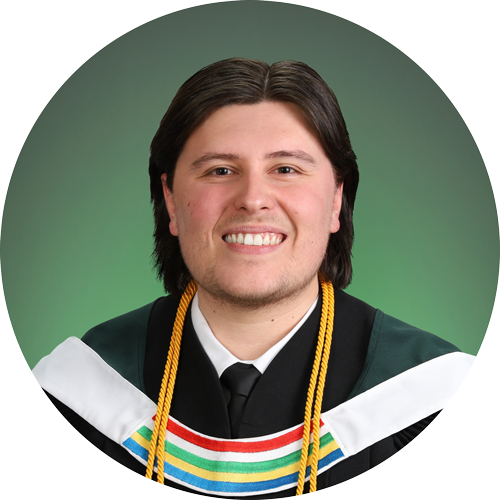 Marc Jr. Doire is an Honors grad of the Faculty of Native Studies. He belongs to the Wanyandie/Moberly family and grew up between the town of Grande Cache and the Cree-speaking community of the Susa Creek Co-operative. His father is French, and his mother is Rocky Mountain Cree from her mother (Aseniwuche Winewak Nation) and Métis from her late father (rescinded Marlboro Métis Settlement). If he's not in a library or an archive, you'll find him back home with his relatives on the lands his maternal ancestors — such as Vincent "Wassar" Wanyandie, Henry "Evan" Moberly, Dolphus "Big Okahama" Moberly and Lucy Wanyandie (born Moberly) — defended.
I never wanted to attend university until after I dropped out of high school.
As a bush kid who was raised between the town of Grande Cache and the Cree-speaking community of the Susa Creek Co-operative, I didn’t feel comfortable with the thought of leaving home for a long period of time. Everything I knew about life was right there on my walks across the small meadow to my great-grandmother Lucy Wanyandie’s house and inside where my relatives would gather to visit; by the creek where I would help my relatives tan their hides; and anywhere in town my relatives would stop to chat up on local current affairs. Since I didn’t want to leave the mountains, I didn’t see the point in earning a paper credential that would take me away. This was one of the reasons why I dropped out of high school to work full-time instead. But I didn’t stay on this path for long.
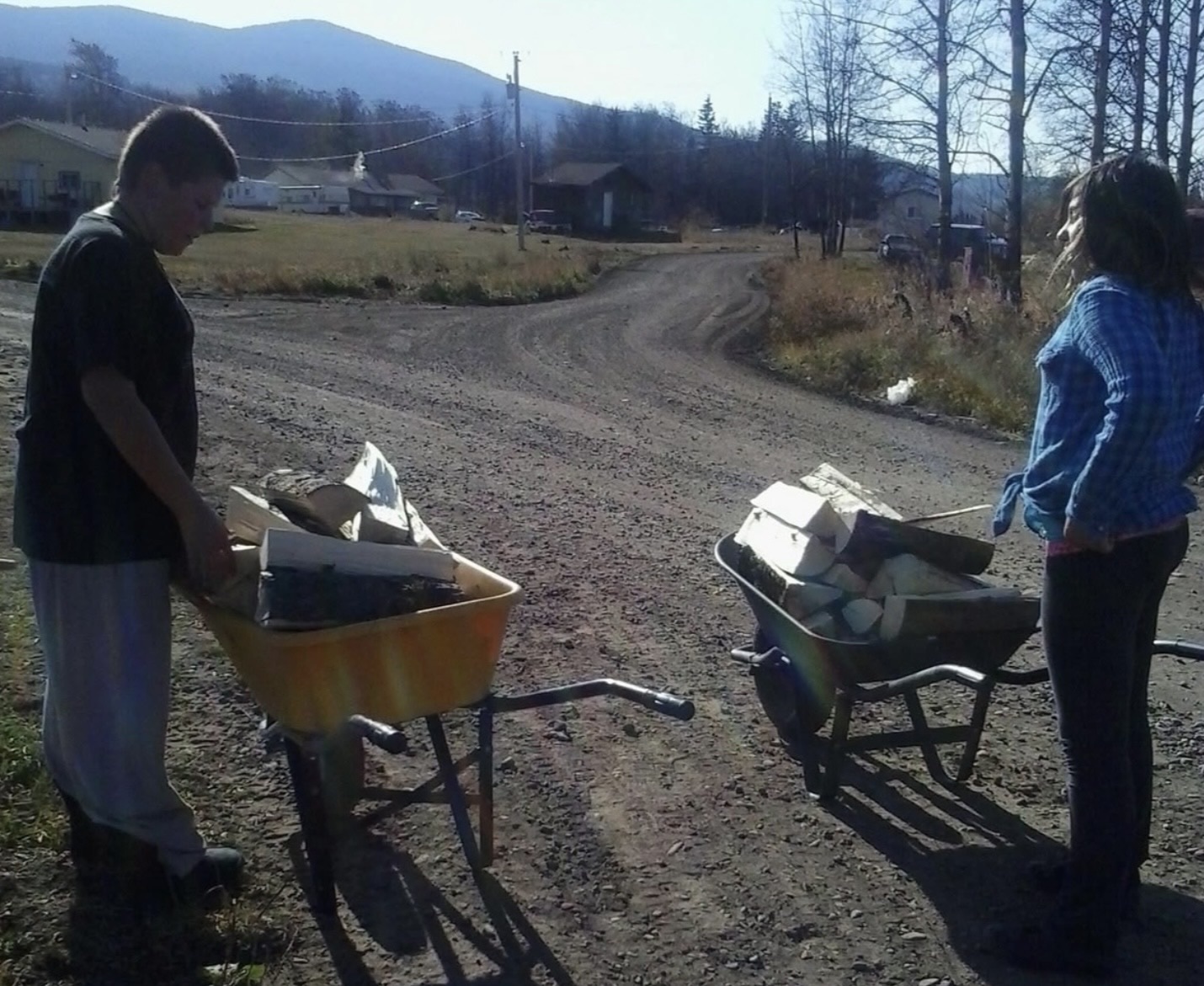
In 2023, I shared a story with YouAlberta about how my relatives hosted U of A law students in summer 2017 to teach them our community’s legal principles of ᐘᐦᑯᐦᑐᐏᐣ wahkôtowin and ᒥᔪ ᐑᒉᐦᑐᐏᐣ miyo-wîcihtowin through the process of brain-tanning a moose hide, and how that unique experience inspired me to return to high school to upgrade and graduate before moving to Edmonton to challenge a degree program at the U of A. Since then, I have graduated with a bachelor of arts in Native Studies with Honors under the thesis supervision of historical geographer Dr. Frank Tough, founder of the Métis Archival Project (MAP) lab. But like my journey to the university, the path to convocation wasn’t linear. Navigating the university as a bush kid without a reference point came with its challenges — but I didn’t need to navigate them alone.
First Peoples’ House provided me with community, cultural connections and holistic support that helped me reach the finish line. From my first steps onto North Campus to my very last ones off the convocation stage, First Peoples’ House was there for it all. I would like to take a moment to share how First Peoples’ House supported me on my academic journey, as a way to say kinanâskomitin — thank you — and encourage other Indigenous students at the U of A to connect with that powerful space.
Thank you for the Transition Year Program.
I came to the U of A through the Transition Year Program (TYP), a full-time open studies program supported by First Peoples’ House for Indigenous students who may need additional support before enrolling in an undergraduate degree program at the U of A.
TYP showed me how to succeed as a student. UNI 101 and 102 (relisted as TAKWA 101 and PIPON 102) taught me how to research in the library, prepare and present a slideshow and write strong essays. These two dedicated TYP courses also instilled in me strong study and wellness strategies, which I relied on heavily after transferring to my degree program. In fact, I never would have guessed while in TYP that the early assignment of exploring and familiarizing myself with the Bruce Peel Special Collections library would lead to me finding a photograph of my great-great-grandfather, Daniel Wanyandie Sr., among the collections during a research visit for my Honors thesis in my final year — thank you for the assignment, Suzanne! TYP not only prepared me for undergraduate studies, but also ignited a curiosity that propelled me to ask new questions, dig a little deeper and look a little further.
Thank you for Orientation and tawâw.
I always looked forward to volunteering for the annual Transition Year Program’s and First Peoples’ House’s respective Orientations, and closing off by joining all incoming and returning Indigenous students at the fall tawâw. The time, care and attention First Peoples’ House staff gave during my cohort’s orientation inspired me to reciprocate for future students. Over the years, I sat on panels to share my unconventional journey to the U of A, introduced keynote speakers Anthony Johnson and Dr. James Makokis, winners of The Amazing Race Canada (season 7) and led campus tours. But regardless of my role — as a new student or a returning volunteer — I always learned something new and useful for the new year.
With that said, I’ll never forget the energy and excitement Shana Dion, assistant dean of First Nations, Métis and Inuit Students, and each member of the First Peoples’ House staff brought to every tawâw, year after year. From taking photos in a 360 spinner photo booth to redeeming a “booth passport” for an iconic First Peoples’ House backpack, each tawâw reunited me with my peers and filled me with excitement for the new year.
Thank you for community meals.
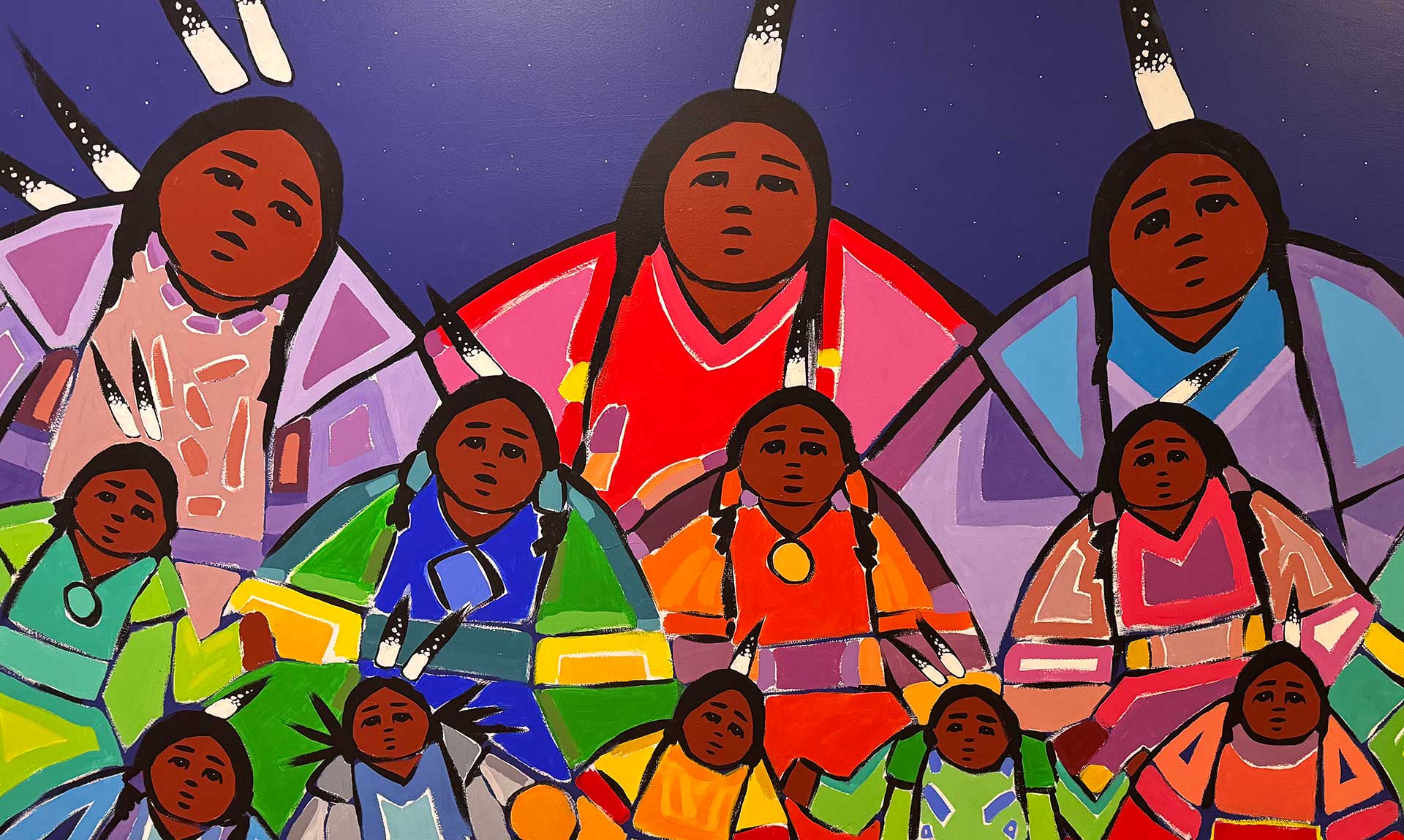
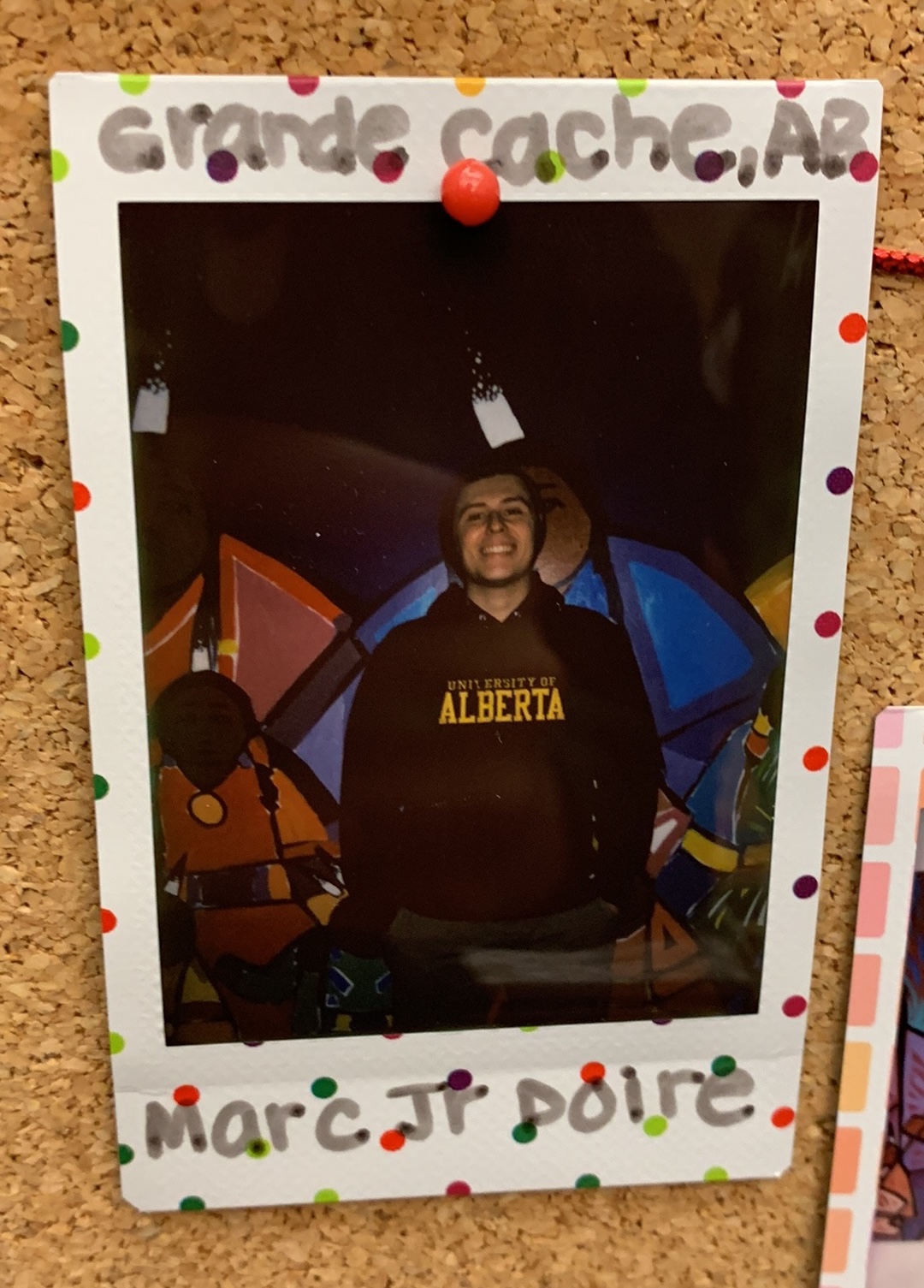
One of the most impactful monthly supports I received from First Peoples’ House was the community meals. I grew up attending regular potlucks hosted by my relatives in the gymnasium of my first school — Susa Creek School — which always reminded us that we belong to a tight-knit community. So, regularly meeting up with my peers along the mural in the hallway to make our way to the food to then share stories before helping the staff clean up and pack leftovers, felt familiar. These monthly community meals always made me feel a little closer to home, which, in turn, allowed me to spend more time and energy focusing on my studies.
Thank you for the First Peoples’ House Annual Round Dance.
The First Peoples’ House Annual Round Dance gave me a rare opportunity to celebrate being on campus with my friends and family. In 2023, when I was first asked to serve as an oskapêweyo and Lead Volunteer, several of my relatives drove more than 400 kilometres from the mountains to visit and be in ceremony, and they have made the drive every year since.
In 2026, my grandmother Mabel Wanyandie’s eldest sister, Philomene Moberly, turned 89 on the same day as the First Peoples’ House Annual Round Dance. They were both already familiar with North Campus thanks to our community’s relationship with the Wahkohtowin Law and Governance Lodge, so they hit the highway with my mother to celebrate with ceremony. After stopping at my place and then picking up other relatives of ours who lived in the city, we all made our way to the U of A. Some time after we arrived, I made an offering so my great-aunt could receive prayers and a song. Our family was brought to the front so she could be seated, so I could take my place in the circle to dance for her and for the rest of our relatives to stand behind and beside her. After the song, people of all ages came up to shake her and my grandmother’s hands. Before we left that night, my mother made sure to speak with as many people as she could in her first language, nehiyawêwin — Cree. She shared that she was so happy to meet so many other fluent Cree speakers all in one place — all at the U of A. It was a special night, and one our family will always remember.
Thank you for the Convocation Honouring Ceremony.
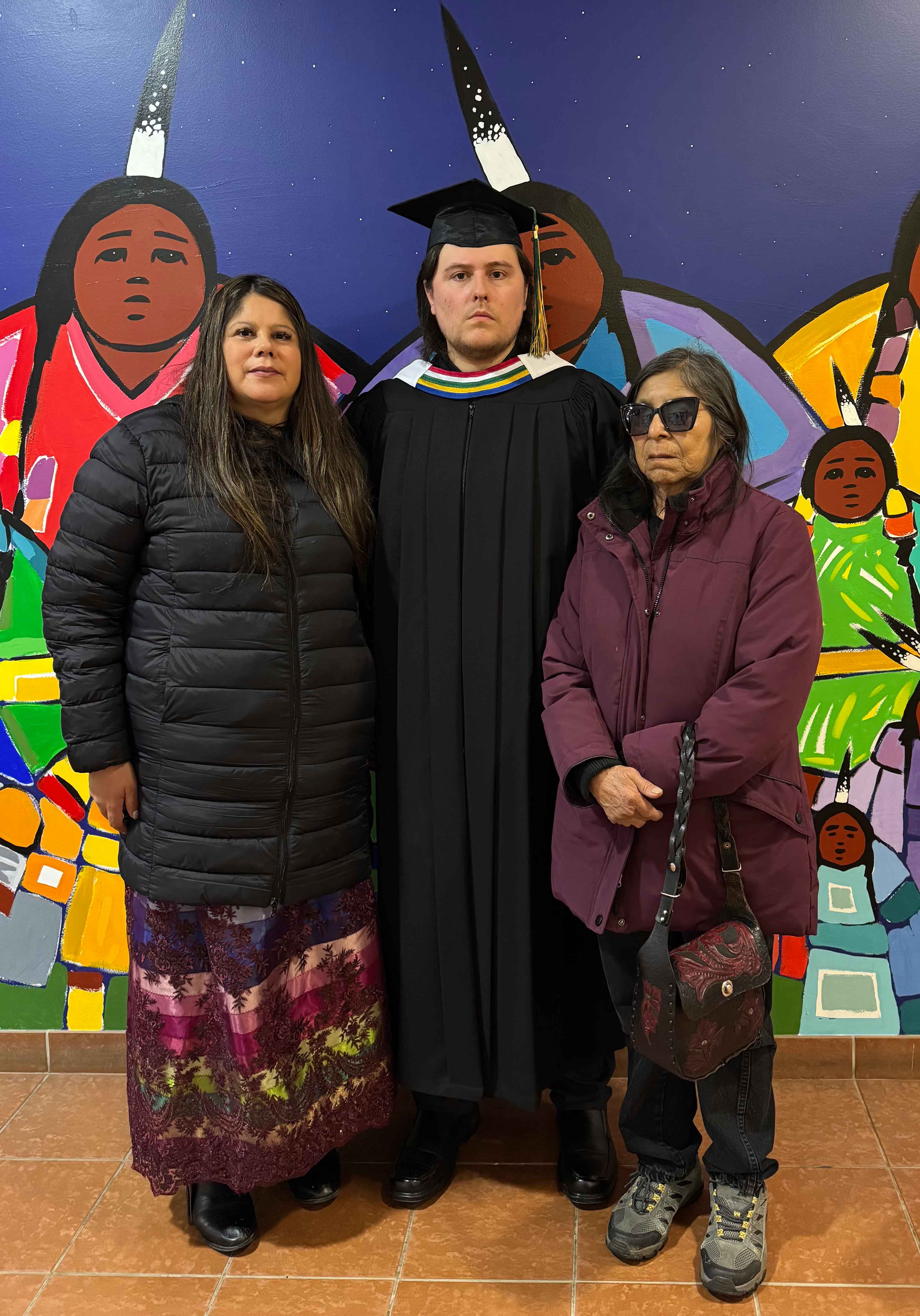
First Peoples’ House didn’t stop supporting me the moment I finished my courses — they were there to meet and honour each of my peers and me for our final moments on the convocation stage. It meant a lot to be with the people who provided me with a “home away from home” during my undergraduate studies in the city, to receive congratulatory hugs, deeply encouraging words and a beaded medallion in First Peoples’ House colours. But it also meant a lot to have my grandmother Mabel, who underwent cataract surgery the day prior, borrow my sister’s sunglasses to self-determinately attend the ceremony, feel the opening Cree victory song and hear my name be called onto the stage. When the ceremony ended, we decided to postpone our familial embraces until we arrived at my home away from home — First Peoples’ House.
Thank you for everything.
From dropping out of high school to becoming the first person in the family to earn a university degree, First Peoples’ House was there for it all. Thank you for being my home away from home as I went through one of the most challenging and rewarding journeys of my life.
To each Indigenous student at the U of A, I hope you will cherish the new First Peoples’ House space in Education South and make some lasting memories. When I reflect on my academic journey, I know I am not only a grad of the U of A, but one of First Peoples’ House, too.
kinanâskomitin,
Marc Jr. Doire