Virtual DUSS Scholars 2026
On this page:
The UAlberta DUSS (Disrupted Ukrainian Scholars and Students) Initiative is pleased to introduce the cohort of Virtual DUSS Scholars 2026—researchers and academics who have been selected for virtual DUSS residency through a competitive application process and matched with UAlberta mentors from the Department of Modern Languages and Cultural Studies and the Department of History, Classics, and Religion.
This diverse cohort of scholars brings together researchers in the fields of Archaeology, History, Political Science, and Sociolinguistics that represent a multidisciplinary shift in Ukrainian studies, moving beyond traditional state-centric narratives to explore the intricate layers of identity, memory, and everyday life. Ranging between archaeological material culture and contemporary political science, their collective research illuminates how Ukraine's past—from the 17th century toys to the 19th century imperial monuments—informs the country's current struggle for decolonization and European integration. These projects collectively challenge monolithic interpretations of Ukrainian history, instead highlighting a "Ukraine-centric" evolution shaped by both local resilience and broader European socio-cultural currents.
The significance of their work lies in its timely application of memory studies, sociolinguistics, and digital humanities to address the existential challenges posed by the ongoing Russo-Ukrainian war. Whether documenting the linguistic shifts of displaced populations in Transcarpathia or analyzing the "mnemonic security" of urban landscapes in Odessa and Poltava, these scholars provide a critical academic framework for understanding Ukraine both from a historical and present-day perspective. Their research not only safeguards Ukrainian heritage under threat but also positions the Ukrainian experience as a central case study in global academic discussions on post-colonialism, societal resilience, and the formation of a modern European democratic identity.
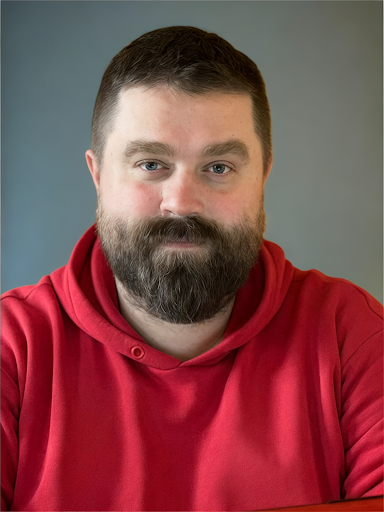
Dr. Yurii Puholovok
Email: yuriy.puholovok@gmail.com
Biographical note
Dr. Yurii Puholovok is a Ukrainian archaeologist, specializing in Early Modern material culture, with a focus on post-medieval ceramics and urban archaeology. His research combines typological and technological analysis of ceramic assemblages with contextual approaches to everyday consumption, trade, and urban life, drawing on fieldwork as well as museum and archival collections. Through spatial analysis and digital documentation, he contributes to projects dedicated to the study and safeguarding of Ukraine's archaeological heritage.
Project description
Playing Urban Life: Toys, Games, and Everyday Experience in Early Modern Poltava (17th–18th Centuries) is a research project that investigates the material and social cultures of play in early modern Ukrainian cities, using Poltava as a case study. Drawing on recent archaeological excavations, it analyses toys used by children and leisure objects associated with adults' games—such as board-game pieces (e.g., chess and draughts), miniatures, figurines, and related small finds—to reconstruct everyday urban routines, social interaction, learning, and cultural values. Because early modern Ukrainian urban history is usually approached through political, military, and economic frameworks, practices of leisure, play, and emotional experience remain underexplored, especially in archaeology where "non-monumental" artefacts are often marginalized. By treating play as a meaningful social practice rather than a trivial activity, the project contributes to the archaeology of everyday life and historical anthropology, while situating Ukrainian urban experience within broader early modern European discussions on childhood, leisure, and material culture.
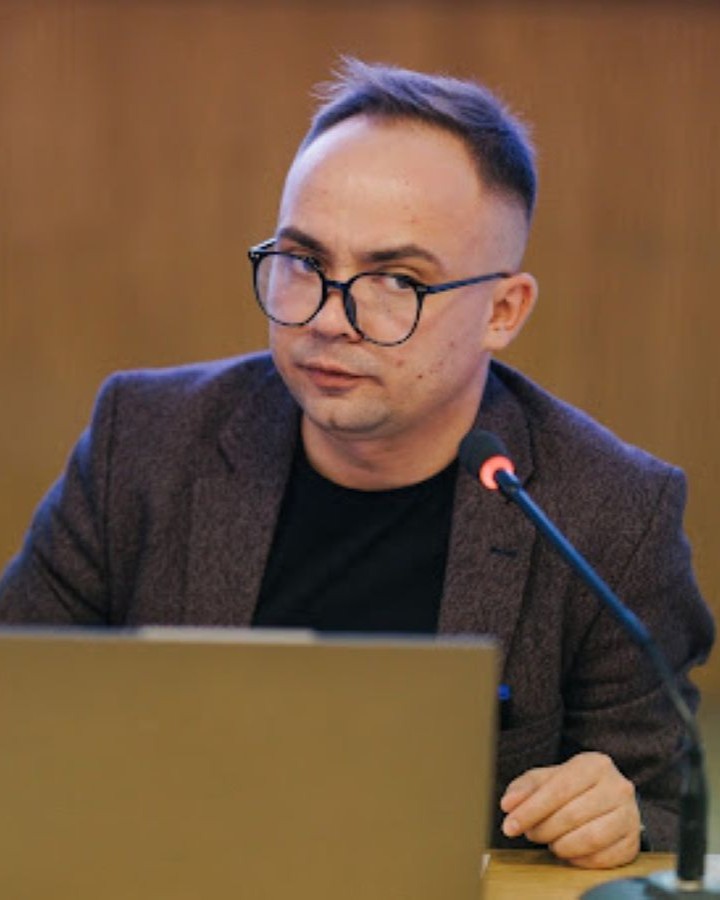
Dr. Yevhen Zakharchenko
Email: ye.zakharchenko@karazin.ua
Biographical note
Dr. Yevhen Zakharchenko is a historian and Associate Professor in the Department of History of Ukraine at the School of History, V. N. Karazin Kharkiv National University (Ukraine). His research focuses on memory studies, digital humanities, Holocaust history, and the political uses of the past in Eastern Europe. He previously headed the Historical Informatics Training Laboratory (2016–2024), where he developed digital approaches to historical research and teaching. Zakharchenko has participated in international academic programs at the United States Holocaust Memorial Museum (Washington, DC), the Institute for Human Sciences in Vienna ("Documenting Ukraine"), Ohio University's Non-Residential Fellowship Program, and the Foundation for Polish Science. His work examines the memory politics of the Russian Empire and the Soviet Union, commemorative practices in Eastern Europe, and the transformation of Holocaust memory in the context of Russia's war against Ukraine.
Project description
Empire Marking Space: Commemoration and Power in Late Imperial Ukrainian Cities examines how the Russian Empire used monuments, urban symbolism, and commemorative practices to shape political space in Ukrainian cities between the mid-nineteenth and early twentieth centuries. The project analyzes how imperial authorities inscribed narratives of loyalty, hierarchy, and historical continuity into urban landscapes, and how these symbolic interventions interacted with local identities. By combining archival research with approaches from memory studies and digital humanities, the study contributes to a broader understanding of how empires structure space through commemorative politics. The project also offers critical historical context for contemporary debates in Ukraine about decolonization, monument removal, and the politics of historical memory.
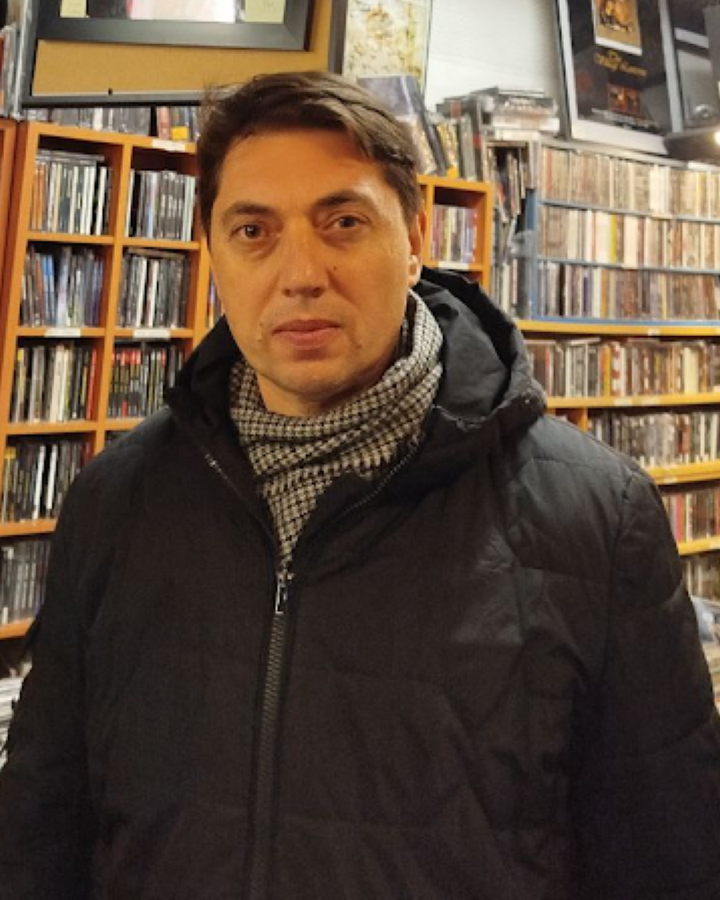
Dr. Sergii Pakhomenko
Email: s.pakhomenko@mu.edu.ua
Biographical note
Dr. Sergii Pakhomenko is the Associate Professor of the Political Science and International Relations Department of Mariupol State University (relocated to Kyiv). His research interests include the politics of memory in Ukraine, Russia and the Baltic states, propaganda and information warfare. Sergii Pakhomenko was a co-editor of the volume Russian Influence Operations and the War in Ukraine. Contributions to Security and Defence Studies (Springer, 2025), as well as a visiting fellow at the Aleksanteri Institute of University of Helsinki (2024, 2025), visiting fellow at the University of Tartu (2021), and academic coordinator from Mariupol State University of Erasmus+ project Rethinking Regional Studies: Baltic-Black Sea Relations (2017–2021).
Project description
Dr. Pakhomenko examines the politics of decolonising historical memory in Ukraine amid the ongoing Russo-Ukrainian war. The study explores how the Ukrainian state and civil society, responding to Kremlin's aggression, the denial of Ukrainian traditions of statehood, and the distinctiveness of Ukrainian historical development have integrated decolonisation into a broader strategy of mnemonic security by rejecting the imperial and Soviet symbolic heritage and strengthening the national narrative. Drawing on postcolonial theory, securitisation theory, and discourse analysis, this study highlights the complex interplay between security imperatives, ideological motives, and identity politics that shape Ukraine's current memory landscape. After 2022, Ukraine's memory politics have taken an anticolonial turn, privileging a Ukrainocentric perspective and reducing the space for mnemonic hybridity. On the one hand, this shift can be understood as a response to the ideological framing of Russian aggression, but on the other, it generates tension between the securitised national narrative and locally rooted forms of mnemonic ambivalence. The city of Odesa serves as a case study illustrating these dynamics—a site where imperial, Ukrainian, Soviet, and post-Soviet legacies intersect, revealing the difficulties of reconciling national and local frameworks of remembrance within Ukraine's current decolonisation agenda.
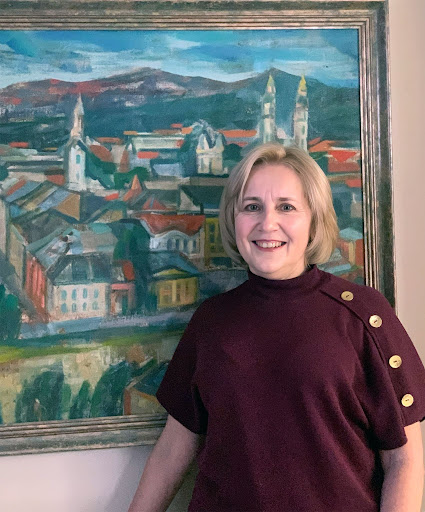
Dr. Halyna Shumytska
Email: halyna.shumytska@gmail.com
Biographical note
Dr. Halyna Shumytska is a sociolinguist and has been affiliated with Uzhhorod University since 2005, where she held various positions, including Dean of the Faculty of Philology (2013–2021). In 2022, she became a professor in the Department of Sociology and Social Work, Head of the Research Centre for the Sociology of Language. Her expertise extends to sociolinguistics, Ukrainian dialectology, social communications, and multilingual education. Prof. Dr. Shumytska has also served as an expert for the OSCE High Commissioner for National Minorities since 2020 and is a member of the Sociolinguistic Commission at the International Committee of Slavists (since 2022).
Project description
Evolving Linguistic Consciousness in the Ukrainian Cross-Border Region: The Impact of Forced Migration from Historical and Contemporary Perspectives: the proposed project aims to track changes in the linguistic consciousness of both the local population and internally displaced persons (IDPs) in Transcarpathia (Ukraine) across the 20th and 21st centuries. By examining two significant waves of migration—the political immigration from 1919 to 1939 and the current displacement caused by the Russian-Ukrainian war (2014–2026)—this study identifies long-term trends in linguistic adaptation and formulates recommendations for social integration.
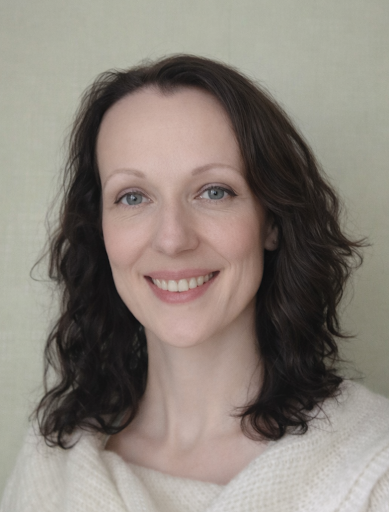
Dr. Marharyta Chabanna
Email: chabanna@ukma.edu.ua
Biographical note
Dr. habil. Marharyta Chabanna is the Head of Political Science Department at the National University of Kyiv-Mohyla Academy. She received her PhD in 2006 and obtained the degree of Doctor of Science in 2020. As a researcher, Dr. Chabanna focuses on political opportunism, post-totalitarian social transformations, European integration and migration studies. She is the author of the monograph Political Opportunism in the State Budgeting during Economic Crisis in Ukraine (2008-2009). Since 2007, she has participated in academic mobility programmes with Friedrich Schiller University (Germany), Tartu University (Estonia), Glasgow University (UK), Free University of Brussels (Belgium), Lyon 2 University (France), Illia State University (Georgia), Central European University (Hungary), Justus Liebig University (Germany), Paris Ludron Salzburg University (Austria), Warsaw School of Economics (Poland), Hertie School (Germany), University Paris 8 (France), Wroclaw University (Poland). Dr. Chabanna had been IERES fellow at Elliott School of International Affairs, The George Washington University (USA), visiting fellow at European University Viadrina (Germany), associate fellow at University of Glasgow (UK), associate fellow at the University of Toronto within the Petro Jacyk Non-Residential Scholars Program, research fellow at the Ukrainian Resource and Development Centre (URDC) at MacEwan University (Canada), awardee of the Juliusz Mieroszewski Dialogue Center Program (Poland).
Project description
Shaping Ukraine's European Identity: Perceptions of Integration and Shared Values in Times of War: the project examines how Ukrainians perceive European integration and shared democratic and cultural values in the context of the ongoing war. The project analyzes surveys, media coverage, policy documents, and public discourse to understand how collective identity, societal resilience, and attitudes toward Europe are evolving under wartime conditions. By exploring the links between national identity, European values, and narratives of solidarity, the study provides insights into how Ukrainians navigate their relationship with European institutions and the broader international community.