
Doctor of Philosophy (PhD)
Lead transformative research at the forefront of health solutions
On this page
About The Program
What is the PhD Program?
The PhD in biomedical engineering is a research-intensive program requiring a minimum of four graduate-level courses and an orally defended research thesis. Students must first enroll in the biomedical MSc program and then transfer to the PhD program. Courses taken in the MSc program count towards the PhD degree. Students entering the department who already hold an MSc degree are required to take only two graduate-level courses towards the PhD. Students typically complete the PhD in four to five years. The department requires all PhD students to receive financial support and have an academic supervisor. Before applying to the program, prospective students should contact the professor(s) they would like to study with.
Why Choose This Program?
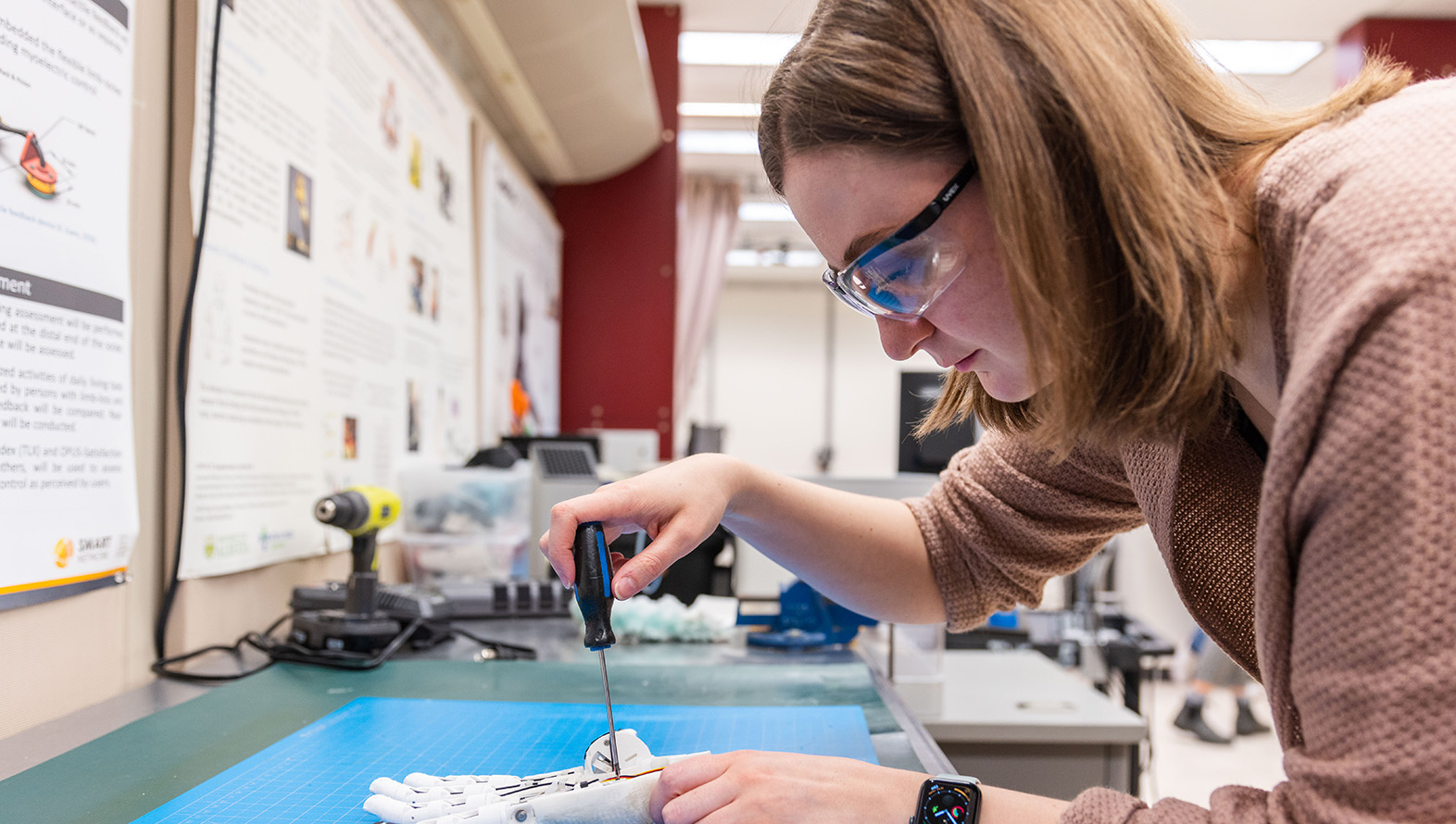
Choose this program to benefit from internationally recognized faculty and their laboratories. You’ll engage in impactful research like developing AI diagnostics or next-gen prosthetics, shaping health care’s future. Graduates are prepared for careers in academia, industry, or entrepreneurship, driving real-world health solutions.
Application Deadlines
September (Fall semester) program start date- Applications open December 1
- Applications close April 1
- Applications open April 1
- Applications close August 1
- Applications open August 1
- Applications close December 1
Program Information
Degree
Doctor of Philosophy (Biomedical Engineering)
Specializations
- Bionics and Biorobotics
- Biomedical Imaging
- Biomechanics
- Precision Health Design
4-5
years
Program duration depending on previous degrees.$25,000
average funding
Annual minimum support for full-time PhD students.300+
research projects
Join diverse interdisciplinary initiatives.3
milestones
Candidacy, research and dissertation defense.Program Objectives
- Master specialized expertise: Attain the highest level of knowledge and specialization in core and emerging areas of biomedical engineering, including biomechanics, medical imaging, biomaterials, computational modeling and systems biology.
- Lead original research: Conceive, design and execute independent, high-impact research that advances the frontiers of biomedical engineering and addresses pressing challenges in health and medicine.
- Integrate interdisciplinary insights: Combine engineering, clinical and life sciences expertise to develop transformative healthcare solutions and novel biomedical technologies.
- Shape the field through leadership: Provide intellectual and strategic leadership in multidisciplinary research teams, guiding projects from concept to real-world application.
- Disseminate knowledge with influence: Communicate complex scientific and technical concepts effectively to diverse audiences, including academia, industry, clinical communities and policymakers to shape the future.
- Model ethical and responsible research: Uphold the highest standards of research integrity, ethics and societal responsibility, ensuring biomedical advancements benefit patients and communities globally.
Learning Outcomes
- Demonstrate research excellence: Design, execute and defend original, high-impact research that significantly advances the state of knowledge in biomedical engineering.
- Apply specialized expertise: Integrate advanced theories, quantitative methods and technical tools within their chosen concentration (e.g., bionics, biomechanics, computational modeling, imaging or entrepreneurship) to address complex biomedical challenges.
- Lead multidisciplinary collaboration: Provide strategic and intellectual leadership in interdisciplinary teams involving engineers, scientists, clinicians and industry partners.
- Translate innovations into practice: Transform research findings into practical applications, medical devices and healthcare solutions with measurable societal and clinical impact.
- Communicate with influence: Disseminate research findings effectively through peer-reviewed publications, conference presentations, grant proposals and stakeholder engagement.
- Uphold ethical and professional standards: Apply the highest levels of research integrity, ethical conduct and regulatory compliance. Ensure that technological advancements serve the well-being of patients and society.
Careers
PhD graduates go on to leadership roles in academia, industry and government. Careers include tenure-track faculty positions, senior research scientist roles and leadership in biomedical startups, biotech companies or regulatory organizations.
- Academic researcher/university professor
- Principal investigator (biomedical research)
- Senior research and development scientist
- Director of clinical research
- Health policy analyst
- Innovation manager (MedTech startups)
- AI in health care specialist
- Intellectual property consultant (biotech)
- Chief scientific officer
- Government Research Scientist (Health Canada, National Research Council Canada
Course Highlights
Series of seminars exposing graduate students to the various areas of research and providing a forum for progress reports in individual areas. Seminars by research workers from inside and outside the University are included. Seminars are informal with ample opportunity for discussion.
Application Steps
1. Gather Supporting Documents
- Official transcripts and degree certificates – Visit the university Documents Preparation page.
- Curriculum Vitae/Resume – To provide information about your previous educational and professional experience.
- Letters of reference – Three letters of reference are required. Ensure that the referees are ready, willing and able to submit a reference. Applicant will enter the names and email addresses of the referees on the application.
- Research proposal or personal statement
- Thesis-based applicants: 1-2 page document that includes who you wish to work with, your research skills and interests, and why you are a suitable candidate.
- Course-based applicants: 1 page document that outlines your academic and/or work experiences, skills and interests, and why you want to complete a graduate degree in biomedical engineering at the U of A.
- English language proficiency score (if required)
| Category | Thesis-Based Programs |
|---|---|
| TOEFL iBT | In-person or special at-home edition – 100 with at least 25 on each individual skills areas |
| IELTS Academic | 7.5 with at least 7.0 on each test band |
| PTE | 61 with a minimum band score of 60 |
| CAEL | Overall 70 with at least 60 on each subtest |
| Duolingo | 120 with no integrated sub score below 100 |
- Supervisory agreement – It is necessary for applicants to the thesis-based programs to have a supervising research professor willing to take you on as a student before applying to the program. Contact a prospective research supervisor via e-mail to determine if they will consider accepting you as a graduate student while offering financial assistance.
2. Apply online and pay application fee
A $135 CAD non-refundable application fee payment is required. This fee cannot be waived.
3. Await response from the department
Only complete application are reviewed. The review process can take several weeks, or longer during peak processing times.
4. Accept our offer
We ask that you accept or decline the offer of admission via the application portal as soon as possible.
International students should visit International Student + Visitor Services for immigration resources.
Program Faculty
Heather E. Williams,
PhD Student
“The biomedical engineering department leaders have supported me in my pursuit of scholarship and travel funding so that I could dedicate myself to research and share my findings at conferences. I know I made the right choice to pursue a PhD in BME at the U of A.”

Connect with us
Connect with student advising for personalized support, or stay in touch to receive updates and resources throughout your studies.