Faculty, Researchers and Administration
University of Alberta Faculty

Dr. Sandra Bucerius, Director
Email: bucerius@ualberta.ca
Twitter: @SBucerius
UAlberta Profile
Dr. Bucerius is a Professor of Sociology and Criminology at the University of Alberta (UofA) as well as the founder and inaugural Director of its Centre for Criminological Research (CCR). In 2020, she was honoured to be appointed a Henry Marshall Tory Chair.
As an urban ethnographer and qualitative researcher, Dr. Bucerius is interested in issues pertaining to social inequality in the broadest sense. She studies this by examining prisons; re-entry post prison; the victim/offender overlap; social exclusion and crime; drug dealing and gangs; and the opioid crisis. She holds numerous research grants and is the Director of a newly awarded $2.5 million SSHRC Partnership Grant on the Intersecting Issues of Justice and Injustice, examining barriers and challenges for people who move through the various institutions of the justice system (police, courts, prison, and re-entry).
Dr. Bucerius is the Co-Editor of the Oxford University Press (OUP) Handbook series in Criminology (together with Michael Tonry) and has held several leadership positions in different academic and community contexts. For example, she has been serving on the editorial advisory board of the American Society of Criminology (ASC)’s flagship journal Criminology since 2018 and, serves on the editorial boards of Crime and Justice and of Incarceration. She has taken on several roles within the ASC, has organized multiple conferences at UofA, and is serving on the Rat für Migration in Germany and on Edmonton’s Police Chief’s academic advisory board.
As the Director of the CCR, she is organizing annual conferences, bringing together leading scholars, stakeholders, and practitioners, organize annual speaker series, pod casts, and discussion rounds between policy officials and academics.
Dr. Bucerius is also the Director of the University of Alberta prison project (UAPP), the largest mixed methods study on Canadian prisons in the history of Canadian criminology and examines how fentanyl and carfentanyl have changed the prison experience for prisoners and guards; whether prisons are spaces in which radicalization occurs and spreads; prison gangs; and the victim-offender overlap. In a second project, she is looking at how police officers perceive the risk of synthetic opioids. Dr. Bucerius has held several research agreements with Correctional Service Canada, Public Safety, Justice Alberta, and the Edmonton and Calgary Police Service. Her five-year ethnography with drug dealers Unwanted - Muslim Immigrants, Dignity and Drug Dealing appeared with Oxford University Press in 2014 and received glowing reviews in many leading academic journals. She is also co-editor of the Oxford Handbook on Ethnicity, Crime and Immigration (with Michael Tonry), the Oxford Handbook on Ethnographies of Crime and Criminal Justice (with Kevin Haggerty and Luca Beradi), as well as the Crime and Justice Review Book on Prisons and Prisoners (with Michael Tonry – Chicago University Press). Her numerous journal articles appear in Criminology, Crime and Justice, International Journal of Drug Policy, British Journal of Criminology, Ethnic and Racial Studies, the Journal of Contemporary Ethnography, among others.

Dr. Kevin Haggerty
Email: kevin.haggerty@ualberta.ca
Kevin D. Haggerty is a Killam Research Laureate and Tier I Canada Research Chair, Full Professor and past (interim) Chair of the Department of Sociology at the University of Alberta. He served as the Executive Editor of the Canadian Journal of Sociology from 2007 to 2024, overseeing one of Canada’s leading peer-reviewed social science journals and shaping national and international debates across sociology, criminology, and related fields. Professor Haggerty is internationally recognized for his scholarship on surveillance, governance, policing, and risk. His research has been central to the development of surveillance studies as a field, particularly through conceptual work on surveillance assemblages, the expansion of data-driven governance, and the social consequences of contemporary security practices. Across his career, he has examined how new forms of monitoring, information collection, and institutional control reshape power relations, everyday life, and state–citizen interactions. His work has influenced a range of disciplines, including sociology, criminology, security studies, geography, political science, and law. In recent years, Professor Haggerty’s research agenda has increasingly engaged with prisons institutions and penal governance. He is currently co–principal investigator, with Dr. Sandra Bucerius, of the University of Alberta Prison Project, a large-scale, interdisciplinary research initiative examining life inside Canadian prisons. This work explores themes such as institutional order, violence, relationships, sensory environments, and the lived experience of confinement, with particular attention to how prison conditions shape social dynamics, well-being, and governance. In addition to his research and editorial leadership, Professor Haggerty has made notable contributions to graduate education and professional mentorship. Along with Aaron Doyle, he is the co-author of 57 Ways to Screw Up in Graduate School (University of Chicago Press), which offers candid, pragmatic guidance on navigating the social, intellectual, and institutional challenges of graduate education.
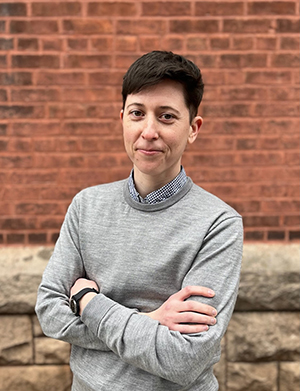
Dr. Lindsay Bing
Email: http://lindsaybing.com/
Bluesky: @lbing.bsky.social
Dr. Lindsay Bing's research investigates racial, economic, and gender inequality in the scope and consequences of mass criminalization. Their work draws attention to types of criminalization that often go undocumented and under-documented in conventional data sources, such as arrest, fines and fees, misdemeanors, and case outcomes falling short of conviction. Dr. Bing completed postdoctoral training at the Columbia University Justice Lab and a PhD in Sociology with a specialization in demography at the University of Texas at Austin. Their recent and forthcoming publications can be found in Demography, Social Forces, American Journal of Sociology, and Proceedings of the National Academy of Sciences.

Dr. Bryan Hogeveen
Email: bryan.hogeveen@ualberta.ca
Dr. Bryan Hogeveen received his PhD in Criminology from the University of Toronto. His interdisciplinary work merges his scholarly research and areas of social engagement. His main areas of scholarship intersect at three distinct points: 1) sociological engagement with sport; 2) youth in/and society; and 3) social theory. He is co-author (with Joanne Minaker) of Youth, Crime and Society: Issues of Power and Justice (2009) and the edited collection of essays, Criminalized Mothers, Criminalized Mothering (2015).
Dr. Hogeveen is a proud father of 3 children (Ayden, Taryk and Maylah), a Brazilian Jiu Jitsu black belt, and can most often be found in one arena or another.

Dr. Jana Grekul
Email: jana.grekul@ualberta.ca
Jana Grekul is Professor in the Department of Sociology and Director of the BA Criminology program. Her research interests include women’s experiences with the criminal legal system and re-entry post-incarceration, eugenics, gangs, critical pedagogy, and gender and edgework in motorcycling and other recreational activities.
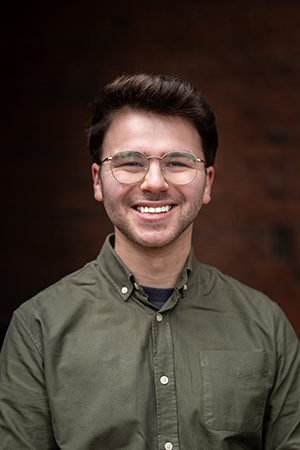
Dr. Daniel Konikoff-Houpt
Email: konikoff@ualberta.ca
Dr. Daniel Konikoff-Houpt is an Assistant Professor at the University of Alberta’s Department of Sociology. He completed his PhD at the University of Toronto’s Centre for Criminology & Sociolegal Studies in 2024. His research focuses on the intersection of justice and technology, and he has recently completed a project on the governance of police’s use of facial recognition technology in Canada. He was also the Director of the Privacy, Technology, and Surveillance program at the Canadian Civil Liberties Association, where he led advocacy efforts around Canada’s new legislation on artificial intelligence and cybersecurity. His recent and forthcoming publications can be found in Policy & Internet, Canadian Journal of Law & Society, Journal of Experimental Criminology, and British Journal of Criminology.

Dr. Temitope Oriola
Email: oriola@ualberta.ca
Temitope Oriola is an internationally recognized scholar in the field of criminology and terrorism studies. He has established a strong reputation as an expert on police reform. A public intellectual engaged in impactful work, Oriola's research has garnered national and international recognition as well as awards from community-based organizations. Professor Oriola served as special adviser to the Government of Alberta on Police Act Review and produced recommendations that were passed into law through The Police Amendment Act, 2022. Oriola’s research focuses on police use of force, terrorism studies, and resource-related conflict (involving tactics like political kidnappings). A recipient of the Governor General of Canada Academic Gold Medal (first presented in 1873 by the Earl of Dufferin), Oriola’s most recent book Terrorism, Politics and Human Rights Advocacy (Oxford University Press) investigates human rights advocacy vis-a-vis realities of terrorism and state repression in a postcolony. Publications from his research also appear in leading scholarly journals, such as Sociology (the flagship journal of the British Sociological Association), the British Journal of Criminology, African Affairs, Critical Studies on Terrorism, African Security, Third World Quarterly, Review of African Political Economy, Criminal Justice Ethics, and Studies in Conflict and Terrorism, among others. Oriola regularly contributes to public scholarship through keynotes, op-eds, media interviews and expert opinions. His perspective has been engaged by thinktanks and/or media organizations in countries like Australia, the US, Canada, Nigeria, Senegal, South Korea and China, etc.

Dr. Marta-Marika Urbanik
Email: urbanik@ualberta.ca
Dr. Urbanik is an urban ethnographer, specializing in drugs, gangs, violence, social media, and policing in the Canadian context. To date, Dr. Urbanik has conducted almost 1,000 interviews with marginalized community members, including criminally-involved persons, gang members, drug dealers, marginalized women, prisoners, people experiencing houselessness, and people who use drugs, across multiple Canadian cities, provinces, and territories. Accordingly, her research agenda centers and amplifies the lived experiences of populations typically considered to be ‘hard to reach,’ whose views and experiences
are frequently overlooked, silenced, and discounted. Her work is published in some of the premiere venues in the field, including the British Journal of Criminology, International Journal of Drug Policy, Qualitative Sociology, Journal of Contemporary Ethnography, Social Science & Medicine: Qualitative Research in Health, and Feminist Criminology.
Dr. Urbanik is committed to advancing empirical research that contributes to scholarly debates, policy, and best practices in Canada and internationally with respect to police-community relations, police misconduct, gentrification, gang relations, and drug policy. As such, she routinely secures internal and external research funding, ensuring she always has a robust research agenda. She also regularly presents her research at national and international conferences, including at venues of the American Society for Criminology (Washington, Atlanta, New Orleans, Philadelphia, San Fransisco), the Western Society of Criminology (Hawaii, Vancouver), Canadian Sociological Association (Calgary), the American Sociological Association (Montreal), the Eurogang Network (Sweden, Netherlands, Germany), the Surveillance Studies Network (Spain), and Law & Society Association (Portugal). In addition, Dr. Urbanik regularly serves as a consultant for municipal and provincial/territorial governments, and community organizations and as an expert witness for criminal trials.

Dr. Jeffrey Brassard
Email: jrb5@ualberta.ca
Jeffrey Brassard is an Associate Teaching Professor in the Department of Sociology and Administrative Coordinator of the Centre for Criminological Research. His research and teaching interests include the Sociology of Media, Sociology of Youth, and Sociology of Religion. Particular areas of interest include American Evangelical media cultures, Differences in Catholic and Evangelical approaches to media, and Christian media industries.