The Structures of Multiculturalism and Their Impact on ULEC and Bilingual Education
4 March 2026
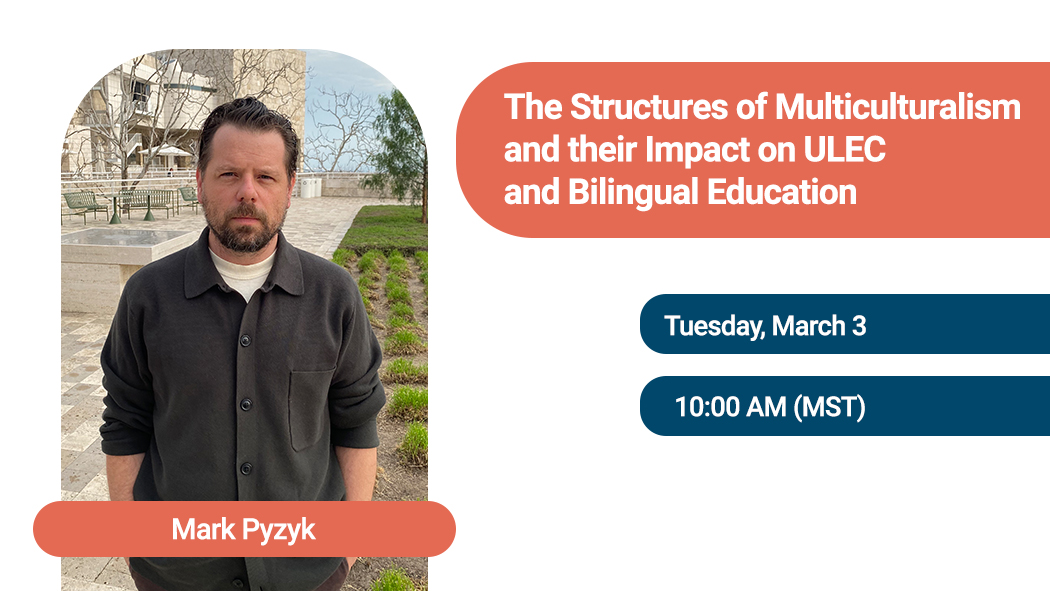
On March 3, ULEC hosted a webinar titled “The Structures of Multiculturalism and Their Impact on ULEC and Bilingual Education,” presented by Dr. Mark Pyzyk.
Dr. Pyzyk is a data analyst and facilitator at the Getty Research Institute in Los Angeles, California, and Co-Director of the Greek Coin Finds of Ukraine project. In this webinar, he focused on the history of the Ukrainian Language Education Centre (ULEC) and its place within the broader development of multiculturalism and bilingual education in Canada.
The presentation offered a historical and theoretical interpretation of ULEC’s origins and evolution within the Canadian Institute of Ukrainian Studies (CIUS). Drawing on archival research, interviews, and social theory, the speaker shared insights from his ongoing ULEC history project, which drew from more than 30 recorded interviews, transcriptions prepared under ethical guidelines, and a timeline that extends to approximately 2020. His goal is to build a fuller narrative of ULEC’s development as an institution shaped by both individuals and larger social structures.
A key part of the webinar focused on the theoretical frameworks of Anthony Giddens and William H. Sewell Jr. Using Sewell’s concept of structuration, the speaker explained how institutional change happens through the interaction of schemas - rules, patterns, and shared ways of thinking - and resources, such as tools, authority, and funding. He showed how these structures help us understand the development of bilingual and multicultural education in Canada, particularly in the Ukrainian Canadian context.
The webinar also traced the roots of ULEC back to 1978, when it was founded as the Ukrainian Language Resource Centre (ULRC) within CIUS to support Alberta’s Ukrainian Bilingual Program. The speaker discussed the broader institutional and financial conditions that made the establishment and growth of ULEC possible, highlighting how leadership, fundraising, and provincial support all played an important role in this process.
Another important theme of the presentation was ULEC’s long-standing adaptation to changing technologies. From the development of VHS-based educational tools in the 1970s and 1980s to internet portals and digital projects in the 1990s and 2000s, the Centre has continually responded to new educational needs and opportunities. At the same time, the speaker emphasized that this work has always existed within a shifting political and financial landscape, shaped by government priorities, funding availability, access to equipment, and the expertise required to maintain innovation in language education.
Overall, the webinar offered a thoughtful and engaging exploration of how multiculturalism, language policy, and institutional development intersected in the creation and growth of ULEC. It also provided valuable historical context for understanding the Centre’s continuing role in supporting Ukrainian bilingual education in Alberta and beyond.
Those who were not able to join the webinar live can watch the recording on the ULEC YouTube channel at the link below.