Echoes of 1944 Sürgün: Today’s Crimean Tatars’ hybrid deportation
14 May 2026
Nara Narimanova, PhD Student in Indigenous Studies | Faculty of Native Studies, University of Alberta
The history of Crimea has long been written from the perspective of the colonizer — one who holds power, forcing displacement and erasing the Indigenous Crimean Tatar people. From the 1783 annexation of the Crimean Khanate by the Russian Empire to the 1944 Soviet deportation and the 2014 Russian occupation, Crimean Tatars have faced displacement from their homeland repeatedly. This article explores how Crimean Tatars have resisted the colonial erasure. It examines how colonial powers historically forced assimilation to erase Crimean Tatar identity, and how contemporary efforts, including digital activism, are being applied to strengthen Crimean Tatar identity on the occupied Crimean peninsula.
18 May 1944 is a date of generational trauma and remembrance for all Crimean Tatars, the Indigenous people of Crimea. 2026 marks the 82nd year of commemoration for the victims of the Sürgün (mass deportation). While decades have passed, the wounds of this tragedy remain open, intensified by the ongoing occupation of Crimea (an Autonomous Republic within independent Ukraine) and continuous persecution of Crimean Tatars that echoes the darkest days of the Soviet era. On 12 November 2015, the Verkhovna Rada of Ukraine officially recognized the 1944 deportation as an act of Genocide against Crimean Tatars. Through Resolution No. 792-VIII, “On Recognition of the Genocide of the Crimean Tatar People,” Ukraine established May 18 as the Day of Remembrance for the Victims of the Genocide of the Crimean Tatar People. This recognition is not merely symbolic, it is a necessary correction to a historical narrative long dominated by the colonizer. For decades, the Soviet Union maintained a fabricated justification for the deportation, accusing the entire Crimean Tatar people of mass collaboration with the Nazis. In reality, while Crimean Tatar men were fighting on the front lines in the Red Army, their families — women, children, and the elderly — were forced at gunpoint into cattle cars.
The disruption of the Crimean Tatar homeland did not begin in the 20th century. It is rooted in a centuries-long pattern of Russian imperial expansion. As noted by historian Alan Fisher, the Russian imperial annexation of the Crimean Khanate in 1783 began a systematic process of marginalization (Fisher 2014). This initial conquest triggered waves of mass emigration and the erasure of Indigenous self-governance. The swift and complete 1944 deportation represented the peak of this colonial project. Between 18 and 20 May 1944, the NKVD carried out the cleansing of the peninsula of its Indigenous people, the Crimean Tatars. The human cost was catastrophic — nearly 46% of Crimean Tatars died from starvation, exhaustion, and disease during and after displacement in “Special Settlement Camps” in exile. According to the Crimean Tatar Resource Center, a total of 193,865 Crimean Tatars were deported, including 151,136 persons to Uzbekistan, 8,597 to Mari El Republic, 4,286 to Kazakhstan, and the rest to other regions of the Russian SFSR.
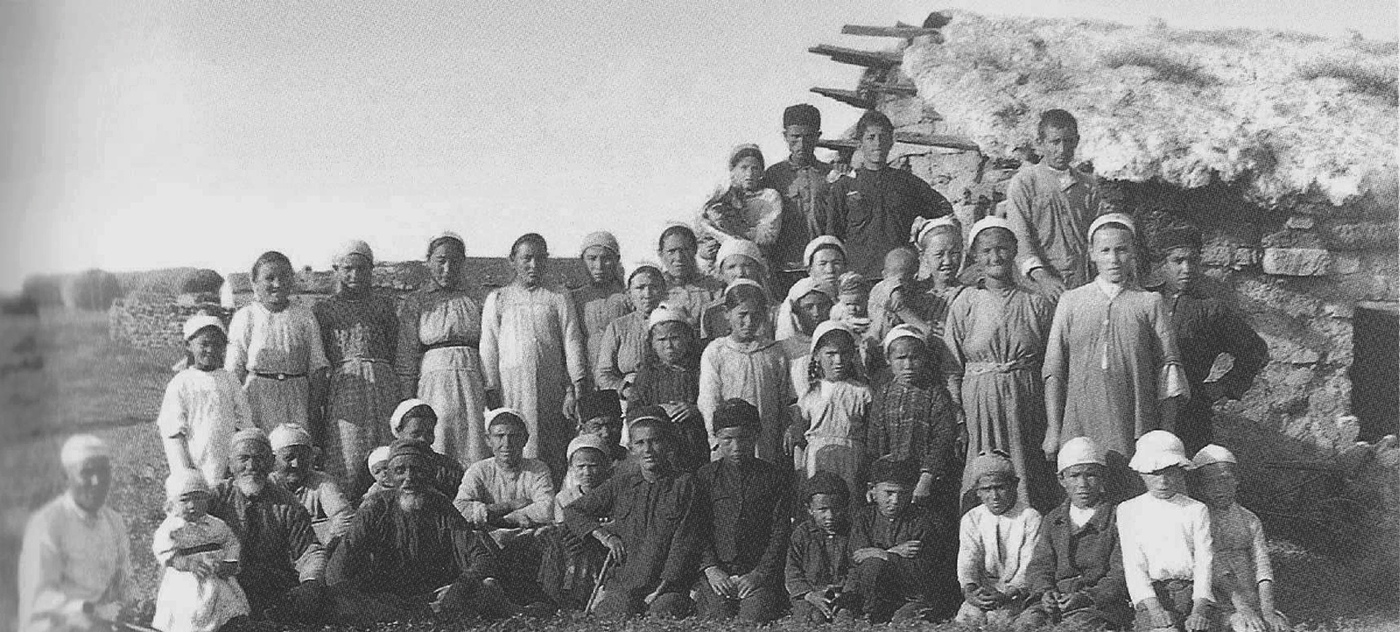
Unlike other deportees who were permitted to return to their homes during the Khrushchev thaw in the late 1950s, Crimean Tatars were deliberately forced to stay in exile. They were deprived of the right to return to Crimea until the late 1980s. When the majority of Crimean Tatars returned to their homeland, they faced structural resistance and discrimination. They found their homes occupied by settlers and their mosques converted into warehouses or destroyed. Crimean authorities refused to allocate land plots to returning Crimean Tatars, claiming there was no land available. To get a job or land, Crimean Tatars needed a residence permit – propiska. To get a propiska, you needed a house. To build a house, you needed land. Without the state's help, the returnees were stuck in a circular trap. Consequently, many Crimean Tatars started building temporary small structures in the 1990s and early 2000s on samozahvaty – so-called self-settlements without access to running water, electricity, or basic infrastructure.
The 2014 annexation of Crimea by the Russian Federation caused another round of displacements, criminalizing Islamic practices and labeling believers as terrorists. The tactics used by the occupation authorities are designed to instill fear and force the population back into exile. FSB and Special Forces keep conducting unfounded searches of private homes of Crimean Tatars, usually at 4:00 am, often planting prohibited religious literature to justify arrests. Membership in organizations like Hizb ut-Tahrir, legal in Ukraine and much of the world, is used to hand down prison sentences of 15 to 20 years for terrorism, despite no evidence of violent intent. Citizen journalists – people filming arrests and court hearings have become the primary targets of the regime. As of January 31, 2023, there are 196 Crimean Tatar political prisoners held by Russia, according to updated data from the Crimean Tatar Resource Center.
In the face of physical and legal erasure, Crimean Tatars have turned to the digital world to preserve their identity and sovereignty. Platforms like Facebook, Instagram, and Telegram have become the new front lines of resistance. The recorded house raids provide evidence of human rights violations. However, this activism comes at a personal cost. The possession of prohibited literature or even a post on social media can lead to a terrorism charge. Yet, the Crimean Tatar resistance persists, preserving identity and asserting the fundamental right to live on our land. The story of the Crimean Tatars is a universal example of the Indigenous fight against settler-colonial erasure. It is a struggle that emphasizes that land is more than property, it is the repository of language, memory, and belonging.
As we commemorate the victims of the 1944 Soviet genocide against the Crimean Tatars, we must also amplify the voices of those currently living under occupation. The international community cannot remain silent while the same patterns of 1783 and 1944 are repeated in the 21st century. Documenting violence and supporting digital activism are not just acts of survival but they are assertions that the Crimean Tatar people will never be erased from history.
References
Crimean Tatar Resource Center. 2023a. “During the Occupation of Crimea, 277 People Were Prosecuted in Criminal Cases – CTRC.” Accessed May 11, 2026. https://ctrcenter.org/en/during-the-occupation-of-crimea-277-people-were-prosecuted-in-criminal-cases-ctrc
Crimean Tatar Resource Center. 2026b. “About Crimean Tatars.” Accessed May 11, 2026. https://ctrcenter.org/en/o-krymskih-tatarah
Finnin, Rory. 2022. Blood of Others: Stalin’s Crimean Atrocity and the Poetics of Solidarity. Toronto: University of Toronto Press.
Fisher, Alan W. 2014. The Crimean Tatars. Stanford, CA: Hoover Press.
Kovach, Margaret. 2021. Indigenous Methodologies: Characteristics, Conversations, and Contexts. 2nd ed. Toronto: University of Toronto Press.
Smith, Linda Tuhiwai. 2021. Decolonizing Methodologies: Research and Indigenous Peoples. 3rd ed. London: Zed Books.
Verkhovna Rada of Ukraine. 2015. Resolution No. 792-VIII, “On the Recognition of the Genocide of the Crimean Tatar People.” November 12, 2015. Accessed May 11, 2026. https://w1.c1.rada.gov.ua/pls/zweb2/webproc4_2?id=&pf3516=2493%D0%B0&skl=9