Ukrainian Culture: Four Years of Resistance and Resilience
5 March 2026
Panel orgnaised by the Danylo Husar Struk Program in Ukrainian Literature, CIUS, University of Alberta; co-sponsors: Petro Jacyk Program for the Study of Ukraine, University of Toronto; Department of Slavic & East European Languages & Cultures, University of Toronto.
Ukrainian Culture: Four Years of Resistance and Resilience
Friday, February 27, 1:00-3:00 p.m.
Munk School of Global Affairs & Public Policy, University of Toronto, 1 Devonshire Place, Room 108N.
Attendance: 52 (full)
Event was moderated by Taras Koznarsky
In the wake of Russia's relentless destruction and propaganda war, Ukraine's vibrant cultural environment has become a crucial weapon in defending the Ukrainian nation. The panel featured leading Ukrainian voices and their initiatives in the visual arts, media, humanities, and book culture aimed at protecting and promoting Ukrainian identity, language, historical memory, and artistic legacies.
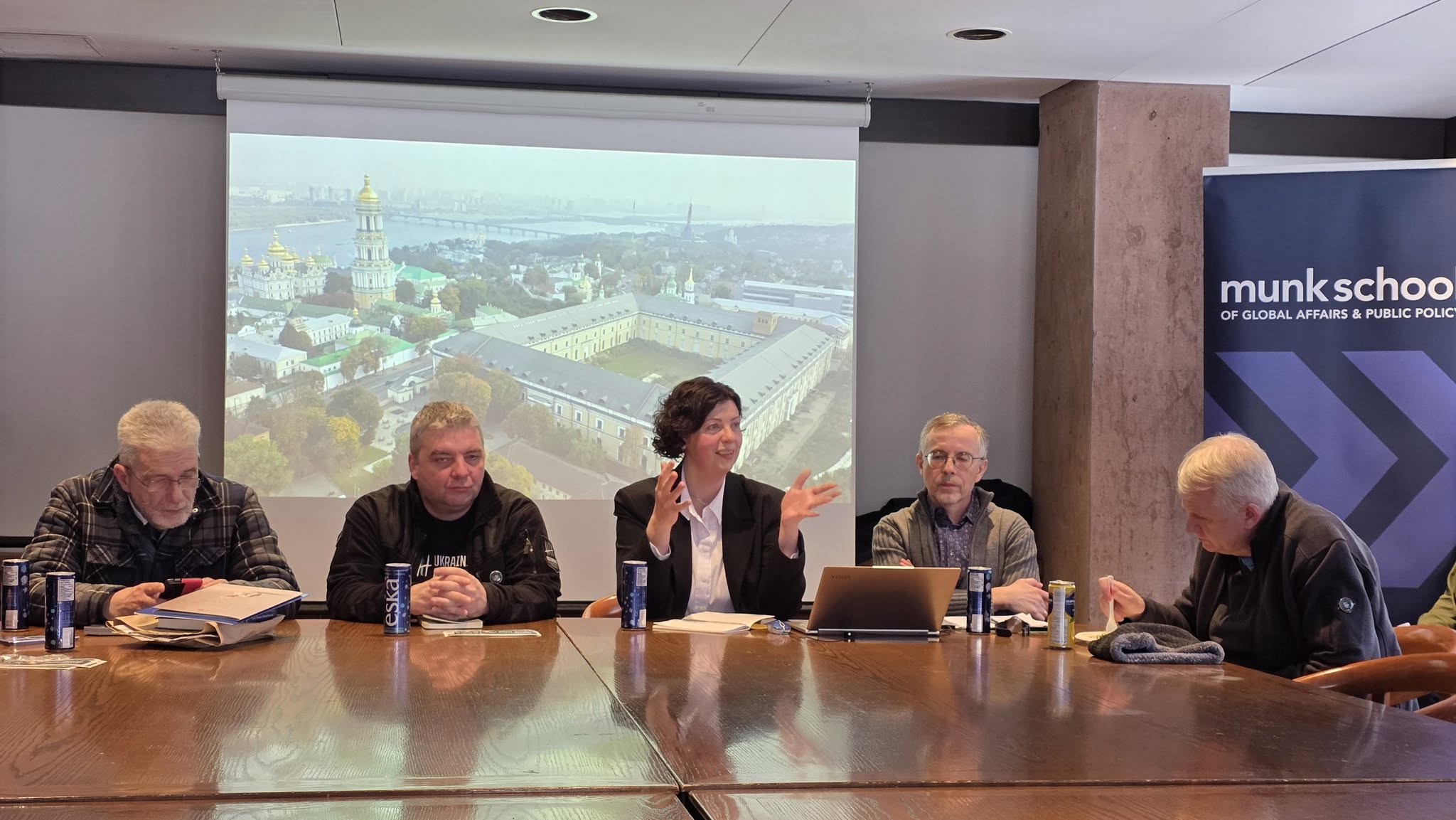
Olesia Ostrovska-Liuta, the Director General of the National Art and Culture Museum Complex “Mystetskyi Arsenal” (Art Arsenal) shared her experience as the leader of a major Kyiv cultural institution during the time of war. She spoke about concerns at the beginning of the war: focusing on protection of art collections, personnel, and cultural practices, measures against the potentially catastrophic scenario: the invasion of Kyiv and looting (something that happened Mariupol and Kherson, the cities that were occupied by Russians).
Once the invaders were repelled from Kyiv in March 2022, the efforts of Arsenal shifted to practices that create spaces to come together and share ideas, experiences, and celebrate Ukrainian cultural heritage. Arsenal also sees its mission in collecting evidence against the crimes of the Russian regime through artifacts and testimonies. Olesia described the challenges museums face. Incessant rocket and drone attacks endanger visitors (required to proceed to shelters) and jeopardize buildings and artifacts. Some events have had to be relocated to bomb shelters. Power outages due to the Russian targeted destruction of civilian infrastructure led Olesia and her team to innovative solutions such as the exhibit “Coexisting with Darkness” that utilizes the minimal amount of electricity possible, employing LED-lights, integrating LED-lighting into the surfaces of artworks, and creatively treating darkness as part of the exhibition environment. Arsenal exhibits creatively address topical themes: food security through art that focuses on earth and soil (“The Heart of Earth”). The most recent exhibit presented the life and legacy of the great 20th century poet Vasyl Stus, a political prisoner who perished in a Soviet forced labor camp at the age of 47. Olesia also described how Arsenal expands its reach by 3D tours and online and interactive programming that provides access to everyone who cannot travel to Kyiv and engages children and young adults in Ukraine and abroad with Ukrainian culture. In addition to art exhibits and lectures, Art Arsenal runs the largest and widely celebrated annual Book Arsenal, a festival of book publishers, authors, and readers that draws tens of thousands of visitors, including Ukraine’s president and cultural and political leaders.
Journalist Andriy Kulykov is known for his work for the BBC, involvement with Rukh and the Ukrainian Language Society at the onset of Ukraine’s independence, the Freedom of Speech talk show on ICTV, and recently, as a co-founder of Hromadske Radio where he actively contributes, and the Head of the Journalism Ethics Commission. A connoisseur of theater and music, Andriy described a vibrant theater scene in Kyiv, showcasing several publications (including the high-quality quarterly journal “Ukrainian Theater” that features diverse theatrical productions in Kyiv and Ukraine). He also spoke of initiatives of the Borys Lyatoshynsky Society: publishing the biography of this remarkable composer born in the Russian empire, who experienced the trauma of being a Ukrainian artist under the scrutiny and pressures of the Soviet state. The first of the three projected volumes was published under the title “The Time Through the Looking Glass.” A recent revival of interest in Lyatoshynsky resulted in the publication of scores of his previously suppressed works and the staging of his opera “Golden Crown” in Lviv in 2025. Andriy, whose hobbies include translating rock lyrics into Ukrainian, also described an active rock scene in Ukraine, including a new rock opera “The Myth of the Cossack Vasyl’ Slipak” (a Ukrainian baritone opera singer who volunteered to the Ukrainian Armed Forces at the beginning of the Russian hybrid war in the Donbas region in 2014 and died at the front defending Ukraine).
Maksym Butkevych is a Ukrainian journalist, human rights activist, and a war veteran with a degree in philosophy from Kyiv National Taras Shevchenko University, and an MA in anthropology from the University of Sussex. At the beginning of the Russian full-scale invasion of Ukraine, Maksym joined the Ukrainian Armed Forces and was captured by the Russians at the front. Under fabricated criminal charges, he was sentenced to 13 years and spent 2 years and 4 months in prison in occupied Luhansk. He shared his experiences of the dehumanizing environment designed to annul prisoners’ human agency, dignity, and erase their Ukrainian identity (for example, by prohibiting speaking in Ukrainian among the prisoners, forced memorization and singing of the Russian anthem). Despite isolation from the outside world, physical and mental abuse, Maksym spoke of his experience as a time of philosophical reflection on the fundamentals of human existence and his own anthropological fieldwork from within the walls of prison (as if through the lens of Foucault’s famous Discipline and Punish). While he was in prison, a collection of his articles, reflections, and letters was published in German and French. Maksym shared a story of the prison library consisting of mostly Soviet-era books that included some Ukrainian classics and translations from foreign languages, which provided a modicum of comfort and connection to Ukrainian prisoners. However, when a Luhansk Republic “human rights ombudsman” made a pro forma visit to the prison and the question of having a choice to read in one’s native tongue was raised, the Ukrainian books were later removed and destroyed. Maksym spoke of the exhilaration of being released from prison and returning to Kyiv after years in an information vacuum, and finding a vibrant civil society, resilience, and determination to fight the Russian invasion. In 2025, Maksym was awarded the Vaclav Havel Prize by the Parliamentary Assembly of the Council of Europe. He co-founded a Charitable Foundation “Principle of Hope” and shared his efforts to support Ukrainian POWs and civilian prisoners (such as in Crimea), through a website and human rights platform https://people1st.online/.
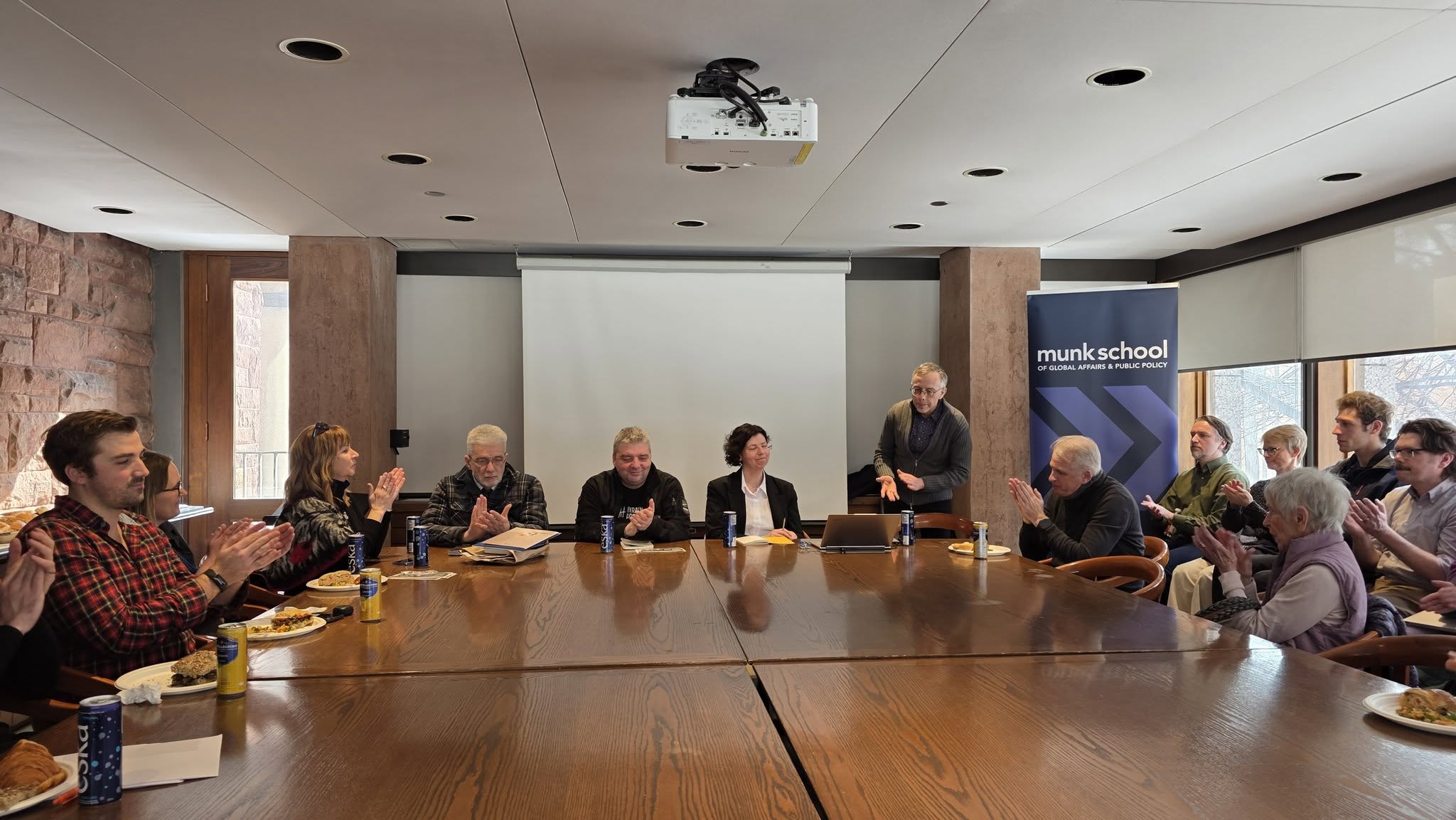
As the Russian regime continues its genocidal attack, murder, and destruction, and the Russian propaganda and war machine tries to deny the existence of Ukraine as a sovereign nation and the Ukrainian identity, Ukrainian culture remains a key weapon of resistance and a beacon of resilience and hope to citizens of Ukraine and of the world. The speakers served as remarkable cultural ambassadors of Ukraine and elicited a lively discussion from an inspired audience.
Please note: This event was not recorded.