Anastassia Voronova
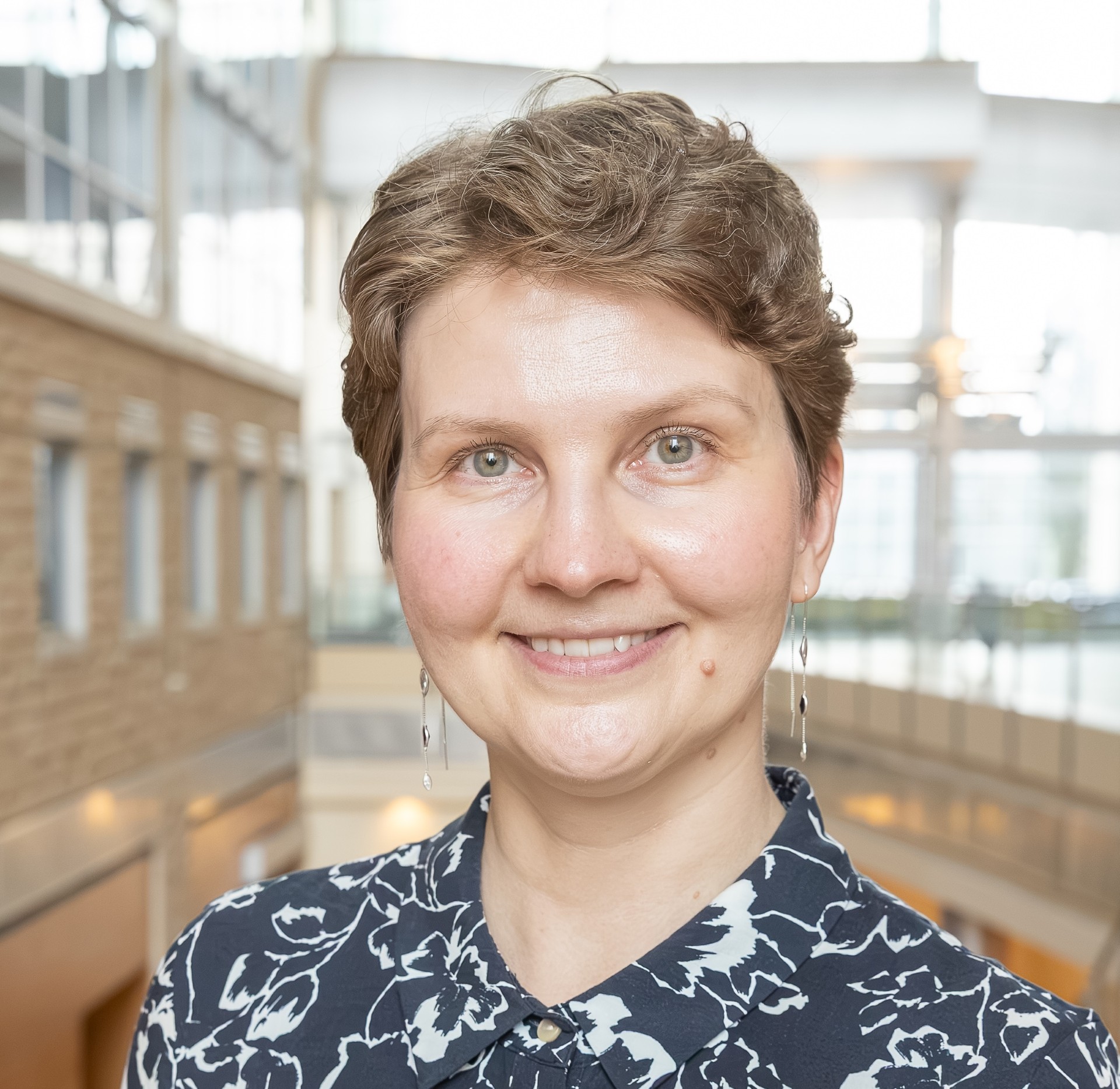
Anastassia Voronova
Ph.D., University of Ottawa
Adjunct Associate Professor
Office: Department of Medical GeneticsLocation: 8-43A Medical Sciences Building
Laboratory: 8-43 Medical Sciences Building
voronova@ualberta.ca
Research:
Dr. Anastassia Voronova's research program investigates how the brain's resident neural stem cells can be harnessed to regenerate damaged or diseased brain tissue, with a particular focus on the generation of oligodendrocytes, the cells responsible for producing myelin. Her lab studies how neuronal chemokines, especially fractalkine signaling through its receptor CX3CR1, regulate the differentiation of neural stem and oligodendrocyte precursor cells into oligodendrocytes, and has shown that fractalkine treatment promotes remyelination and reduces inflammation in mouse models of multiple sclerosis. A complementary line of research explores the chromatin regulator ANKRD11, the gene responsible for the neurodevelopmental disorder KBG syndrome, using mouse and human iPSC-derived models to understand its role in nervous system development and function. The Voronova lab further examines how genetic variation contributes to multiple sclerosis progression and how neural stem cells communicate with microglia to shape neuroinflammatory responses, applying state-of-the-art techniques such as single-cell and spatial transcriptomics (MERFISH), hiPSC-derived organoid models, and pre-clinical mouse models of MS and KBG syndrome. By tracing the fundamental mechanisms of brain development and repair, Dr. Voronova's work aims to translate these discoveries into regenerative therapies for neurodevelopmental and neurodegenerative disorders.