
Dig Deeper | Tartuffe
Exclusive Online Content
- PLAYWRIGHT BIO: Molière
- DIRECTOR'S NOTES | by Kathleen Weiss
- 'CANCELING' MOLIÈRE: The Early History of Tartuffe | an article by Stefano Muneroni
- STATE RELIGION, ASSUMED MORALITY, AND TODAY | an article by Gemma Lissoway
- INTERVIEW WITH SARAH ROSE, MFA Theatre Practice Candidate and Assistant Director of Tartuffe
- COMPANY BIOGRAPHIES
- VIEW THE EXPANDED PDF PLAYBILL
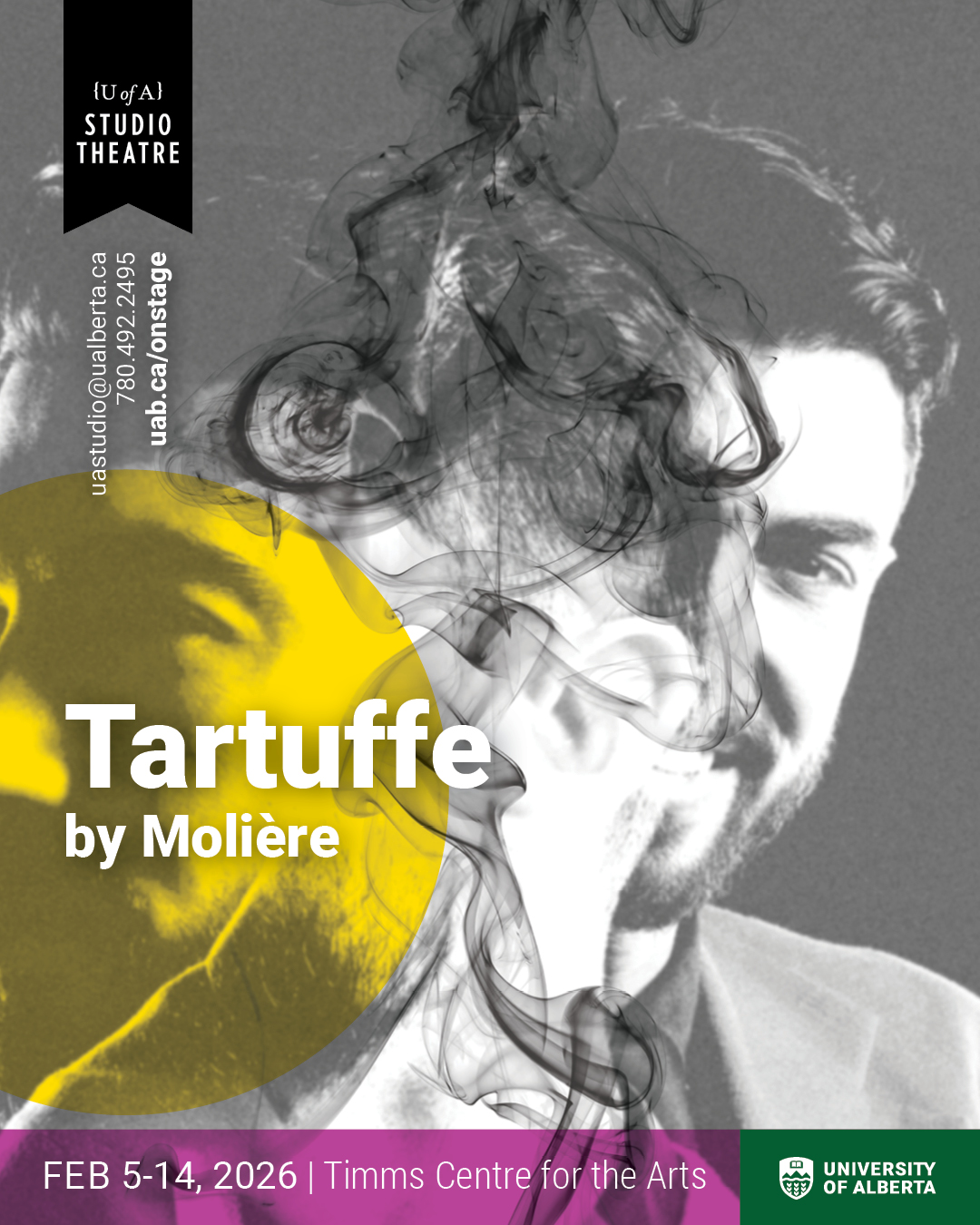
PLAYWRIGHT BIO | Molière
Born Jean-Baptiste Poquelin, Molière (1622-1673) is France’s most famous comedic playwright. He was born into a wealthy family in Paris, but gave up his station to pursue a life in the theatre. Molière was a controversial theatre figure within the French Neoclassicism period; continuously critiqued by the Catholic Church and French nobility, his favour with King Louis XIV was likely the only thing that prevented his excommunication. An actor for 13 years before taking up playwriting, he continued acting until he suffered a hemorrhage onstage during a performance of his play, The Imaginary Invalid, and he died hours later due to complications with pulmonary tuberculosis. Because of the stigma against actors, he was initially denied a Christian burial. It required the King's personal intervention for Molière to be laid to rest in a private ceremony held at nighttime.
His plays include The Misanthrope (1667), The School for Wives (1662), The Miser (1668), and Don Juan (1665), among many others.
Tartuffe was first performed in 1664 at the Palace of Versailles, and was met with backlash from the Catholic Church. The play was banned twice before the third and final rewrite was allowed to be publicly performed in 1669 at the Palais-Royal theatre. This is the version that was published and continues to be performed to this day.
.jpg)
DIRECTOR'S NOTES | by Kathleen Weiss
“Noblemen, pretentious women, cuckolds, and doctors have all submitted to being put on the stage and pretended to be amused as everyone else in the way I have portrayed them, but the hypocrites would not stand for a joke; they took immediate alarm and found it strange that I had the audacity to make fun of their antics. They united in furious attacks on my play.” Molière
This quotation is from Molière’s preface to the edition of 1669, in which he argues against the play’s detractors. It seems that hypocrites cannot bear to be made fun of, not in 1669 or in 2026. Surely it is the duty of comedy to do exactly that so we dare to take on the hypocrites of own time through the clever implications of a comedy from 350 years ago. Comedy corrects men’s errors in the course of amusing them, and never have we lived in a time that more urgently needs a public outcry over the absurd antics of hypocrites and tyrants.
TARTUFFE was the most frequently performed of Molière’s plays in his lifetime and afterwards; indeed there are two productions currently running on Broadway. It was extremely controversial in its own time, offending powerful people and was supressed for a five year period. It was only the direct endorsement of King Louis XIV that cleared the way for its public performance. Moliere’s gratitude is expressed in fulsome praise at the end of the play when all the characters salute the “wise and benevolent” King.
I chose this translation by Christopher Hampton, written in iambic pentameter, because it honors the spirit of a verse play but through an English language lens. I appreciated this versions’s dignity welded to absurdity.
I am a director who relishes a play that can be fulfilled with a highly theatrical style featuring abundant physicality. Luckily, my cast, the graduating BFA Acting class of 2026, are exceptional physical actors with great training, inventiveness and dedication. Working with them has been a joyful experience.
In creating the rich, indulgent world of Orgon’s spoiled family, I have had amazing support from a brave band of very talented artists; extraordinary set and lighting designer, Brock Keeler, who completes his MFA thesis in Design with this show, cognoscente of fabric and fashion, Robert Shannon, and sound designer Vale de la Torre Villaseñor. I also wish to acknowledge the contribution made to the production by vocal coach Josh Meredith and movement coach Marie Nychka.
A comedy only really makes sense when we can include the audience in the joke so we welcome our audience with open arms. We are beyond thrilled to share our work with you in person.
'CANCELING' MOLIÈRE: The Early History of Tartuffe
Tartuffe was written in 1664, at a time when a play could animate great public debates, destroy an artist’s career, and provoke threats on a playwright’s life. The first incarnation of the play was staged at Versailles for the monarchs and the court; however, news of the story and its title character spread like wildfire, igniting a violent reaction from the religious establishment. Tartuffe proved to be a dangerous play for Molière to stage, even though it was also his greatest box-office success. In a pamphlet published in 1664, Father Pierre Roullé argued that Molière should be burned at the stake for offending the Catholic Church. Understanding the gravity of the situation, Molière wrote a heartfelt appeal to King Louis XIV, with whom he enjoyed a friendly relationship, to denounce these attacks and make a case for his play. Molière suggested that if the public saw Tartuffe, they would understand that his intentions were pure: to "ridicule the vices of my age [...] decry the hypocrites, and expose plainly the grimaces of these ultra-godly people." The attacks did not stop even after he changed the title and rewrote Tartuffe as a more secular character. In February 1667, Molière wrote another letter to the King asking for protection and even threatening to stop writing: "I must no longer think of writing comedies, if the Tartuffes should gain the day." The play was finally staged in 1669 with the King’s support, and Molière wrote a final letter to Louis XIV thanking him for "the great resurrection of Tartuffe." When the play was finally published that year, Molière was ecstatic that the public could finally read and watch his work, but he also felt compelled to address the defamation campaign and the personal toll it had taken. In his Preface, he takes one last jab at the hypocrites, reminding them that the very purpose of comedy is to poke fun at society—to educate while entertaining. Molière’s life is a testament to resilience and artistic defiance. Writing against the backdrop of France’s burgeoning absolutism, he successfully spoke truth to power and became the leading playwright of his generation.

Article by: Stefano Muneroni
Nagler, A. M., editor. A Source Book in Theatrical History. Dover Publications, 1959.
Molière. Tartuffe and Other Plays. Translated by Donald M. Frame, Signet Classics, 2015.
State Religion, Assumed Morality, and Today
What happens when religion becomes conflated with morality? This is the question Molière examines in Tartuffe, directly engaging with Catholicism as a state religion in 1600s France. Following the French Wars of Religion (1562–1598), religious toleration was granted to the Huguenots through the Edict of Nantes (1598) (“French Wars of Religion”). However, this was revoked in 1685 by King Louis XIV via the Edict of Fontainebleau—an explicit legal action against Protestantism in favor of Catholicism. This conflation of religion and state law led to an assumed morality for certain religious groups, Catholics in particular, and the persecution of other faiths deemed "amoral."
The title Tartuffe; Or, the Hypocrite refers to a main character who preaches piousness while simultaneously acting as a criminal and predator. Throughout the play, Mme. Pernelle and Orgon insist upon his morality, citing his religious devotion and supposed charity (Molière 1.1, 1.5). They acknowledge his ostentatious behavior yet make excuses for him due to his position as a "man of God." Because religion played such a pivotal role in the identity and social climate of 17th-century France, the church functioned as a community hub. Characters trusted those they worshipped with, assuming they shared the same moral values. This is how a state religion reinforces itself: it naturalizes the act of worship as an inherently moral act.
What makes Tartuffe relevant today is its strict condemnation of those who hide behind religion to act solely in self-interest. In an era of radicalization and online echo chambers, political leaders build followings by "moralizing." By appearing to share the values of their target demographics, they cultivate die-hard bases for their own advantage. Implicit trust based on assumed morality remains a key factor in modern political spheres, and religion remains a central pillar of that trust.
Critiquing pundits who misuse religion is often difficult because it is frequently misconstrued as a critique of religion itself. Molière faced this exact issue; in criticizing Tartuffe’s behavior, he was accused of attacking the Catholic Church, leading to bans on two different editions of the play (“Molière”). However, as Cléante says, “Don’t fall for hypocrites; but, equally, don’t attack true devotion” (Molière 5.1). Molière is not condemning religion outright; he is condemning the weaponization of faith to serve hypocritical desires—a message that rings true today. Through an examination of the conflation of morality and state religion, the relevance of Tartuffe comes to light: by utilizing religion to establish assumed morality, hypocritical figures can build trusting followers to serve their own interests. This is the central criticism of institutional religion Molière enacts in his play.
Article by: Gemma Lissoway
Works Cited:
Molière, Tartuffe, translated by Christopher Hampton, 1983.
"Molière." Britannica Academic, Encyclopedia Britannica, 19 Feb. 2025. academic.eb.com/levels/collegiate/article/Moli%C3%A8re/108735. Accessed 26 Jan. 2026.
"Wars of Religion." Britannica Academic, Encyclopedia Britannica, 25 Mar. 2016. academic.eb.com/levels/collegiate/article/Wars-of-Religion/473183. Accessed 22 Jan. 2026.
Wikipedia contributors. "Edict of Fontainebleau." Wikipedia, The Free Encyclopedia. Wikipedia, 19 Dec. 2025. Accessed 22 Jan. 2026.
---. "French Wars of Religion." Wikipedia, The Free Encyclopedia. Wikipedia, The Free Encyclopedia, 30 Dec. 2025. Web. 22 Jan. 2026.
INTERVIEW WITH SARAH ROSE | MFA Theatre Practice Candidate and Assistant Director of Tartuffe
Stefano: Hi Sarah, tell us a little bit about yourself and how you got involved with this production of Tartuffe.
Sarah: Thanks so much for this question, Stefano! I am a working director and educator with a strong interest in the intersection of heightened text and physical acting. I recently joined the Department of Drama as an MFA candidate under the supervision of Kathleen Weiss, director of Tartuffe. Assisting Kate on this production has been a vital part of my developing practice and research, and a real privilege given her deep expertise in physical acting tools.
Stefano: What did the rehearsal process reveal about this play that you did not know at the beginning?
Sarah: What surprised me most is how fundamentally ensemble-driven Tartuffe is. The play only works through the precision, generosity, and collective intelligence of the full company. And of course, how genuinely funny it is when that ensemble is firing together.
Stefano: Tartuffe was deemed a dangerous play when it was first produced in the seventeenth century. Is that still the case?
Sarah: Mocking religious hypocrisy is no longer dangerous in the same way. That said, the play still exposes a very contemporary danger: our willingness to surrender judgment to charisma, ideology, and moral certainty.
Stefano: Why do you think Tartuffe continues to be a favorite of audiences everywhere?
Sarah: Because it is both razor-sharp and deeply human. Tartuffe skewers hypocrisy with extraordinary wit while recognizing our vulnerability to charm, fear, and self-deception. Audiences laugh, recognize themselves, and leave unsettled by how little has changed.
Stefano: What is next for you as a director?
Sarah: Next, I will be directing Sanctuary City by Martyna Majok in the Department of Drama’s Bleviss Lab Theatre in March 2026, with advising by Kathleen Weiss.
Interview by: Stefano Muneroni
The COMPANY | Alphabetically by last name
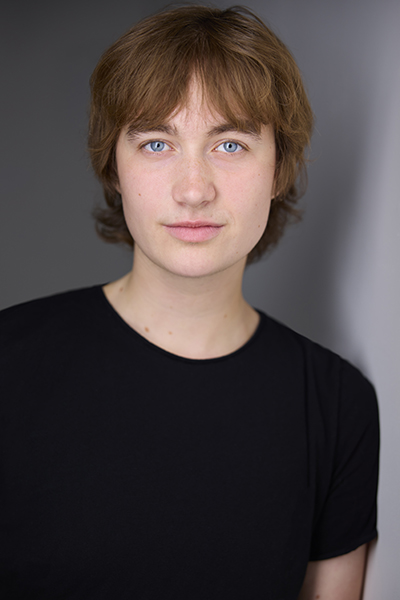
Sable B. Boltz | LAURENT
Sable B. Boltz is honored and overjoyed to perform in Molière’s Tartuffe as his second project on the Studio Theatre stage. His training has imbued him with a love for dance, physical theatre, and clown, which he has had the pleasure of integrating into this performance. Onstage, you may have seen Sable in The Winter’s Tale, The Cherry Orchard, Bright-Eyed Portraits, antigone lives* (University of Alberta), White Christmas (NUOVA Vocal Arts), Lemon (ReadyGo Theatre), and That’s The Spirit! At NextFest, co-created with Gabi Stachniak. Offstage, Sable is a writer, sewist, and photographer. He can be found reading poetry at open mic nights, taking pictures for local bands, and finding new organizational methods for his fabric scraps.
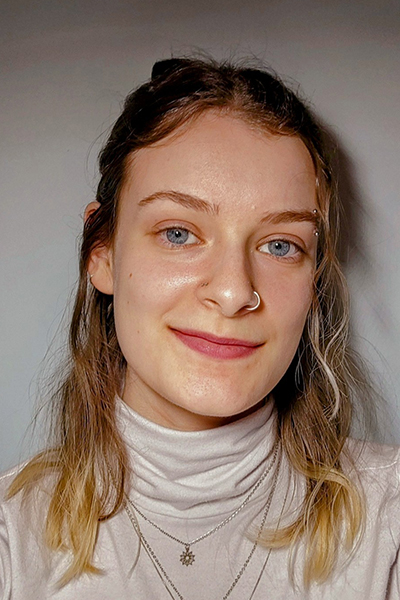
Sunny Bossert | Stage Manager
Sunny Bossert (she/her) is an emerging artist and stage manager in Amiskwacîwâskahikan, Edmonton. There is no better place than Edmonton to study theatre and explore the network of small community businesses that the city has to offer! Since she was young she’s felt drawn to the performing arts, and stage managing is her dream job for supporting and creating live performances. Next year Sunny will be graduating from the UofA with a BFA in Drama Production majoring in Stage Management. It has been a joy working on a classic comedy like Molière’s Tartuffe. Thank you to all the friends and patrons who are here to enjoy the work of this passionate group of artists!

Emma Church | Assistant Stage Manager

Vale de la Torre Villaseñor | Sound Designer
Vale is a multidisciplinary technician, on their last year of the BFA Production - Technical Production at the University of Alberta. When they’re not working you can find them curled up in bed binging a show or doing some sort of craft.
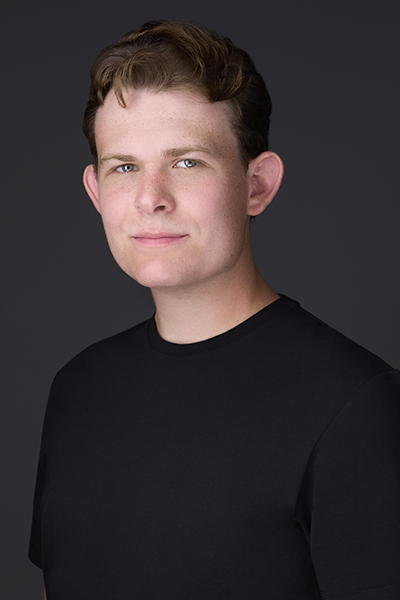
Andrew Domanski | DEMIS
Andrew Domanski is excited to play the Character Demis in tonight's performance of Tartuffe! The inclusion of this classical comedy in his graduating studio theatre season is something he is quite prepared for, after four years of participation in a variety of comedic plays and musicals at the Edmonton Fringe Festival. Selected credits from his past include The Noteworthy Life of Howard Barnes (Light in the Dark Theatre), Practically Perfect Pitch (Top Bunk Theatre) and Speed: The Nineteen Forties Radio Drama (Cousins in Law Productions). Andrew hopes to bring smiles with his performances both during this show and after his rapidly approaching graduation!

Travis Edwards | VALERE
Travis is excited to be graduating from the BFA program at the University of Alberta. Hailing from a small farming community in Southern Alberta, Travis has previously trained with Rosebud Theatre and School of the Arts, obtaining a two-year Diploma in Acting. Rosebud Theatre select credits include The Sound of Music, and most recently Dream: A New Canadian Musical (Understudy). Other select credits include Canadian Badlands Passion Play (Badlands Amphitheatre), The Cherry Orchard, The Winter’s Tale (University of Alberta), and most recently The Moors (Studio Theatre). Love to Lacey, and many thanks to family and friends for all their support.
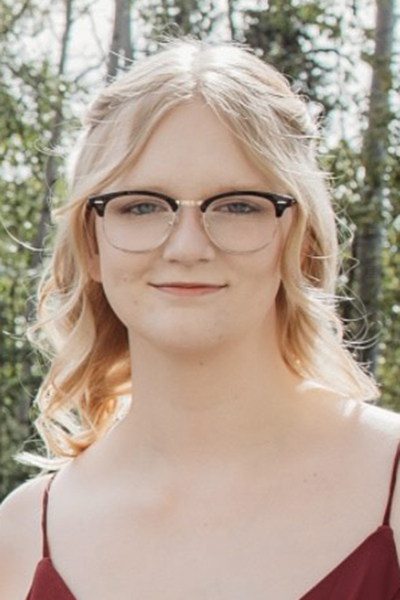
Kahlan Fornara | Assistant Stage Manager
Kahlan is originally from northern BC and is a student at the University of Alberta in the BFA in Drama Production - Stage Management program. Some of the shows she has been a part of are: Wild Fire (U of A 2024 sound operation), Tom At The Farm (U of A 2025 ASM), The Laramie Project (U of A 2025 backstage hand), A Gentlemen’s Guide To Love And Murder (Grindstone 2025 paint crew). Hyena’s trail (here for fear 2025 Stage Manager). Antigone (U of A 2025 Stage Manager) She would like to thank everyone for the opportunity to stage manage this show; she is thrilled to have a chance to learn and support it. Please enjoy the show!

Emma Hanley | Understudy for MARIANE
Emma is an actress originally from Saskatchewan and is currently completing her first year of university. She has been pre-accepted into the Bachelor of Fine Arts in Acting program for the 2026-27 year. Emma has participated in many plays at Saskatoon’s Barn playhouse and does
Irish dance outside of school. SHe is excited to be developing her craft through the performance chances and training that she will acquire through this degree and is grateful for the opportunity to be a part of this production.

Joshua Hope | TARTUFFE
Joshua Hope is an Alberta based artist, originally from Red Deer, Alberta (Treaty 6 and 7 Territory). His primary work as an artist has been acting, but additionally, Joshua has done a variety of fight coordination work for various companies in Edmonton and Red Deer, as well as some independent music co-writing/production. Additionally, Joshua is currently in the process of completing their BFA in Acting here at the University of Alberta. They have relished this opportunity to bring the world of Tartuffe to life, and they appreciate your support in coming to see this show!! Selected acting credits include: Sheep Play (New Works Festival), The Cherry Orchard, The Winter’s Tale (University of Alberta), antigone lives* (University of Alberta Studio Theatre). Selected fight coordination credits include: Romeo & Juliet, Riverona (Prime Stock Theatre), You Can’t Take It With You (Abbedam), I Inherited the Harvest (New Works Festival).
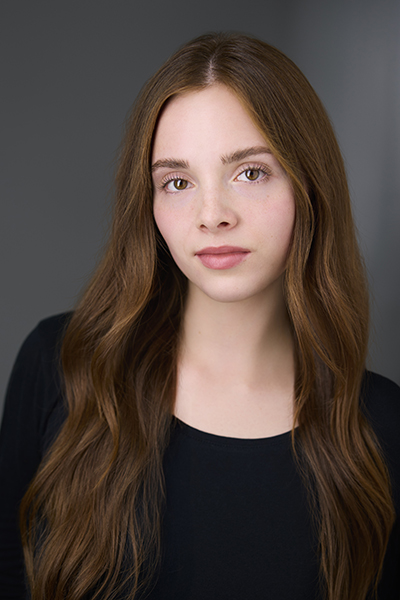
Lauren Johnsen | LOYAL
Lauren Johnsen is an Alberta-based theatre artist, currently in her fourth year of the BFA Acting program. She is grateful to get to work, create, and play on this land and is thrilled to perform on the Timms stage for her final year. Recent performance credits include: antigone lives* (Studio Theatre) Nose Dive (Play the Fool), The Last Perfect Game: The Jerry Stephenson Story (Edmonton Fringe), This is Not a Test (Collections Collisions/Mile Zero Dance), The Winter's Tale, and The Cherry Orchard (University of Alberta).
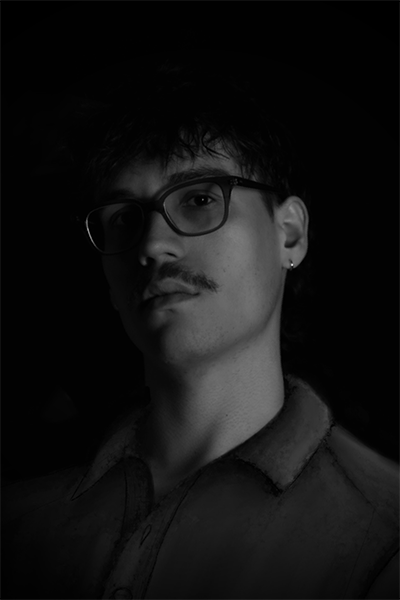
Brock Keeler | Set, Props and Lighting Design
Brock Keeler is an Edmonton-based theatre designer working in set, lighting, costume, and projected media. As a graduating MFA student, he is excited to share his thesis design for Tartuffe. He hopes audiences enjoy the play and the world that has been created. Recent credits include: Springboards New Play Festival (Set & Costume Co-Designer, WWPT), Through the Leaves (Costume, BLT), Indecent (Set, Props & Projection, Studio Theatre), Everybody (Lighting, Studio Theatre), The Circle (Lighting & Projection, BLT), and The Consul (Set & Lighting, Opera NUOVA). More at brockkeeler.ca

Tori Kibblewhite | FLIPOTE
Tori Kibblewhite is an emerging performer, producer, playwright, and multi-disciplinary artist based in Amiskwaciywâskahikan and is graduating with a BFA in Acting this spring. She has performed in festivals such as Skirtsafire, the Edmonton Fringe, Play the Fool, Nextfest, and The Kaleido Festival. They have a passion for new work, having written and/or produced several plays and clown shows. She co-founded Dog Bite Theatre Collective and currently serves as its Artistic Producer. Beyond theatre, she is a painter. Selected performance credits include: The Moors (Studio Theatre) Televangelists (Dog Bite Theatre), A Winter’s Tale (University of Alberta), what falls out of our brains… (Dog Bite Theatre & Good Women Dance), Working: The Musical (Citadel Theatre).

Abby Krushel | MADAME PERNELLE
Abby Krushel is an emerging artist originally from Tk'əmlúps (Kamloops, British Columbia). She is currently in her fourth year at the University of Alberta in the Bachelors of Fine Arts Acting program. She has had the privilege of training in various programs in British Columbia, Alberta and Ontario. Abby has also participated in workshops geared towards the development of new plays and was a part of the Postmarginal Edmonton workshop ‘Casting Across Differences’. Selected theatre credits include: The Shape of a Girl (Western Canada Theatre), Working: A Musical (The Citadel Theatre’s Young Company), The Winter’s Tale and The Cherry Orchard and antigone lives*(The University of Alberta).

Gemma Lissoway | Dramaturg
Gemma Lissoway (she/they) is a theatre practitioner based in Edmonton, Alberta. She is currently completing her BA Honours Degree in Drama and Film Studies.
She recently served as a Dramaturg for the Drama 457 production of Argonautika in 2025.
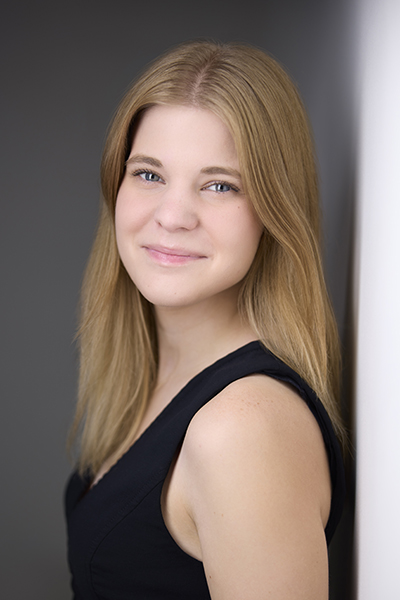
Caileigh Muilenburg | MARIANE
Caileigh Muilenburg is currently in her fourth and final year of her Bachelor of Fine Arts in Acting at the University of Alberta. Previously she attended MacEwan University where she graduated with a Diploma in Music Theatre Performance. Caileigh is passionate about the experience the audience has and helping to transport them to another world. She is especially interested in children's theatre as this brought her a lot of joy as a child and she now wants to pass that experience on to today's youth. Past credits include World Goes ‘Round (MacEwan University), The Drowsy Chaperone (MacEwan University), Once Upon a Mattress (Nuova Vocal Arts), and Between the Lines (Nuova Vocal Arts). She owes many thanks to her mom and dad who have supported her along the way. Instagram: caileigh_joy
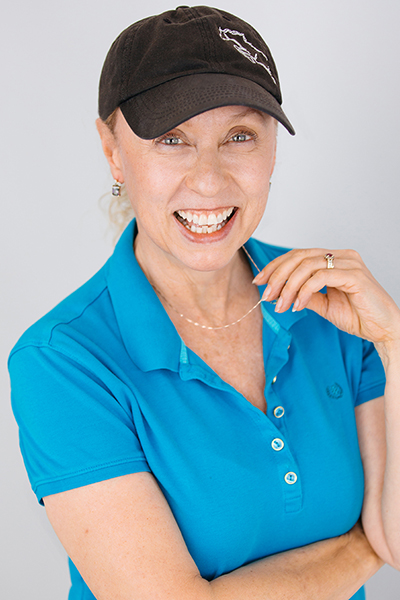
Marie Nychka | Movement Coach
Marie began her career as a dancer with such companies as the Royal Winnipeg Ballet, Ballet Brazil, and Ballet de Roma working across Canada and in Italy, Brazil, New York, Florida, and the Caribbean. She is also a former dancer with the Yevshan Ukrainian Folk Ballet Ensemble and the Pavlychenko Folklorique Ensemble. For more than thirty years she has been a freelance actor, director, choreographer, adjudicator, and teacher. She is a regular faculty member and choreographer for Nuova Vocal Arts and Edmonton Musical Theatre. She teaches in both the BA Drama and BFA Acting Programs in the Department of Drama at the University of Alberta where she has received several teaching awards including the prestigious William Hardy Alexander Award for Excellence in Undergraduate Teaching (2016). Marie has been nominated eight times and twice received the Elizabeth Sterling Haynes Award for Outstanding Choreography. She is the founder and was the Artistic Director of the Tavria Ukrainian Folk Dance Ensemble for many years. In 2016 Marie received The Nation Builders Award from the Ukrainian Canadian Committee for years of outstanding service to Ukrainian dance in Canada.
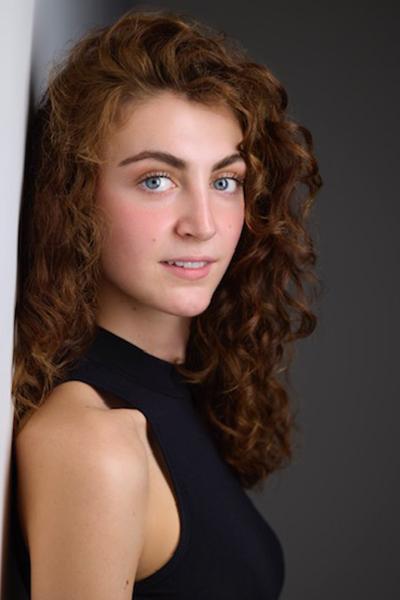
Katie O’Keefe | DORINE
Katie O’Keefe is in her last year of the BFA Acting program at the University of Alberta. Her home is in Springbank, AB, where she developed her love for the stage as an Irish dancer. Outside of school, she’s been working as an actress, choreographer, and puppeteer. She has a passion for physical comedy and has found a new love for Clowning. When she’s not on the stage or in front of the camera, she can be found dancing, writing songs on her guitar, or going on nature walks with her dog Levi. Enjoy the show!

Giulia Romano | Shadow Director
Giulia Romano (she/her) is a director, performer, creator, writer, and educator. Currently based in amiskwacîwâskahikan (colonially known as Edmonton), Giulia is a graduate of the University of Alberta, where she earned a Bachelor of Arts in Drama and a Bachelor of Education. She is also an MFA Directing Candidate at the University of Alberta.
A passionate theatre maker, Giulia has a deep affinity for new works, classical texts, devised creations, and movement-based, collaborative productions. Her directing practice is rooted in innovation, with a strong focus on developing and staging original pieces in close collaboration with emerging playwrights. At its heart, her work is about creating space for collective reflection, dialogue, and transformation. For her, the stage is not simply a place of performance, but a vessel for giving back

Sarah Rose | Assistant Director
Sarah Rose is a director and dramaturg who has worked internationally in New York (Off-Broadway), Toronto (Playwrights Guild of Canada; Shifting Ground Collective), and Vancouver (Pacific Theatre; Vancouver Fringe). Awards include the Eugene O’Neill Theater Center Scholarship, and BroadwayWorld Vancouver Awards for Best Director (Professional) and Best Play (Professional) for Danny and the Deep Blue Sea (Studio 16). Sarah is an alumna of the Advanced Directing program at the National Theater Institute, and holds a Bachelor of Arts from the University of British Columbia. A faculty member in Voice at the Vancouver Academy of Music S.K. Lee College, Sarah teaches and adjudicates across pre-college, collegiate, and graduate programs.

Robert Shannon | Costume Designer
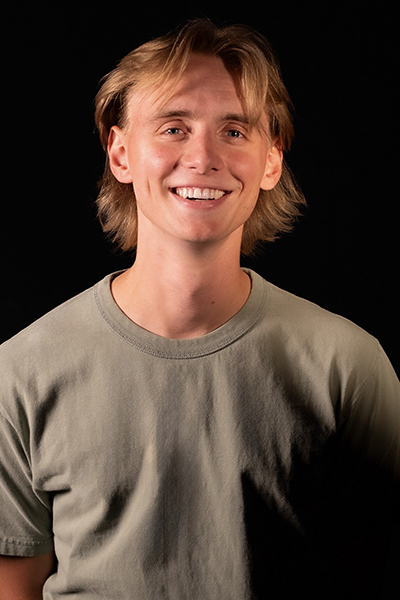
Liam Sievwright | ORGON
Liam Sievwright is an Edmonton (Amiskwacîwâskahikan) based actor currently attending the University of Alberta in the Bachelor of Fine Arts Acting program. His passion for performance continues to grow as he learns more and more about the world of the stage. Aside from acting, he has fallen in love with clown and movement and he can’t help but to bring his passion for both into everything he performs. Recent performance credits include antigone lives* (University of Alberta) Crossing The Line (Play the fool) and The Winters Tale (University of Alberta)
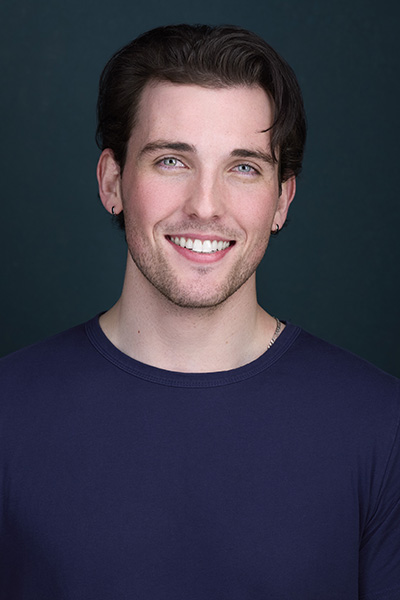
Benjamin Smith | Fight Director
Benjamin Smith (he/him) is a director and theatre educator from Fredericton, New Brunswick / Wəlastəkwewiyik. With an MFA in Directing from the University of Alberta, Ben has also trained with the Academy of Fight Directors Canada and Theatrical Intimacy Educators (TIE). He is currently the Associate Artistic Director of NUOVA Vocal Arts and teaches in the Musical Theatre Performance program at Grant MacEwan University.

Gabi Stachniak | ELMIRE
Gabi Stachniak is a multidisciplinary theatre artist residing on Treaty 6 Territory. Growing up in the dance world, her love of the arts has expanded into devising, producing, teaching, and performing. She’s had the honour of performing in festivals such as the Edmonton Fringe Festival, NextFest, Common Ground Arts Festival, and New Works. Recently she co-created and performed in the clown show, That’s The Spirit! and the dance show, what falls out of our brains and into the pockets of strangers at NextFest 2025. Other select performance credits include The Moors (Studio Theatre), The Winter’s Tale and The Cherry Orchard (University of Alberta), Cats and Other Miscellaneous Pleasures (Common Ground Arts Festival).
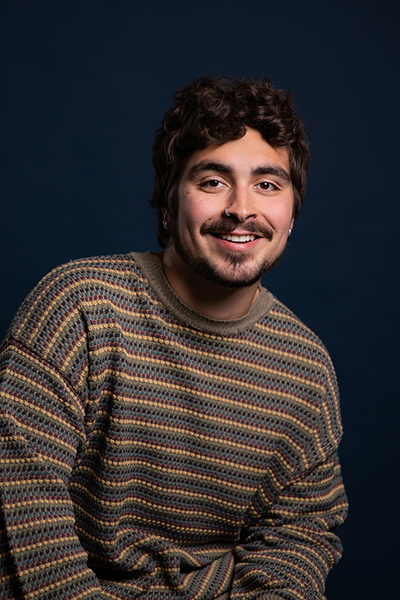
Colby Stockdale | CLEANTE
Colby Stockdale (He/Him) is an indigenous actor based in Amiskwaciwâskahikan. He began acting in high school and went on to do the Young Companies acting program at The Citadel Theatre. Over the past two summers Colby has spent time in Berlin studying dance and theater with Tanzfabrik, The English Theater, and Dock 11. He is currently studying acting at the University of Alberta through the BFA Acting program. His recent credits include: Thou Art Here Theatre’s Civil Blood: A Treaty Story, The Cherry Orchard, The Winter’s Tale, and antigone lives* at The University of Alberta.

Kathleen Weiss | Director
I have extensive background as a professional theatre director, artistic director, dramaturge, and playwright. My specialization is experimental or image-based theatre, innovative rehearsal processes, and new Canadian plays.
I trained as an actor initially and am grateful for the insight this gives me working with actors. I discovered early on in my career that I was happiest in the rehearsal room and desirous of overseeing the entire process involved in realizing a theatre production. I got an MFA in Directing from the University of British Columbia and worked as a director, dramaturge and playwright in Vancouver for many years. I am the former Artistic Director of Tamahnous Theatre and the Women In View Festival. My site specific production of THE HAUNTED HOUSE HAMLET in 1986 was acclaimed for its level of innovation. I have always pursued additional training, notably training with Linda Putnam each year from 1978-88 in workshops ranging from short 7 to 10 day intensives to longer 6 week courses travelling to study with Linda in Massachusetts. My second career has been as a professor and Department Chair at the University of Alberta, where I work with graduate directing students, and BFA acting students. The last Studio show I directed was DRACULA.
Published February 2026