Have you met… Dr. Qingna Jin?
Faculty of Education - 3 September 2026
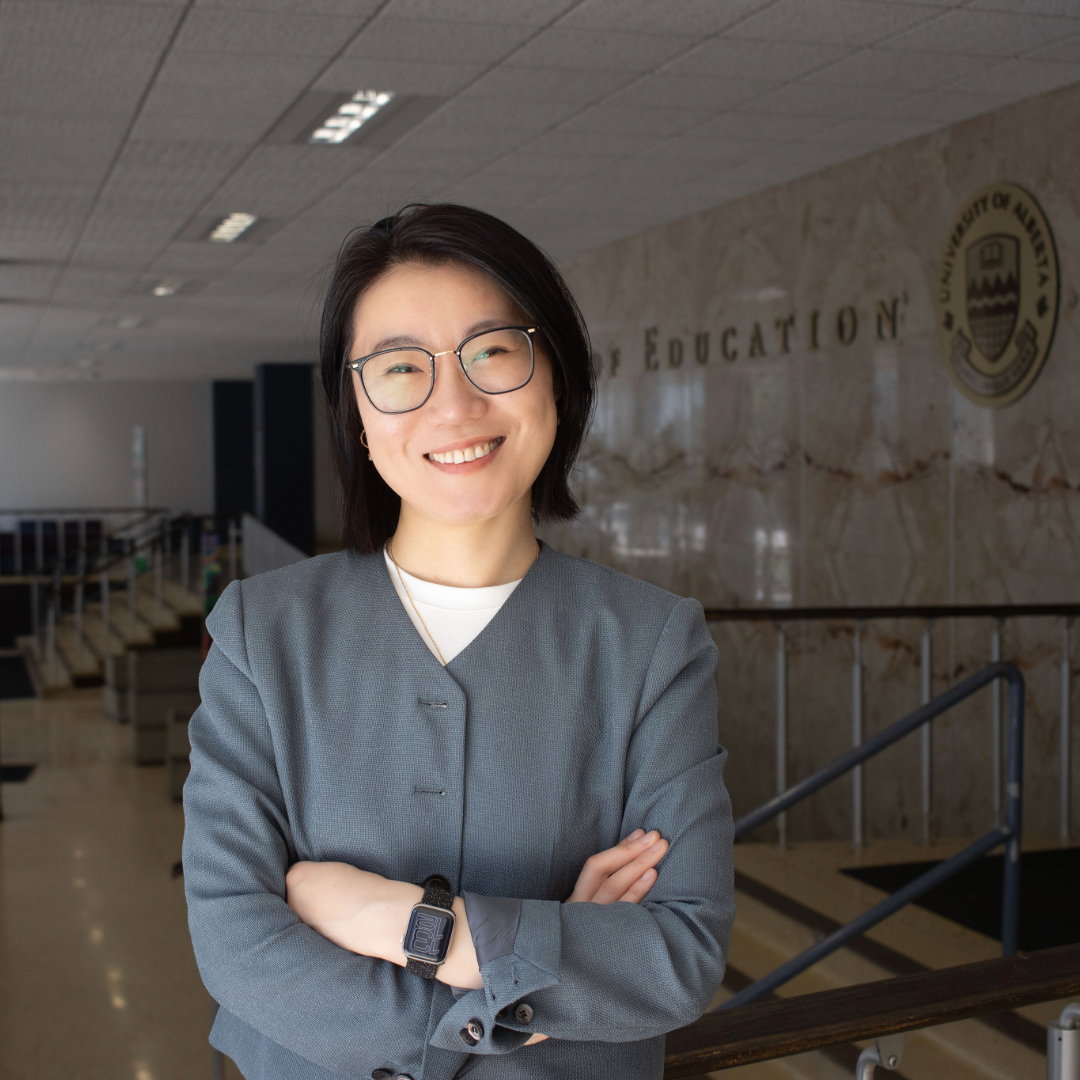 Dr. Qingna Jin (she/her) joined the Faculty of Education at the University of Alberta as an Assistant Professor of K-12 Science Education in July 2026. She earned her PhD in Science Education from the U of A and has returned to the Faculty after serving as an Assistant Professor of Education at Cape Breton University. Before entering higher education, she taught science in both elementary and secondary schools.
Take a few minutes to get to know Dr. Jin!
Tell us about yourself!
I am a science educator at heart. Before becoming a university teacher and researcher, I taught science at both the elementary and secondary levels. Those classroom experiences continue to shape how I approach teaching and research.
I am continually inspired by children’s curiosity and by their willingness to engage with difficult questions when adults give them the time, tools and trust to do so. My work now brings together science education, teacher education, sustainability, and information literacy. At the centre of these interests is a commitment to helping young people become thoughtful users of evidence and responsible participants in their communities.
What brought you to the U of A Faculty of Education?
The U of A has played a formative role in my academic and professional journey. I completed my PhD here and later worked with colleagues across the Faculty of Education and other disciplines. Many of my most meaningful scholarly relationships began here.
After gaining valuable experience at Cape Breton University, the opportunity to return to the U of A felt both like coming home and beginning a new chapter. I was drawn by the Faculty’s strength in science and teacher education, its collaborative research culture, and its commitment to working with schools and communities. I look forward to contributing what I have learned from different educational contexts while developing new partnerships in Alberta and beyond.
What are your current research interests?
My research has three closely connected areas. First, I study how children reason with evidence, construct and evaluate arguments, consider different perspectives, and develop agency as knowers in science and STEM classrooms.
Second, I am interested in children’s critical information literacy and metacognition in digital and AI-mediated environments. As generative AI makes it increasingly easy to produce fluent and convincing information, an important educational question is how children learn to examine sources, recognize uncertainty, verify claims, and decide what deserves their trust.
Third, I design climate and sustainability learning with teachers, students and community partners. This work helps young people understand complex environmental systems, weigh scientific and ethical considerations, and move from learning about problems toward informed civic and stewardship action. Across these areas, I am also interested in how teacher education can prepare educators to facilitate thoughtful dialogue around complex and sometimes controversial issues.
What inspired you to enter this field?
My inspiration came from the classroom. As a school science teacher, I saw that children were capable of asking profound questions and making sophisticated connections between science and their everyday lives. At the same time, science education sometimes gave them too few opportunities to question information, debate evidence or pursue problems that genuinely mattered to them.
The gap between what children were capable of doing and the opportunities they were given led me toward research. I wanted to understand how classrooms could become places where children do more than learn established knowledge — places where they learn how knowledge is produced, evaluated, challenged and used responsibly.
Describe your teaching philosophy.
I believe learning is active, social and consequential. Students learn deeply when they investigate meaningful questions, articulate their thinking, listen to others, encounter uncertainty and revise their ideas in response to evidence.
In my science methods courses, I want future teachers to experience the kinds of learning environments they may later create for children. They investigate phenomena, develop and critique explanations, design lessons, examine student thinking, and reflect on the assumptions underlying their instructional decisions. I try to combine high expectations with strong support and to treat questions, uncertainty and mistakes as productive parts of learning. Ultimately, I hope students leave my courses with both practical teaching tools and the confidence to create inclusive, inquiry-rich and responsive classrooms.
What are your impressions of the U of A so far?
Returning to the U of A feels both familiar and new. Because I previously studied and worked here, I already knew the Faculty as a place with strong intellectual traditions and a deeply collaborative community. Returning as a faculty member allows me to see it from a new perspective.
I have been especially grateful for the warmth and generosity of colleagues and for the Faculty’s energy around teacher education, interdisciplinary research and community engagement. I am excited to reconnect with long-standing colleagues, develop new relationships, and contribute to the education of future teachers and researchers.
What interests you outside work?
Outside work, I enjoy gardening, hands-on building and home projects, and spending time outdoors. I find a great deal of satisfaction in growing or making something tangible and in solving practical problems along the way. These activities help me slow down and stay connected to the natural world. They also remind me that careful observation, patience, creativity and learning through experience matter just as much outside the classroom as they do within it.
Photo by Laura Sou