Have you met… Dr. Vicheth Sen?
18 September 2026
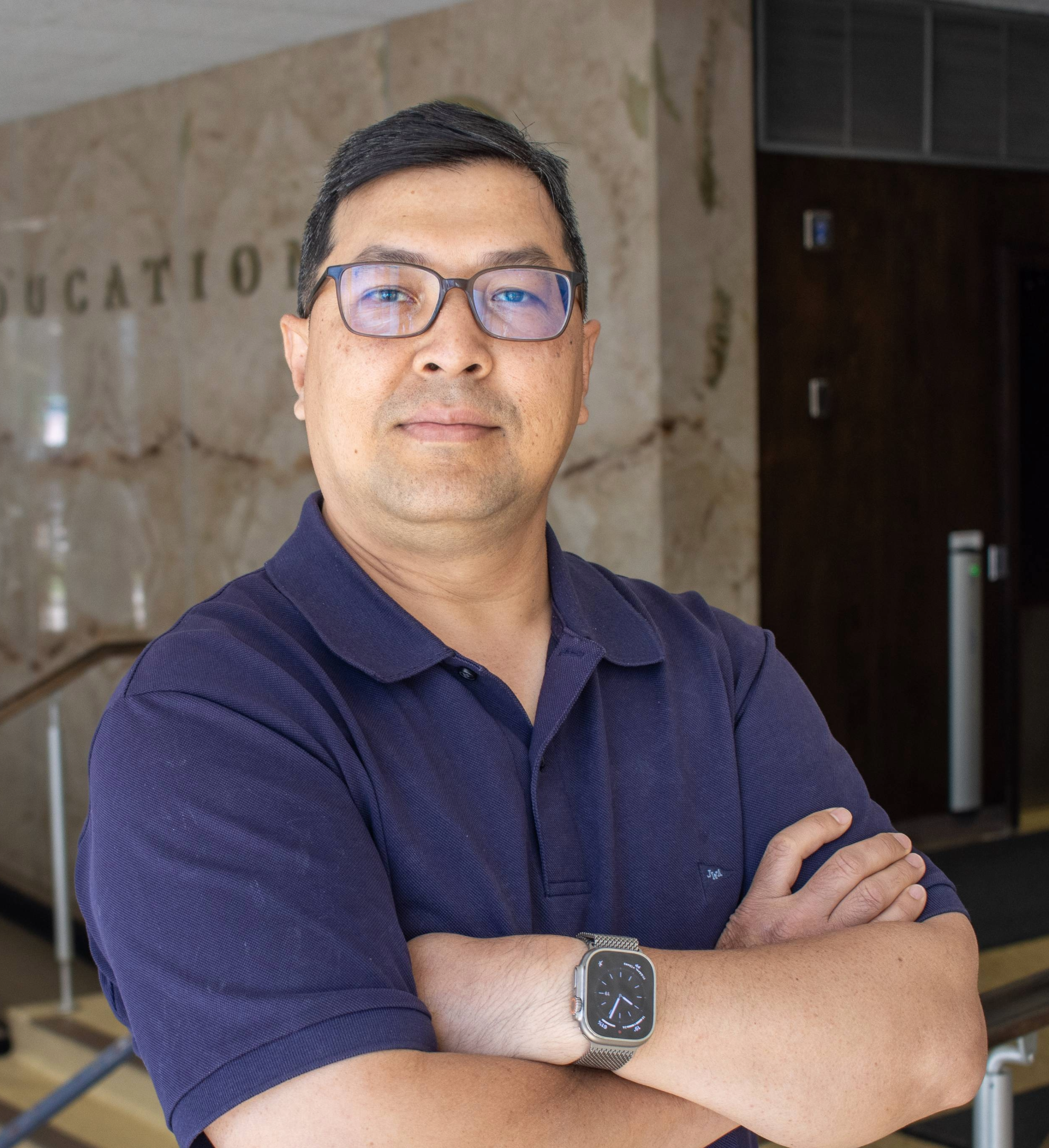
Dr. Vicheth Sen joined the Faculty of Education on July 1, 2026 as an Assistant Professor contributing to the Adult, Community and Higher Education (ACHE) program. His research focuses on coloniality, social mobility, and equity in higher education, particularly the experiences of adult learners from marginalized backgrounds in postcolonial Global South contexts.
Take a few minutes to get to know Dr. Sen!
Tell us about yourself!
I was born and raised in a rural farming village in Cambodia. My career began in Phnom Penh in the early 2000s, teaching English and training teachers at the Department of English, Institute of Foreign Languages, and later at the Faculty of Education, Royal University of Phnom Penh. I also spent time outside the university as a researcher at the Cambodia Development Resource Institute. At the end of 2012, I moved to Canada to begin my PhD at the University of British Columbia, and before joining the University of Alberta I taught adult and higher education courses at UBC and Athabasca University.
Moving between the Global South and the Global North has given me a particular vantage point on adult and higher education. I have been a student in systems shaped by other people’s decisions, and I now work inside systems that do some of that shaping. It is not a comfortable position, but it is a useful one, and I am glad to be bringing it to Adult, Community and Higher Education.
What brought you to the U of A Faculty of Education?
Since finishing my PhD at UBC, I have accumulated more project ideas, and the U of A Faculty of Education offered me the opportunity to pursue them. The ACHE program was the particular draw. Its focus on diverse adult learners and on equity and access lines up closely with the questions I have been working on, and I am looking forward to collaborating with colleagues here and contributing to what we understand about (de)coloniality and epistemic (in)justice in adult, community, and higher education.
What are your current research interests?
My current research centres on coloniality and epistemic injustice in adult and higher education, particularly as they shape the experiences of diverse adult learners. My forthcoming book with Routledge, Coloniality in Cambodia’s Higher Education System: Social Mobility Experiences, draws on life history interviews with Cambodian professionals and traces how they navigated a system built from colonial legacies and neoliberal reform.
What interests me now is bringing those questions into a Canadian context. I am starting a pilot study on how first-generation, mature, and racialized students experience and navigate the University of Alberta and on whether their knowledge, languages, and prior experience are recognized or set aside in advising and student services. From there I want to look more broadly at engagement and retention among these students, at access and transition programs for non-traditional learners, and at how institutional and provincial governance shapes equity outcomes. Running alongside all of it is a question I keep returning to: Who gets to produce knowledge in community-engaged research, and on whose terms?
What inspired you to enter this field?
My own path — from a rural farming village in Cambodia to where I am today — is what first made me curious about the role of education in social mobility. My parents had very little formal schooling, yet they instilled in my siblings and me the belief that we should pursue higher education. I often wondered how they had come to hold that idea. I was not serious about pursuing the question academically, though, until my father died in 2014, about a year into my doctoral studies. I ended up rewriting my comprehensive examination questions entirely to focus on it. My doctoral research became, in large part, an attempt to understand my own trajectory as an adult learner: how education shaped the path I took, and what that shaping looks like in a ‘postcolonial’ context.
What keeps me in this field is different from what brought me to it. In my students I kept recognizing the negotiation I had been studying in myself. Watching adult learners make sense of their working lives through theory, and seeing how much knowledge they already carry, is what convinced me that adult and higher education was where I wanted to spend my career.
Describe your teaching philosophy.
I teach from the assumption that adult learners arrive already knowing a great deal, and that my job is to help them make that knowledge speak to theory and to each other. Bourdieu’s theory of social practice and Tara Yosso’s community cultural wealth framework both inform how I do that. The first keeps me alert to how advantage gets reproduced in a classroom; the second reminds me that students from marginalized communities bring forms of capital that institutions routinely fail to count.
In practice this means a learner-centred, collaborative classroom built on dialogue, critical reflection, and collective inquiry. As an educator from the Global South who has navigated higher education in both the Global South and the Global North, I bring lived experience to this. Decentring Western epistemologies and creating space for Indigenous perspectives and marginalized voices is what I want to continue to pursue in my teaching.
What are your impressions of the U of A so far?
Relocating is rarely easy, but the senior leaders in the Faculty of Education, my colleagues in ACHE, and the administrative staff I have met have all been so welcoming that this move has felt considerably lighter than it might have. I have only explored a small part of campus so far, though enough to have developed a real fondness for some of the architecture. I am looking forward to seeing the rest.
What interests you outside work?
Outside of work I photograph nature and take long walks, usually at the same time. I am looking forward to seeing what Edmonton has to offer, and to getting to know the city properly.
Photo by Laura Sou