Reimagining inclusive education
Carmen Rojas - 25 March 2026
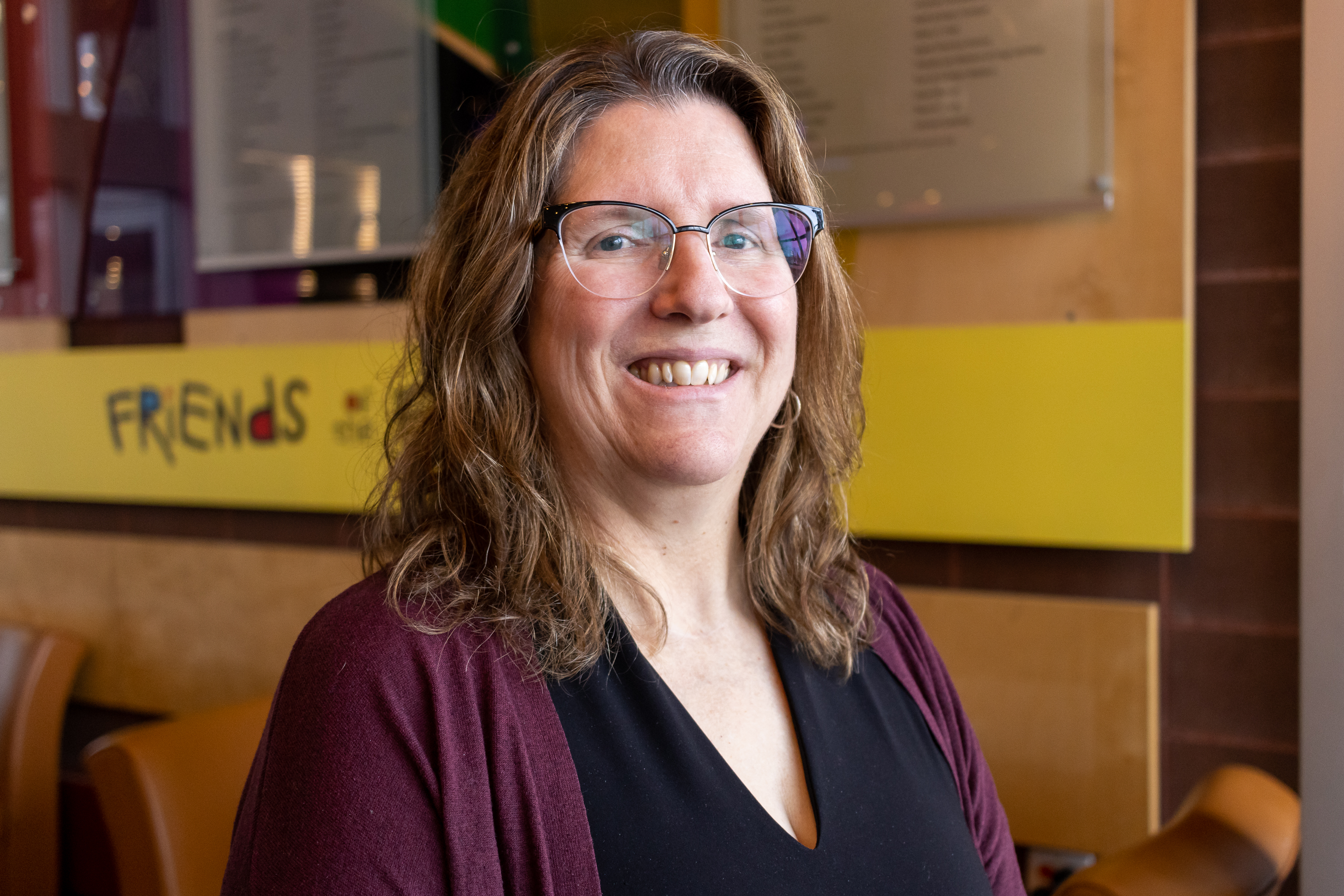
Joanne Weber (Photo credit: Laura Sou)
When educational psychology professor Joanne Weber was named the first-ever Canada Research Chair (CRC) in Deaf Education in 2020, she knew breaking new ground wouldn’t be easy.
“I think there’s a growing appreciation for my research,” she says. “But when I started it was like having a stick and a dry field, and I was just pounding with the stick trying to plow this field.”
Weber’s perseverance is yielding results. With her second five-year term as CRC now underway, she is focused on the emerging field of deaf aesthetics, in particular on raising awareness among teachers about what the world looks and feels like for Deaf students, which she believes can lead to improved learning outcomes.
As Weber emphasizes, the stakes for this work are extremely high: 88 per cent of Deaf children in Canada are placed in mainstream classrooms and, because of language deprivation, not many of these students are graduating at a level where they can access post-secondary education.
“If you’re not providing them with access to language or the opportunity to interact with that language on a rich, deep level, they’re not able to thrive and grow,” she says.
Breaking the "Audiocentric" Mold
The language deprivation experienced by Deaf children, which recent research shows is an epidemic, is often misinterpreted as an intellectual disability. But in reality, the true barrier lies in the way information is presented in our society.
“The world right now is organized according to audiocentric norms – everything is based on the ability to hear,” says Weber. “Spoken language is linear, so that influences the way we present information, the way we teach online, the way software is designed.”
She highlights the example of slide decks, which are generally designed with large amounts of text, pictures and colours. For a Deaf person who is ocularcentric — relying on vision as their primary sense for interacting with the world — and relying on an interpreter at the same time, this creates what Weber describes as a “ping pong effect” of going back and forth as they try to absorb all the information.
“With ocularcentric processing, we’re taking things in really quickly in one swoop and we don’t have time to read everything on a slide presentation,” she says. “You’d be surprised how hard and culturally different that is.”
This is where the concept of deaf aesthetics comes in. Coined by her colleague Dr. Michael Skyer from the University of Tennessee, Weber explains that deaf aesthetics refers to a field of inquiry that explores “what is beautiful, what is pleasing, what is enjoyable and what is perceivable most directly from the perspective of a Deaf body.”
While Weber’s first term as CRC focused on arts-based approaches to education, in her second term she is taking an interdisciplinary perspective to explore the potential of applying deaf aesthetics across a wide range of disciplines.
Building Capacity for Change
In particular, she wants to introduce teachers to deaf aesthetics by creating training resources that can help them understand and adapt their teaching for ocularcentric learners.
Weber believes the traditionally “tepid” response to language deprivation on the part of hearing educators and administrators lies in a lack of understanding.
“What I’m interested in is building capacity in hearing people who don’t know anything about what it means to be ocularcentric and without dedicated, consistent access to language — signed or spoken. It results in language deprivation,” she says.
And while Weber stresses that deaf aesthetics can’t solve language deprivation, which requires intensive intervention to protect the brain from irreversible damage, her research shows that it can ease the learning process for many Deaf students.
The resources she is developing for preservice and inservice teachers include the “Building Frankie” course, named for the 'Frankensteinian' reality of the work: materials must be meticulously patched together across multiple software platforms to achieve a true deaf aesthetic. The course provides training for designing materials that prioritize ocularcentric learners – an approach that, as Weber points out, often benefits students with ADHD and other neurodivergent needs as well.
Weber is also developing a play-building resource for working with Deaf people in the area of drama and theatre, as well as a website with materials on the deaf model of storytelling.
Towards a grassroots approach
As Weber continues to move her research forward in the coming years, she does so without thinking about “success” in a traditional sense.
“For me, it's more important to be faithful rather than to be successful – being faithful to the reality that language deprivation is a terrible, terrible thing that we do to Deaf kids,” she says. “The Deaf community has seen it over and over again, and we’ve been screaming about it for decades, but it’s just not making its way into the hearing population.”
Weber believes that by sharing the lived experience of the Deaf body, change can grow from the foundational work of educators.
“If more and more people can start to get a little snippet of what this means, then there might be more of a grassroots effort on the part of teachers, administrators and especially at the board level to say, ‘We can’t let this happen; we’ve got to do something; we’ve got to intervene.’”