When the stage becomes the arena: Inside the psychology of competitive dance
By Jennifer Fitzgerald, Interview conducted by Pirkko Markula-Denison - 29 October 2025
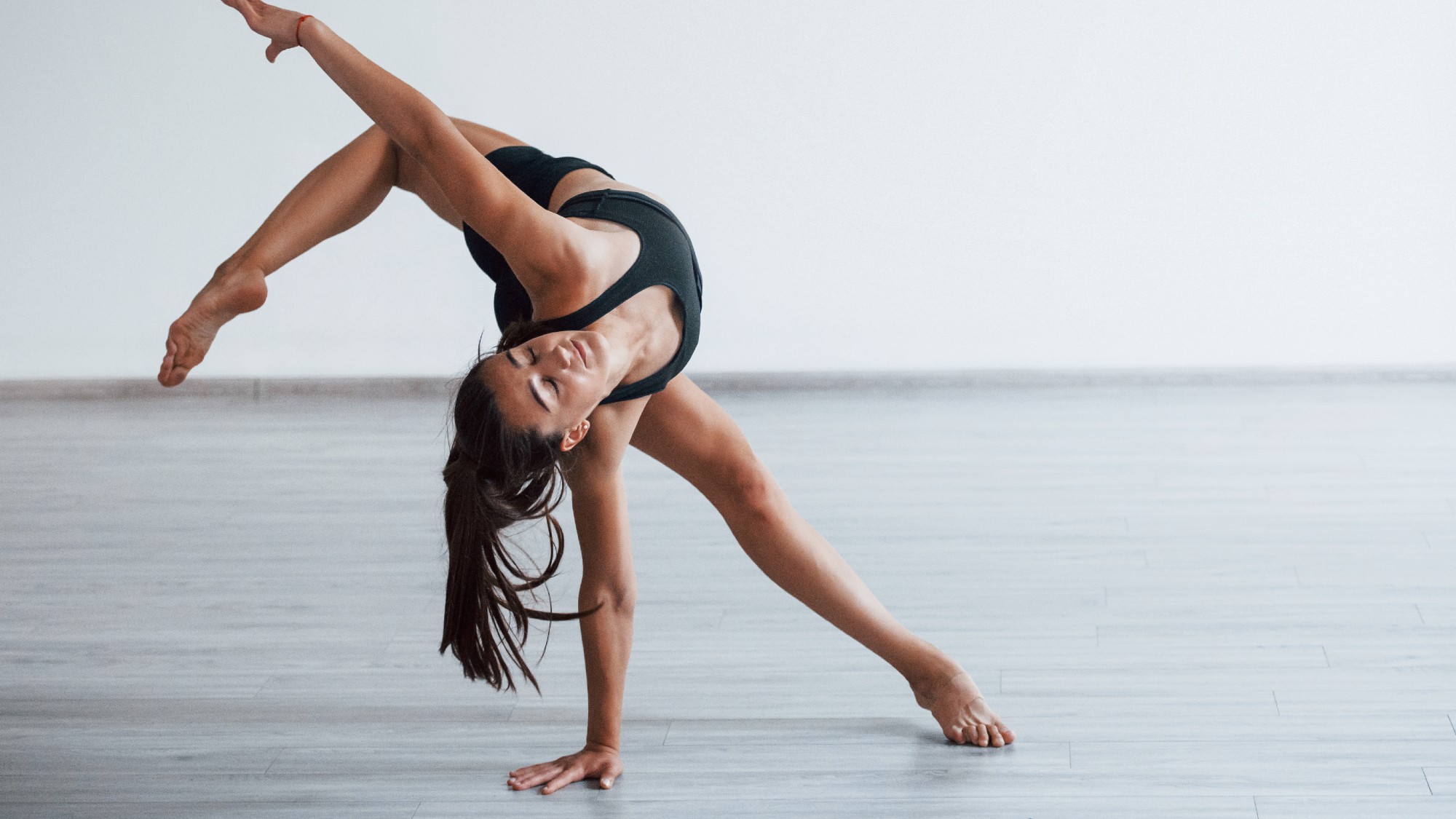
When people picture athletes under pressure, they might imagine the roar of a stadium, not the pulse of bass lines and synchronized motion beneath a spotlight. But in the world of competitive dance, where artistry meets athleticism, performers face the same grueling training, competition anxiety, and relentless pursuit of perfection as elite athletes do.
That’s what drew Faculty of Kinesiology, Sport, and Recreation associate professor Amber Mosewich and graduate researcher Ben Sereda into a world that science had largely overlooked. Their new study, soon to be published in Sport, Exercise and Performance Psychology, explores how dancers experience and manage stress across a full competition season.
The project began, unexpectedly, with Sereda’s sister. A lifelong dancer, she had called him for advice before a high-stakes competition. “She was dealing with really intense demands,” Sereda recalled. “I looked at the literature and realized—there wasn’t much on competitive dance. There were entire gaps where sport psychology didn’t quite fit.”
That realization set the project in motion. Sereda and Mosewich, along with co-authors Danae Frentz and Sara Sereda, followed a group of competitive dancers for eight months, documenting how stress and coping evolved from first rehearsals to the final moments on stage.
What was the focus of your research?
For Sereda and Mosewich, the project centered on understanding dancers’ psychological experiences across an entire performance year.
“We were really interested in how competitive dancers experience stressors and challenges over a season,” said Sereda. “But we also wanted to know how they manage those demands as the season evolves. The pressures in the fall look very different from those in spring when competition peaks.”
What is competitive dance?
Unlike recreational dance, competitive dance involves high-level performers who train intensely and regularly compete against others.
“These are dancers for whom training is a major part of life,” explained Sereda. “They attend competitions, showcases, tournaments—events where their performance is judged against others. That competitive element creates unique stressors, which makes them an important yet understudied population.”
What does a competitive dance season look like?
A typical season begins in late summer, when dancers form their teams and start choreographing routines. As the months go on, rehearsals intensify—culminating in what the dancers call “hell weeks.”
“They’re training every day, often for hours,” says Sereda. “All for a few minutes on stage at the end of the season. And sometimes they have to change their choreography right before competing, to improve scores. Imagine working all year and making those changes 24 hours before performing.”
That single performance, Sereda says, carries the weight of months of work:
“One dancer told us, ‘We train all year for five minutes on stage.’ That really captures it.”
Who were the dancers you studied?
The team followed dancers, from their teens to late twenties, performing hip-hop and related styles. Over time, the dancers themselves began reflecting on what labels like “hip-hop” truly represent.
“They started realizing the terminology didn’t fully capture their work,” says Sereda. “It’s not just one form of dance, it’s multiple related styles under one umbrella.”
How did you study them?
The researchers conducted interviews with each participant three or four times over the season – early on, mid-season, and after the final competition. They also observed rehearsals to understand the context firsthand.
“We used established frameworks on stress and coping to guide our questions,” says Mosewich. “We were interested not only in how they handled stress in the moment, but how they anticipated it and adapted over time.”
What stood out most in your findings?
What emerged was not just the strain of competition, but a striking sense of collective care.
“These dancers were incredibly supportive of one another,” Sereda says. “If someone needed to take a break, it wasn’t seen as weakness – it was encouraged. Their directors even reinforced it, saying, ‘If you need a break, take it.’”
Mosewich called it “communal coping”: a shared responsibility for each other’s well-being.
“The supportive culture was fostered by both instructors and dancers,” she adds. “Veteran dancers modeled it, prompting newer members to rest or talk about how they were feeling. It went beyond teamwork – it was care in action.”
What can sport learn from dance?
Sereda and Mosewich agree that the findings challenge long-held assumptions in sport psychology.
“There’s this ingrained mentality in sport; push through no matter what,” Sereda says. “But these dancers proved you can rest, recover, and still perform at an elite level. Their well-being didn’t detract from performance, it sustained it.”
“That’s the message,” adds Mosewich. “When you build an environment where athletes support each other, everyone thrives.”
Dance as an Olympic discipline
With breakdancing making its Olympic debut in Paris, both researchers see this recognition as an important step forward.
“The physical and mental demands of dance are extraordinary,” says Sereda. “It absolutely belongs on the world’s biggest stage.”
“Dance has always reflected the Olympic spirit,” added Mosewich. “It’s about testing human limits through both artistry and movement. It’s the perfect fusion of performance and athleticism.”
What’s next?
Their study has grown into a meaningful bridge between science and art.
“The most exciting projects,” says Mosewich, “are the ones that come directly from people living those experiences. It’s research that not only builds knowledge – it gives back to the community that inspired it.”