Poetry Contest Winners
Congratulations to the winners of the 2026 CLC Poetry Contest! /
Félicitations aux gagnants du Concours de poésie du CLC 2026 !
The Centre for Literatures in Canada, together with Athabasca, MacEwan, and NAIT, congratulate Jasmine Hyatt-O'Donnell, Caitlyn McClintock, and Amy Bacon for their winning poems!
Read the winning poems below and get to know a little bit about the poets.
The CLC thanks Cassidy Hogg, our Research Assistant, and Cody Caetano, U of A Writer-in-Residence, for creating the longlist of poems. We also grateful to this year's contest adjudicators--Chris Hutchinson (MacEwan), Mike O'Driscoll (U of A), Gabriel Proulx (Athabasca), and Kelly Shepherd (NAIT)--whose comments abut each poem we share below.
Thank you to all the students who submitted poems this year, as well as to our contest partners: Athabasca University, MacEwan University, NAIT, the Writers Guild of Alberta, the Edmonton Poetry Festival, Athabasca University Press, NeWest Press, and University of Alberta Press.
1st Place: "Pollen Between Kitchens" by Jasmine Hyatt-O'Donnell
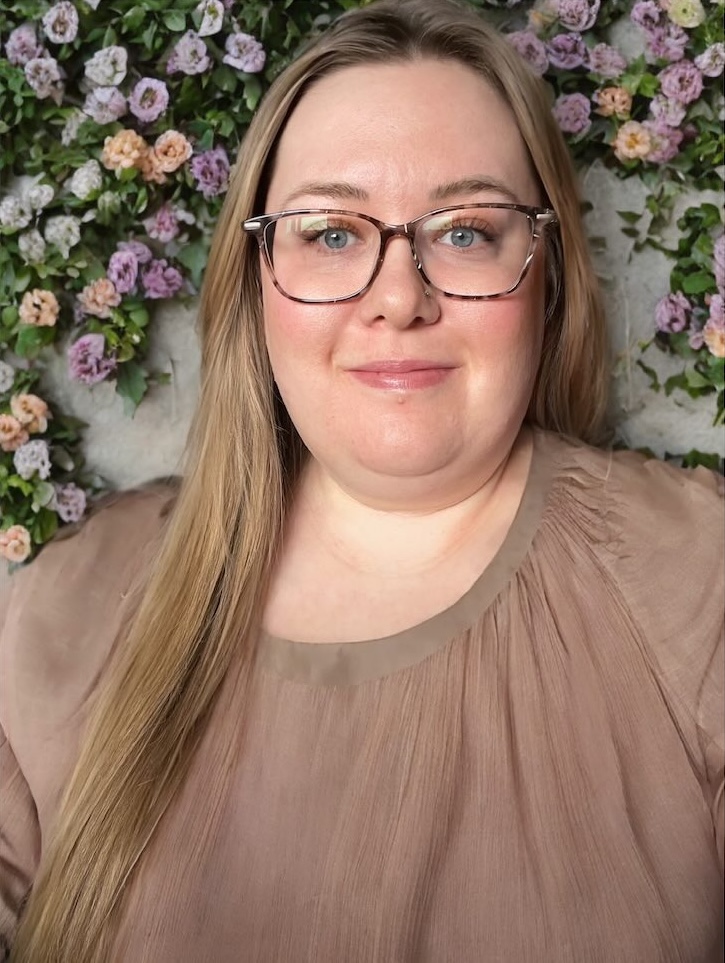
Jasmine Hyatt-O'Donnell (she/her) is a Licensed Practical Nurse working in neonatal intensive care and outpatient settings. She is currently studying courses through Athabasca University, with a focus on women and gender studies, and Indigenous studies. She recently returned to creative writing, and her work has been shaped by a reconnection with her Métis heritage. Through her life experiences and work within healthcare, she holds a strong commitment to human rights, with a particular focus on Indigenous and gender issues.
The jury commented: "'Pollen Between Kitchens' made the jury buzz with excitement. This powerful and memorable poem offers a wonderfully sustained conceit: bees quietly carry pollen across the boundaries of time and space just as storytelling carries traditional knowledges that are life affirming and life sustaining. Here the speaker discovers their reclamation of that knowledge in the making of bannock—and in the creation of a poem that is as simple and exact as the most delicious home cooking."
Pollen Between Kitchens
In spring the bees carry stories
from one garden to another.
Yellow dust clings to their legs
like flour on my hands
the first time I try to make bannock.
I follow a recipe online.
Two cups flour.
Baking powder.
Salt.
This should have happened
in someone’s warm kitchen,
a hand over mine
guiding the dough.
Instead the knowing
slipped quietly out of our house,
set aside in a time
when being only one thing
was safer.
Pollen travels quietly,
over fences,
over survey lines,
through the invisible borders
people draw
between us
and them.
Road allowance people
built kitchens from almost nothing
and still pressed dough
flat in a pan.
I should have had my own kokum.
Instead I found many
sharing stories
where knowledge travels
like pollen on bees.
In flour on my hands
I press the dough flat
In a kitchen I am learning
to try again.
2nd Place: "Nefesh Teoma (twin soul)" by Caitlyn McClintock

Caitlyn McClintock is a 3rd-year PhD student at the University of Alberta, where her research explores contemporary Gothic children’s literature, with a focus on trauma and the figure of the ghost. She holds an Honours BA and MA from Western University. Her poetry moves between traditions, drawing from Anglo-Saxon verse, Beat poetics, and modernist writers such as Seamus Heaney and C.S. Lewis. Working across illustration, textiles, and writing, her creative practice is rooted in medieval and Southern Gothic aesthetics, with a particular fascination for ghost stories, historical fashion, and Golden Age children’s illustration. Her work has appeared in Cold Strawberries Collective, Polemical Zine, Symposium & Semicolon, and FrankenZine (Wordsfest, London, ON). She shares additional work on Instagram @thelittlegothichouse.
The jury commented: "'Nefesh Teoma (twin soul)' is a wild, beautiful ride, full of high-flying diction, lush imagery, and a sweeping range of metaphors and allusions. Haunted by the ghost of Gerard Manley Hopkins but charged with its own music and incessant energy, the poem caught the jury’s attention for the way it conjures and draws together such disparate concepts and visions as 'quantum entanglements,' 'eons built in inflorescence,' 'haphazard harems of sugared fruits,' 'insectoid lovers,' and 'unbirthed angels in the undergrowth.' The poem moves beyond eclecticism and risks a kind of teetering yet persuasive syncretic unity, and the jury applauds its ambition."
"Nefesh Teoma (twin soul)"
Cross-pollination—
A little of you in me,
a little of me in you.
Is that all this horticultural galaxy can offer?
One fleshed, petaled calyx curving into the blushed sepal of another,
wind and water in a whirl danse macabre no eye but God’s can see?
I am but the corpse flower to your carrion,
eons-built in inflorescence,
living by you as a mere fly on this wall,
your dipteran of dewy sweat in obsolescence.
Babe, you’ve got me batty for you,
but this is a real quantum entanglement,
so forget the haphazard harems of sugared fruits and insectoid lovers;
breathe me in like osmosis, corpulent membranes
dissolving the way red ribbons do
when they flutter into folded viridian sheets.
When I shatter in multiplicity and stretch my arms wide,
will you wrap ‘round me like fettered vines do and be my Methuselah?
Bearded tree—unbending root, in memoriam.
I will not wait for winged travellers to find me in the thirteenth hour,
be their moonflower in the sleeping wet of night,
when too many grass fields have been laid between us.
For I am heliotropic and leave traces of shadowed steps for you to find,
stringed gossamers crossing in this continuous fashioning of our universe:
webbed, atomic, a spooky action at a distance.
Are we but sunshine and dust in some rare sort of origin story,
where God cradles the Big Bang with an armful of stars and seraphim
like some scientific father pushing up his microscopic glasses?
In this great Mendelian experiment,
you and I sit as still as garden statues,
unbirthed angels in the undergrowth,
convalescent under someone’s golden hour windowsill.
And one eukaryote to another,
colloidal and insignificant,
we wait desperately to be disturbed.
Honorable Mention: "i was there/j’étais là" by Amy Bacon
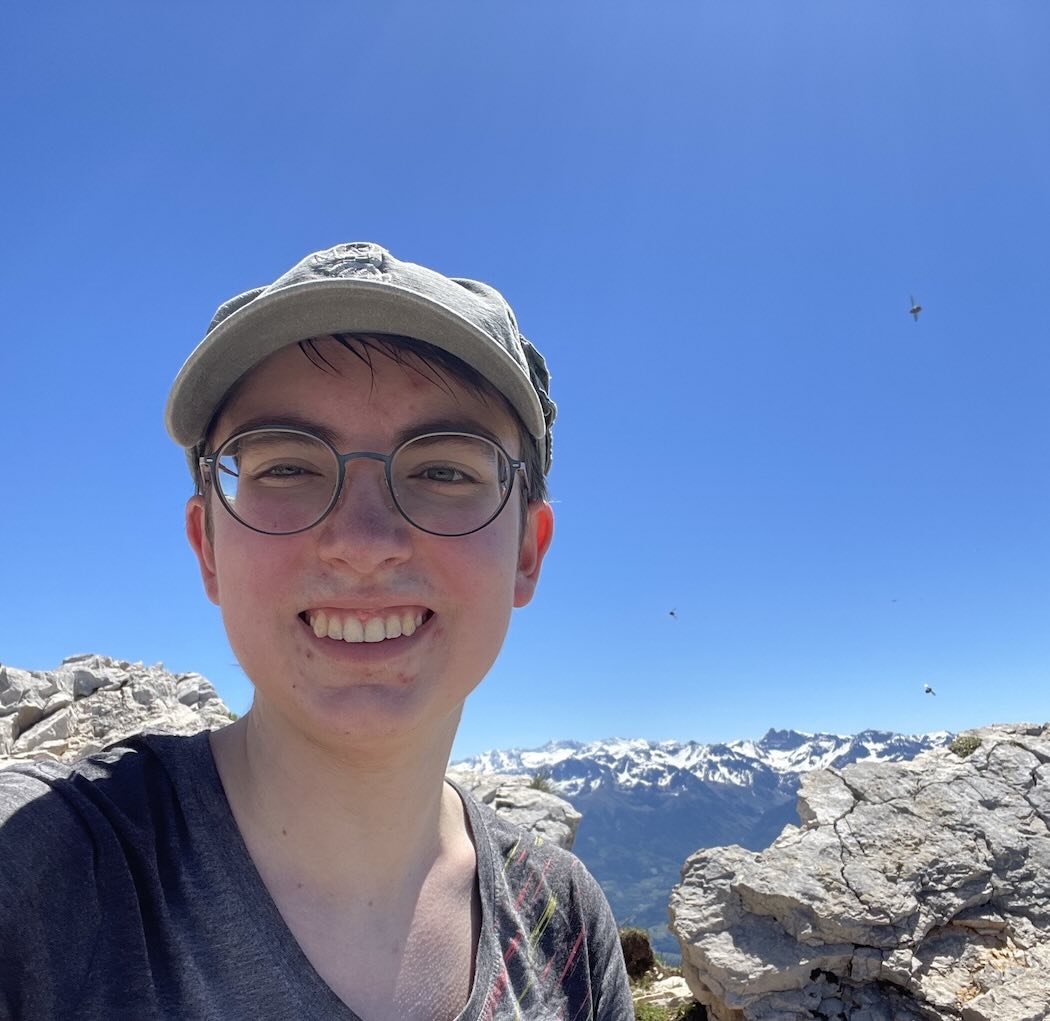
Writer, poet, scientist and lover of stories, Amy Bacon has previously performed at the Edmonton Fringe, and published work in the Capital City Press Anthology (Volume 4) as well as Milk Bag Magazine. Amy's poetry usually consists of random thoughts and emotions migrating from head onto page . . . often while staring out the bus window. For more information, check out Amy’s website.
The jury commented: "'i was there/j’étais là' stood out to the jury for its striking meditation on memory and longing. Weaving English and French together in a way that feels organic, its shifting syntax and incantatory rhythm mirror the instability of recollection. Suspended between past, present and future, the poem compresses and dilates time as it explores the bittersweetness of transformation with both subtlety and force."
"i was there/j’étais là"
it fades comme des mémoires
peut-être des rêves
when fulfilled
leaves an absence as stark
comme les murs blancs de leur peinture
blue for the longing purple to crown them
garder essai de garder fermement
footsteps time washes over
marcher vers l’avant comme s'il n’est jamais passé
tenir les leçons tenir la confiance
and try and hold on
rien n’a changé or has it
i blink and i am back
trois mois et demi
sur l’autre côté du monde trois secondes et demi
in the grand scheme
la même personne et pas
looks melancholy in the mirror
garder un peu plus longtemps
time moves as a dancer
water velvet transient
quels rêves rêve-moi maintenant
quand la mémoire allume mes yeux
what can i make of it
carry with me to hold on
le passé ne peut pas être importé
through our arms to make present
to our hearts today
but i am still searching
pour quelque chose de garder
d’une autre vie d’un autre pays
avant qu’elle disparaisse
de moi
Congratulations to the Winners of the 2025 CLC Poetry Contest!
The CLC congratulates Alexis De Villa and Teren Hazzard as joint first-place winners of our 2025 Student Poetry Contest!
Read the poems and bios from the winning poets below.
Thank you to this year's contest jury--Ryan Fitzpatrick (Writer-in-Residence, U of A), Gabriel Proulx (Athabasca), Lisa Martin (MacEwan), and Kelly Shepherd (NAIT)--whose comments about each poem we share below. Thank you to all the students who submitted poems this year, as well as to our contest partners and sponsors: Athabasca University, MacEwan University, NAIT, Athabasca University Press, NeWest Press, University of Alberta Press, and the Edmonton Poetry Festival.
The Gateway, the U of A student newspaper, interviewed the winning poets about their interpretation of this year's poetry contest theme: polyphony. Read The Gateway interview with Alexis and Teren.
"sinigang on settler states" by Alexis De Villa
as pinoy kids on stolen lands
knowing collective existence is a chorus within our being
the warm harmonics of sinigang
the pork, the bok choy, the green beans, the sour tamarind soup
at minus 30 weather
interwoven with a melody singing "a better life but for whom?”
sipping sinigang wishing I knew the guava tree my mom sang about as a child
while only knowing the notes of tensioned ties to trees that are just as invasive as we
swaying between dissonance
comma
cognitive
and cross solidarity movements
i can't imagine sinigang without jasmine rice
i don't know life without these lands
From the jury: “'sinigang on settler states' simmers a spatial mix, reflecting on diasporic existence on stolen land. Its argument ends on a contradictory position around home and geography, of how and where the poem’s speaker is able to imagine themselves and the wish for a 'better life' amidst the dissonant feeling that they may be a kind of invasive species. The poem is soupy in a good way, swinging its lines across the page as it offers a complex warmth that pairs well with its critical sense of longing."
Alexis De Villa (they/them) is a pinoy/pangasinan transdisciplinary artist creating and moving in amiskwaciwâskahikan. They are just finishing up their MA in Material Culture at the University of Alberta, while also being a parent to the loveliest little human! Their approach to writing and art is informed by a blend of activism, self-knowing, lived experience, and intergenerational knowledge. They believe that knowledge and beauty is co-created through relationships with community and the land, and that all art must be done with consent, love, compassion, honesty, and reciprocity.

"Dance with Us, Girly Girl" by Teren Hazzard
A giggle bubbles in the baby’s throat that
rumbles and pops on her mother’s chest.
Mom’s own laugh echoes through Grandma’s hat
to Dad and aunt and brother and guest.
ABBA* crowns dancing queens on the radio for days.
High-pitched cries are a cracking beat of sticks
before a concerto of shhhh sends her in a daze.
”Chiquitita, tell me what’s wrong,” a metronome ticks.
Girly girl, girly girl, the food is almost ready.
Girly girl, girly girl, smell the sizzle of beef, of sauce.
Dance with mama as we make spaghetti.
That’s it. Wave to Grandpa. Watch his feet criss-cross.
Spin over ‘70s tile and sing
from arms to arms to arms to arms.
*A Swedish pop group formed in 1972 who wrote the line “Chiquitita, tell me what’s wrong” and crowned us all dancing queens.

From the jury: “'Dance With Us, Girly Girl' offers a joyous domestic scene of family bonding in the kitchen, dinner cooking and radio on. The poem is compact with a touch that is at once light and packed with flavour. The author stirs their vibrant language until it sounds like the crackle of a needle across a worn-in copy of Arrival (or is it Voulez-Vous?). It is a sonnet that is strikingly contemporary, even as it’s streaked with faded nostalgia, an overexposed Polaroid.”
Teren Hazzard is an emerging transgender writer from Treaty Six Territory. He is pursuing a Bachelor of Science in Environmental and Conservation Sciences with a major in Conservation Biology at the University of Alberta. His place-based poetry focuses on the observations and details he sees around him. His work primarily explores queer joy, activism, and the importance of youth voice, but in his winning poem, he explores a new topic of family joy. As a poet and community leader, he plays an active role elevating young, queer voices through his work with several diversity-focused committees, including Women in Scholarship, Engineering, Science, and Technology (WISEST) and local governments. His writing-related roles include volunteering with The Gateway, and having been the featured reader at the 2024 Strathcona County Pride Flag Raising. When he is not studying for his ecology courses, he is performing in open mic nights, writing silly short stories and poetry, or spending time at the library. He is currently penning his first poetry collection and is seeking representation.
Congratulations to the winners of the 2024 CLC Poetry Contest! /
Félicitations aux gagnants du Concours de poésie du CLC 2024 !
The CLC--along with NAIT, MacEwan University, and Athabasca University--congratulate Justine Schultz, Acacia Kubanay, and Joseph Lam for their winning poems!
Read the winning poems below and get to know a little bit about the poets.
Thank you to this year's contest judges--Dr. Evelyne Gagnon (Athabasca), Dr. Michael O'Driscoll (University of Alberta), and Kelly Shepherd (NAIT)--whose comments about each poem we share below. Thank you to all the students who submitted poems this year, as well as to our contest partners: Athabasca University, MacEwan University, NAIT, Edmonton Poetry Festival, Athabasca University Press, NeWest Press, University of Alberta Press, and SpokenWeb.

Read The Gateway's interview with Justine where she talks about writing "Attic."
The jury commented: "The poem 'Attic,' by Justine Schultz, is a moving account of father-daughter relationships captured in contrasting metaphors of fire and air. Stark symmetry and deftly chosen images provide an intimate account of the passions--anger, resentment, melancholy, loneliness--we store away and that give shape to our lives."
Attic
When other women
Speak of their fathers,
I can smell the soot-stain fingerprints
That mark their souls,
Their kindling hearts inherited
Just to burn and burn and burn,
The attics of their childhood homes stocked,
Like hoarder’s houses or doomsday bunkers,
With napalm and gasoline
Always just a spark away
From going up in flames
And these women
Born with flint in hand,
They may never have unpacked
Those boxes in the attic,
But they’ve kept them this long
My father
Was no volcano, no roaring bonfire of a man
He was more of a cave
And when the wind blew through him,
It would howl in lamentation as it passed,
Bird-bone-wind-chime skeleton
Kept propped up
With nothing but air
And the hand-me-down heart I was given
Hangs off my shoulders, heavy,
But ragged and moth-eaten
It struggles to keep me warm
And when the wind passes through its holes,
Through the hollow of my chest,
I think of my attic,
Empty
Justine Schultz (she/her) is a poet living on Treaty 6 Territory. She is currently enrolled in the University of Alberta's Classics Honours program, with a minor in Creative Writing with poetry as her area of focus. She is an emerging creative, with her 2024 CLC Poetry Contest submission being her publishing debut. Her voice as a poet has been developing since her teenage years, though the themes she handles–identity, nature and nurture, irreversible change, the search for connection and acceptance–have been informed by a lifetime of experiences as a queer, neurodivergent, and otherwise marginalized person in an often hostile world. Despite the hostility, Justine has also known boundless love and kindness, things which she herself hopes to help bring more of into the world every day. Within ancient Mediterranean studies, Justine is particularly interested in the work of the tragedian Euripides, as well as the posthumous construction of identities through the vehicle of funerary material culture. Outside of her educational and poetic pursuits, she enjoys sewing, baking, engaging in communal storytelling projects, and experiencing local visual and performing arts.

Les juges ont commenté: « Le poème ‘La flamme’ présente une harmonie et une élégance formelles qui témoignent d’habiletés poétiques notables. Le jury a particulièrement apprécié les riches jeux sonores et la construction cohésive des images exprimant l’agentivité du sujet poétique, qui célèbre avec détermination sa présence au monde. On nous rappelle avec justesse, dans ce poème, que la possibilité d’être vu.e, aimé.e, accepté.e (que ce soit par un proche ou encore par une collectivité), dans notre unicité même, demeure ce qui donne souffle à notre âme et ce qui, ultimement, nourrit notre flamme intérieure. »
La flamme
J’ai une flamme en moi que j’essaye toujours de cacher
Elle attire les regards des autres, mais ils n’osent jamais me toucher.
La seule façon dont je peux montrer mon amour, c’est en respirant
Mais quand je le fais, ils soufflent sur moi en disant
“Je ne sais pas comment t’aimer.”
J’ai une flamme en moi que je ne vais plus cacher
Car, elle brûle de désir et danse en silence,
Elle est un feu à nourrir, et ne cherchera plus de l’ombre pour l’accueillir
Malgré les vents contraires, elle ne va jamais faiblir
Car cette flamme est qui je suis
Moi et ma peau bronzée,
Mes yeux noirs et mon cœur sanglé
Je suis faite pour brûler, et non pour être diluée.
Acacia Kubanay est une élève de 12e année de l’École Maurice Lavallée, qui a toujours été captivée par le monde de la poésie. Sa passion pour les mots et la créativité transparaît à travers les poèmes et les chansons qu'elle écrit. Avec une perspective unique et un talent pour la narration, la poésie d'Acacia résonne profondément auprès des lecteurs. Son dévouement et son travail acharné ont porté leurs fruits lorsqu'elle est devenue l'une des gagnantes de ce prestigieux concours de poésie.

The jury commented: “‘Can you see the Milky Way from Calgary’ by Joseph Lam is both deeply confessional and urgently political. The irregular stanzas, which juxtapose historical and international events and intimate, personal memories, are connected to one another but still surprising. The committee remarked on the poem's visceral, sensuous imagery, and the circularity of beginning and ending in the stars.”
Can you see the Milky Way from Calgary
my mother points to Orion’s belt on the page of a beat-up library book,
said at 6 years old,
that stars can have names too,
rooted all that nerve into a
would-be wishing bone sleeping in my mother’s fingertips
i wake up in haunted houses now,
with chairs and moonbeams and whatever god uses
to keep her stomach in when
children are stolen and beaten in her name
I haven’t yet done ritual,
but I’ve seen fire
and smoke
Gaza burns, and our leaders are silent
I spent Thursday night liking a dead man’s message
Friday morning,
wondering if I’d know how to tourniquet a broken arm,
would know how to string my backbone tight enough
to un-blue a child’s face,
wonder if it would take god twice as long
I grew up Protestant,
but my better half would say I’m just gay and Chinese,
which means revolution is half-here, and
half dreaming of the first heel at Stonewall,
of my mother’s first breath on Canadian soil
but I know ancestors don’t stay in the ground,
have seen my father’s footsteps light a grave
from Vietnam to Alberta,
Asked me, “What do you know about silence?”
Silence loads itself into grief’s chambers,
takes aim at the biggest parts of ourselves
So small,
is everything my best friend swears she cannot be
the first time she ever held her nieces
But tonight, I am a child,
corporeal under these sheets,
wondering in all the silence,
if people can see the milky way from Calgary
Joseph Lam is a 2nd-year pharmacy student at the University of Alberta. He acts as the VP External for the 2SLGBTQ+ Pharmacy Students’ Club, whose purpose is to advocate for 2SLGBTQ+ student populations and for the betterment of health for queer-identifying patients. He loves to play the ukulele and write poems with his childhood best friend.
2023 Contest Winner: “(Rural*) Grandmother Alchemy” by Abbigail Ketsa

The CLC, MacEwan University, and Athabasca University extend our heartfelt congratulations to Abbigail Ketsa, whose poem “(Rural*) Grandmother Alchemy” was selected as the winner of the 2023 CLC Poetry Contest!
The contest judges, Professors Marla Epp (MacEwan), Jocelyne Le Ber (Athabasca), and Michael O'Driscoll (University of Alberta) wrote: “The poem '(Rural*) Grandmother Alchemy' is a wonderfully evocative and challenging poem that captures this year's theme of ‘Land and Water’ by evoking generations of living close to the land 'as the night suckles the wheat / sprouts fingertips in hungry mouths.' The language snaps and cracks like the sidewalks, produce, and hands it describes, as the poem descends into starkly beautiful and disturbing imagery. The use of word variants, marked by asterisks and set in parentheses, invite multiple and complex readings of the poem as dynamic as the cycles of life it describes.”
Thank you to all who submitted to the contest this year, as well as to our partners: MacEwan University, Athabasca University, Edmonton Poetry Festival, University of Alberta Press, NeWest Press, and Athabasca University Press.
(Rural*) Grandmother Alchemy
the Past,
quack grass, grown-up
through the sidewalk
cracks, coarse as
Nana’s beans
left too long on the vine
cracks, fissuring the palm
from years of dirt toiling in the fields passed Chipman
dusty disdain for old women who fled
Hunger for new-world hate
where daughters inherit heirloom pain (hunger*) &
Suns scorch like angry men
(brittle*) …
sewing flax into cotton &
swallowing fresh-water pearls pulled
from the East* (Grand mother-of-pearl* / milk* / milking*)
violet blooms under eyes —
heart’s delight &
the leathered hands roll up like holubsti
from making bread in a stolen bread-basket (burning* / oven* / baking*)
as the night suckles the wheat
sprouts fingertips in hungry mouths
(warm and green*)
Grandmother’s love
splintering the playground
forgotten in the backfield (schoolyard*)
where we learn to feed mice to cats &
cats to coyotes &
writhing in the jaws and
watering the garden bloody
before our last harvest;
beige libation (oblation*)
turned (spun*)
Gold at twilight
Abbigail Ketsa (she/they) is an emerging settler poet and writer from Edmonton, Alberta. She is finishing a Bachelor of Arts degree at the University of Alberta. A member of the LGBTQ+ community, they enjoy exploring death, existence, and the universe through poetry. Abbigail is currently participating in the 2023 Roger S. Smith Undergraduate Researcher Award, researching divine monstrosities and “vampires” in ancient Greek magic and religion. They are a recipient of the 2021 Ted and Charlotte Davenport Poetry Prize and the 2021 Darren Zenko Memorial Prize for the non-fiction essay “Step Into the Night,” a feminist telling of a night walk. They have previously worked on poetry’s function as a pedagogy of walking the city. Their prose work on poetry as a medium of exchange for the Italian-Canadian and diaspora experiences, "Cultural Literary Landscapes," is expected to be published in a 2023 Special Issue of Crossings: An Undergraduate Arts Journal. In her free time, she writes and shares short stories amongst peers and family. Abbigail hopes to forever be a work-in-progress and to share her experiences, strengths, and hope.
2022 Contest Winner: “nitohtamok êkwa wiya manâpekiswek” by Meghan Eaker

The CLC, MacEwan, and Athabasca University extend our heartfelt congratulations to Meghan Eaker, whose poem “nitohtamok êkwa wiya manâpekiswek” was selected as the winner of the 2022 CLC Poetry Contest!
The contest judges, Professors Marla Epp (MacEwan), Jocelyne Le Ber (Athabasca), and Michael O'Driscoll (University of Alberta) wrote: “This is a beautifully constructed poem that is at once economical, powerful, and compelling. The poem's precise and evocative verse focuses on listening as an intergenerational experience that produces a collective triumph of song and poetry, expressed through metaphors of musical collaboration and the author's humble contribution as a 'magpie voice.' The Cree title and speaker's address to 'nimosompan,' or grandfather, contributes to the poem's inspiring assertion of voice and community.”
Thank you to all who submitted to the contest this year, as well as to our partners: MacEwan, Athabasca University, Edmonton Poetry Festival, University of Alberta Press, NeWest Press, & Athabasca University Press.
nitohtamok êkwa wiya manâpekiswek
on his deathbed
nimosompan asked me
do you understand?
i’m not sure, i replied
but i have been listening
when i will have need of these teachings
i know the memory of your voice
will come to me
then, i will understand
when the teachings i was not yet ready
to follow become inscribed
in my bones by the hand
of experience
then, i will know
listen to my magpie voice
can you hear the layered harmonies?
when i speak
i do not speak alone
my voice is a chorus of many generations
i cannot take credit
for this poetry alone
it is not mine
it belongs to all the echoing
voices past, present, and future
that sing it into being
translations:
nitohtamok êkwa wiya manâpekiswek – listen, then speak with care
nimosompan – my late grandfather/great-uncle
Meghan Eaker (she/her) is an amiskwaciywâskahikan-based poet, registered nurse, and beading artist of mixed european and nehiyaw ancestry and is a member of the Woodland Cree First Nation in treaty 8 territory. She is currently pursuing a PhD at the University of Alberta studying storysharing as a practice towards miyo pimatisiwin (a good life).
Congratulations also to Mikayla Bortscher, whose poem "CPR for a Heterotroph" received an honourable mention.
The judges commented: "This poem offers the reader a wonderful process of discovery, as the sensuous details of the scene gradually come into focus with a synaesthetic richness that merges colour and sound, mimicking the gradual convergence of human and natural time and experience. The striking colours of the poem--synthetic red lipstick and chlorophyll green--sound as much as they show this encounter that demonstrates a profound attunement to the non-human world. Formally, the poem's rhythm, internal rhymes, and visual prosody are evidence of an accomplished poetic that accentuates the poem's evocative imagery."
2021 Contest Winner: "When Honey Drips" by Céline Caruso Dixon

Congratulations to Céline Caruso Dixon, whose poem "When Honey Drips" was chosen as the winner of the 2021 CLC Student Poetry Contest! The contest theme this year was "Reckoning and Resilience" / « Responsabilité et résilience. »
The contest judges, Professors Marla Epp (MacEwan), Evelyne Gagnon (Athabasca), and Jordan Abel (University of Alberta), praised the poem’s “strong point of view,” well-crafted rhythm and pacing, and “rich imagery.” Showing “a wide historical context entangled with more intimate moments,” this “resonant and powerful poem” “invites us to listen attentively, to open our minds and our hearts to this engaging experience of beauty and resilience.”
"When Honey Drips" by Céline Caruso Dixon
Let the melanin drip like honey down my body
Broad noses, Thick lips, Curly hair
Trust me when I tell you that Black beauty
That this melanin, is power
They told us you need to straighten your hair without ever recognizing that our curls
Told the paths of freedom braided into our scalps
The blood of our ancestors run through us
The melanin drips from us like honey
Let me explain to you what privilege looks like because black bodies know the word
As it rolls off our tongue and caresses our thoughts
We have never felt warmth in its presence
I foolishly screamed “SAY IT LOUDER FOR THE PEOPLE IN THE BACK”
My mistake, you see we have always been told to get to the back they have taken over the front seat
I do not need to say it to the people who already understand what it means.
And our melanin drips a little darker, now mingled with red
You see our beauty is defined with in our pain I’m sure you see the trends
The box brains, the long nails, The hoops, The use of vernacular
I’m sure you see the similarities between us and these trends
Our beauty wasn’t meant to be commodified, our beauty, our culture, our presence
Let me tell you the joys of being Black
One: Our food is made through loving hands, coloured with spices of distant lands some turned into our home
Two: Our hair. A symbol of beauty. My Afro puff, bantu knots, cornrows, wraps, weaves, wigs and more my hair is not a symbol for you to touch. I don’t know where your hands have been anyways
Three: Vernacular. We speak in a way that symbolizes our history. Our ability to code switch has nothing to do with us and everything to do with you.
Four: Thick lips came naturally for us we speak with power and love even harder, we were conditioned to look at them as a Nuisance as we watch lip fillers become popular
Five: Our culture. Broad and wide we have adapted to create culture where ever we are. We are from the world. African, Caribbean, African American, Afro Latin our culture although diverse showcases the beauty we have.
And our melanin drips as if it was glowing
Trust me when I tell you that black beauty that our melanin is powerful
Black hymns run through us and formulate jazz blues rock and roll rap rhythm and blues
Our voices despite being pushed down have thrived and only become louder
And our melanin drips for longer
When I tell you our beauty has come from pain
Take a look at our history
You don’t need to go that far
Last summer was another showcasing of our blackness becoming pain
We stand with them
George Floyd, Breonna Taylor, Ahmed Aubrey
And the thousands of others
If cameras weren’t around would you believe us
And our melanin drips tingling off our finger tips
Like honey it is sweet to the taste
It has history, it has culture, it is beauty
When I tell you our Blackness is beautiful
I don’t say it to reassure myself because of our history
I say it because Blackness is the embodiment of beauty
And we will forever let our melanin drip like dark honey from our fingertips.
2020 Contest Winner: "paper tree" by Skye Haggerty

Congratulations to Skye Haggerty, whose poem "paper tree" was chosen as the winner of the 2020 CLC Student Poetry Contest! The contest theme this year was "Literary Ecologies" / « Écologies littéraires. »
"paper tree" by Skye Haggerty
waskway, show me your nicks
and scars.
let me taste you,
sweet as you are
you are no maple tree.
I thought I was willow,
but nîpisîy is a hundred years old
and gnarled in her old age.
I was never so slender as to
slip between their fingers
or bend between their hands.
waskway, when I look at your
dark bands I see
how you have given yourself—
black marks on white paper.
I see how you heal, too.
Skye Haggerty is a Métis writer from the bush, north of amiskwaciwâskahikan. As the granddaughter of a traditional artisan, her childhood was spent dabbling in various crafts and gathering material from nature. Despite relocating to the city, not much has changed in this regard and her various pursuits seem to always find her wandering the muskeg of memory.