Zhixiang Wang
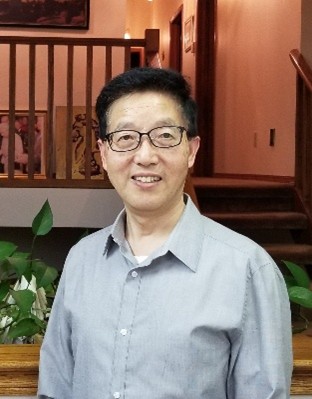
Professor and Director of Graduate Studies
8-35 Medical Sciences BuildingOffice/Lab: 780.492.0710
Email: zhixiang.wang@ualberta.ca
After obtaining his PhD at Simon Fraser University in 1993, Dr. Wang did his postdoctoral training at University of Toronto supported by CIHR (MRC) Centennial Fellowship, Charles H. Best Postdoctoral Fellowship and NSERC Postdoctoral Fellowship. He started his first independent research position at Northeastern Ontario Cancer Centre and University of Ottawa in 1996. He moved to the University of Alberta as an Assistant Professor. He is now a Full Professor at the Department of Medical Genetics, University of Alberta. His major research interests including ErbB receptor signaling, trafficking, and its implication in breast cancer, as well as EGF-induced Rac1 phosphorylation and its novel function in nucleus.
We have been studying EGF receptor (EGFR) mediated cell signaling, protein trafficking and their implication in breast cancers (BC) for more than 20 years. Our research has been funded by CIHR, NSERC, CBCF and ACF. Our results are published in many high impact journals including Science, EMBO Rep, MCB, MBC, Traffic, JCS, JBC, FASEB J, Cancers, Cells and others. According to Google Scholar, I have a total citation of 8805 and h-index of 41.
Our major research interests:
- EGF-induced Rac1 phosphorylation and its novel function in nucleus
Following the identification of Rac1106PNTP109 motif as the binding site for PLC-g1, we showed that T108 is phosphorylated by ERK in response to EGF, which targets Rac1 to the nucleus. Both Rac1T108 phosphorylation and Rac1 PBR contribute to Rac1 nuclear translocation. We also showed that Rac1 phosphorylation at S71 facilitate its interaction with 14-3-3 proteins. We recently showed that nuclear Rac1 is localized to nuclear speckles and interacts with proteins involved in RNA splicing. We also showed that nuclear Rac1 positively regulates alternative mRNA splicing. By extending Rac1 function beyond the cytoplasm to the nucleus, our study will change the paradigm of Rac1 research.
- Heterogeneity of EGFR signaling
We have studied several aspects of EGFR signaling heterogeneity. We studied the heterogeneity of EGFR signaling from different subcellular locations along the EGFR endocytic trafficking pathway. We also studied EGFR signaling heterogeneity caused by differences in ligand binding and receptor dimerization. Recently we began to study EGFR signaling heterogeneity during the eukaryotic cell cycle.
- Regulation of EGFR endocytosis
We initially studied the regulation of EGFR endocytosis by signaling proteins. Our pioneer study regarding the role of GRB2 in EGFR endocytosis (Science, 1996) is one of the earliest publications in the field. We later shifted our focus to establish a novel model for EGFR endocytosis.
- Targeting ErbB2 for treating breast cancers
We began to study drug resistance in BC more than 30 years ago. In addition to study the mechanisms of tanxane resistance in BC, we focused our research on the molecular mechanisms of trastuzumab (TRZ) resistance. Most recently, we further showed that TRZ inhibits EGF-induced lipid raft localization of EGFR-HER2 heterodimer, which leads to the inhibition of canonical HER2 signaling and cell proliferation without blocking the formation and phosphorylation of EGFR-HER2 heterodimer. We also showed that HER2 signals through a non-canonical pathway, Regulated Intramembrane Proteolysis (RIP), which is targeted by TRZ.
Current Research Funding:
(2025-2026) CIHR Breast Cancer Priority Grant,
The novel function of nuclear Rac1 and its implication in breast cancer
(2025-2028) MITACS Inc,
Optimizing Bioinformatics Workflows for Experimental Biologists
Selected Publications:
Books:
- Wang, Z. (2022) Editor for " Cell-Cycle Synchronization: Methods and Protocols." ISBN 978-1-0716-2735-8, Hard cover, 250 pages, ISBN 978-1-0716-2736-5, eBook. Serial Editor JM Walker, “Methods in Molecular Biology” 2579. Publisher: Springer Nature. ©Springer Science+Business Media LL.
- Wang, Z. (2022) Editor for “10th Anniversary of Cells—Advances in Cell Cycle.” ISBN 978-3-0365-5216-3 (Hbk); ISBN 978-3-0365-5215-6 (PDF), Hard Cover, 194 pages. Publisher: MDPI.
- Wang, Z. (2017) Editor for "ErbB Receptor Signaling: Methods and Protocols." ISBN 978-1-4939-7218-0, Hard cover, 303 pages, ISBN 978-1-4939-7219-7, eBook. Serial Editor JM Walker, “Methods in Molecular Biology” 1652. Publisher: Springer Nature. ©Springer Science+Business Media LL.
- Rahman, Md.M., Kim, J.S., Li, L., Reisal, M.R., Mak, K.Y.L., Tavaoli, M., Wang, Z., Ballermann, B.J., Hwang, P.M. (2025) CLIC5A binds to and stabilizes the open and active conformation of ezrin. J. Biol. Chem. 301 (10):110646.
- Nami, B and Wang, Z. (2024) A Non-Canonical p75HER2 Signaling Pathway Underlying Trastuzumab Action and Resistance in Breast Cancer. Cells, 13(17), 1452; https://doi.org/10.3390/cells13171452
- Wang, R. C. and Wang, Z. (2023) Precision Medicine: Disease Subtyping and Tailored Treatment. Cancers, 15(15), 3837; https://doi.org/10.3390/cancers15153837 (This paper has been cited 262 times by Google Scholar)
- Maadi, H. and Wang, Z. (2022) A Novel Mechanism Underlying the Inhibitory Effects of Trastuzumab on the Growth of HER2-Positive Breast Cancer Cells. Cells, 11(24), 4093; https://doi.org/10.3390/cells11244093
- Wang, Z. (2021) Regulation of Cell Cycle Progression by Growth Factor-Induced Cell Signaling. Cells, 10, 3327. https://doi.org/10.3390/cells10123327
- Nami, B., Ghanaeian, A., Black, C. and Wang, Z. (2021) Epigenetic Silencing of HER2 Expression during Epithelial-Mesenchymal Transition Leads to Trastuzumab Resistance in Breast Cancer. Life, 11, 868. https://doi.org/10.3390/life11090868
- Maadi, H., Soheilifar, M. H., Choi, W-S., Moshtaghian, A., and Wang, Z. (2021) Trastuzumab Mechanism of Action; 20 Years of Research to Unravel a Dilemma. Cancers, 13(14):3540. doi: 10.3390/cancers13143540.
- Abdrabou, A and Wang, Z. (2021) Nuclear Speckle localization of Rac1 and its role in pre-mRNA splicing. FASEB J 35 (2):e21235. doi: 10.1096/fj.202001694R. with Cover Illustration
- Abdrabou, A., Brandwein, D., and Wang, Z. (2020) Differential Subcellular Distribution and Translocation of Seven 14-3-3 Isoforms in Response to EGF and During the Cell Cycle. Int J Mol Sci. 21(1). pii: E318. doi: 10.3390/ijms21010318
- Abdrabou, A., Brandwein, D., and Wang, Z. (2019) Rac1 S71 Mediates the Interaction between Rac1 and 14-3-3 Proteins. Cells 8, 1006; doi:10.3390/cells8091006
- Nami, B., Maadi, H., and Wang, Z. (2019) The effects of pertuzumab and its combination with trastuzumab on HER2 homodimerization and phosphorylation. Cancers 11(3). pii: E375. doi: 10.3390/cancers11030375
- Wee, P. and Wang, Z. (2018) Regulation of EGFR endocytosis by CBL during mitosis. Cells 7(12). pii: E257. doi: 10.3390/cells7120257.
- Nami, B. and Wang, Z. (2018) Genetics and expression profile of tubulin gene superfamily in breast cancer subtypes and its relation to taxane resistance. Cancers 10, 274; doi:10.3390/cancers10080274
- Maadi, H., Nami, B., Tong, J., Li, G., and Wang, Z. (2018). The effects of trastuzumab on HER2-mediated intracellular signaling in CHO cells expressing human HER2. BMC Cancer 18(1):238. doi: 10.1186/s12885-018-4143-x.
- Wang, R., Chen, X., Parissenti, A., Joy, A.A., Tuszynski, J., Brindley, D.N., and Wang, Z. (2017) Sensitivity of docetaxel-resistant MCF-7 breast cancer cells to microtubule-destabilizing agents including vinca alkaloids and colchicine-site binding agents. PLoS one, 12(8):e0182400
- Wee, P and Wang, Z. (2017) Epidermal Growth Factor Receptor Cell Proliferation Signaling Pathways. Cancers. 9(5): E52. (This paper has been cited 2287 times by Google Scholar)
- Tavasoli, M., Li, L., Al-Momany, A., Zhu, L., Adam, B.A., Wang, Z. and Ballermann, B. (2016) CLIC5A stimulates Rac1-dependent Pak and ERM protein activation, protecting against hypertension-induced glomerular injury. Kidney International 89(4):833-47
- Wang, Y., Pennock, S, Chen, X. and Wang, Z. (2002) Endosomal signaling of epidermal growth factor receptor stimulates signal transduction pathways leading to cell survival. Mol. Cell. Biol. 22 (20): 7279-7290 [Cover illustration on MCB 22 (22)]. Science's STKE highlighted this paper in "This Week in Signal Transduction" for the October 1 issue.
- Chen, X. and Wang, Z. (2001) Regulation of epidermal growth factor receptor endocytosis by wortmannin through activation of Rab5 rather than inhibition of phosphatidylinositol 3-kinase. EMBO Reports 2: 842-849.
- Chen, X. and Wang, Z. (2001) Regulation of EGF receptor intracellular trafficking by Rab5 in the absence of Phosphatidylinosito 3-kinase activity. EMBO Reports 2:68-74. (with Cover Illustration)
- Wang, Z. and Moran, M. (1996) Requirement for the adaptoer protein Grb2 in EGF receptor endocytosis. Science 272, 1935‑1938.
Xinmei Chen, Research Technician
Hamid Maadi, Post-doctoral Fellow
Graduate Students:
Abdalla Abdrabou, MSc 2020.
Daniel Brandwein, MSc 2019
Hamid Maadi, PhD 2020
Babak Nami, PhD 2019
Ping Wee, PHD 2018
Fahed Elian, MSc 2016
Lei Liu, MSc2009
Justin G. Pahara, MSc 2008
Peng Wu, MSc 2009
Qian Wang, PhD 2009
Siwei Li, MSc 2008
Qian Wang, PhD 2009
Steven Ponnock, PhD 2008
Yi Wang, PhD 2006
George Kourouniotis, MSc 2003
Postdoctoral Fellows:
2017 Jorge Alberto Gutierrez Gonzalez, MD
Mar 2011 – 2017 Junfeng Tong, PhD
2009 –2010 Giri Raghavaraju, PhD
2004-2005 Murshedul Alam, PhD
2003-2004 Fuxiang Zhu, PhD