Convocation 2026: Kush Patel, MBA/PharmD, Faculty of Pharmacy and Pharmaceutical Sciences
Donna McKinnon - 5 June 2026
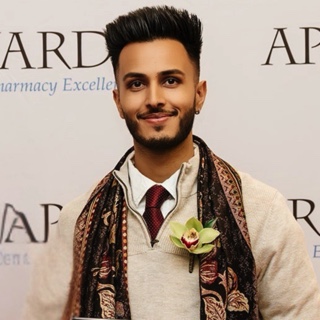 Driven by a fascination with healthcare systems and a calling toward patient accessibility, Kush Patel approaches pharmacy with a rare blend of clinical care and corporate strategy. For Kush, the MBA/PharmD pathway was never about earning two separate titles, but about unlocking a singular capability: understanding how healthcare systems fail, how they run and how they can be reimagined.
For Kush, pharmacy is not just one career, but "a hundred careers wearing the same coat" — an expansive field that spans community care to tech startups and government policy.
“That's what the MBA/PharmD represented to me, not two degrees but one complete vision,” he says. “The ability to be of service to patients and help shape the industry that serves them.”
Graduating with a complete vision for the future, Kush is poised to not only advocate for patients on the front lines but to actively shape what the pharmacy industry becomes for the next generation.
Congratulations Kush!
Degree receiving / previous degrees:
I'm completing the combined degrees Master of Business Administration + Doctor of Pharmacy (MBA/PharmD) — a dual-degree I had circled in my mind long before I ever set foot on campus. My undergraduate degree was completed at the University of Calgary in biological sciences prior to entering the University of Alberta PharmD program.
What drew you to this area of study?
It started with a simple observation that never left me.
Pharmacists are open when everything else is closed. At eight in the morning, before the rest of the healthcare system has even had its first coffee. At midnight, long after every other door has shut. When someone is scared, overwhelmed, or unsure where else to turn — we're there. That kind of accessibility isn't just a scheduling detail. It's a calling.
But there was a second pull, one that came from a different part of me. I've always been fascinated by systems, how they're built, how they fail, how they can be reimagined. Pharmacy sits at one of the most powerful intersections in all of healthcare, and yet so much of its potential goes untapped because clinical excellence alone isn't enough to change a system. You also have to understand the business of it. The economics of it. The strategy of it.
That's what the MBA/PharmD represented to me, not two degrees, but one complete vision. The ability to be of service to patients and help shape the industry that serves them.
What achievement or moment are you most proud of?
Honestly, the moments I'm most proud of aren't the ones that made it onto a transcript. It's the Tuesday afternoon I almost quit. The rotation week where I felt like everyone around me had it figured out and I was just trying to keep up. The night before a presentation where I sat with genuine self-doubt and chose, quietly, to show up anyway.
Completing the combined MBA/PharmD matters deeply to me, but what I'm actually proud of is who I had to become to finish it. The program didn't just teach me clinical knowledge and business strategy. It taught me how to carry more than felt comfortable, for longer than felt sustainable and still find reasons to be grateful for the weight. I didn't always know it would work out. I just kept going. And if there's anything I'd want a future student to take from my story, it's that. Not the degree at the end, but the quiet, unglamorous decision to keep going on the days when nothing about it felt worth it. That decision, made over and over again, is what I'm most proud of.
How did you stay motivated when things got tough?
I leaned on three things — and each one carried me in a different way.
The first was spiritual practice. Pharmacy is relentless with coursework, rotations, assessments, work, life...all demanding your attention simultaneously. What kept me grounded wasn't sheer willpower. It was the quiet. The stillness that came from returning, consistently, to something larger than my to-do list. Spiritual practice gave me perspective when the pressure made everything feel urgent and overwhelming. It reminded me, again and again, that I was capable, and that this too would pass.
The second was my partner. We were both accepted into this program, and we walked every step of it together. On the days when the weight of it all felt like too much, she was steady. On her hard days, I tried to be the same for her. We didn't just share a program, we shared the whole journey, the late nights, the self-doubt, the small victories that only made sense to each other. To have someone beside you who genuinely understands what you're carrying, not because you explained it, but because they're carrying it too, is one of the rarest and most beautiful things. I am endlessly grateful for her.
The third was my classmates. These are not just people I studied with; they are people I struggled with, laughed with and grew with. The people who will be friends for life. There's something about pharmacy school that forges real bonds and I was fortunate to be surrounded by a cohort that chose to lift each other up rather than compete. When the people around you are choosing to rise, that energy is contagious. It becomes its own kind of fuel.
What did you learn about yourself during your time at the U of A?
I learned that I have a fundamentally positive mindset and pharmacy school was the crucible that confirmed it.
The shift happened when I stopped measuring success by outcomes and started measuring it by process. It sounds simple. It is not. When you walk into an exam chasing a percentage, every question feels like a threat. But when you've truly committed, when you've done your best with every resource, every hour and every ounce of energy you had, you can walk into that same room with something closer to peace. You're not performing. You're expressing everything you prepared.
Pharmacy throws a lot at you all at once: assignments, seminars, skills labs, rotations, life events that don't pause because you have a deadline. I learned that if you squeeze the lemons life gives you — all the way, with full effort and full intention — that's what success actually looks like. The lemonade might turn out delicious. It might not be perfect. But the squeezing? That part is always yours. And that part is always enough.
What advice would you give to a student considering this area of study?
Engage with the full scope of what this profession can be — before you decide what it will be for you.
Talk to the community pharmacist who has been serving the same neighbourhood for 20 years and knows every family by name. Talk to the pharmacist working in a hospital ICU making critical dosing decisions. Talk to the one who left practice to build a health tech startup, or the one advising the government on drug policy. Pharmacy is not one career; it is a hundred careers wearing the same coat. The earlier you understand that, the more intentionally you can find your own path within it.
And this — carry it with you always: be a person first, then a pharmacist. Your empathy, your curiosity, your character, these are not just soft skills. They are clinical tools of the highest order. The patients who change you, the ones you'll still think about years from now, will not remember the name of the medication you dispensed. They will remember how you made them feel when they needed someone.
Finally: take care of yourself with the same diligence you will one day take care of others. That is not optional advice. That is the whole thing.
What's next for you?
I'm stepping into independent practice by joining an independent pharmacy with an ownership track on the horizon. That choice is intentional. I believe deeply in what independent pharmacy represents: the ability to truly know your patients, to be genuinely embedded in a community and to build something that reflects your values from the ground up.
But, I'm also not done building. I want to keep working at the intersection of pharmacy, technology and entrepreneurship — finding the places where innovation can make care more accessible, more personal, and more effective. I've already had the opportunity to build in this space through building digital health platforms and what I've learned is that there is so much more possible than what currently exists. My hope, ultimately, is not just to practice pharmacy, but to help shape what it becomes for the generation coming after me.
And beyond pharmacy, I'm also pursuing something a little unexpected. I'm working toward obtaining my private pilot license. It began with a curiosity I couldn't quite let go of. The more I learned about space exploration and the future of human spaceflight, the more I found myself asking: where does pharmacy fit in all of this? How do we ensure medication safety, therapeutic efficacy, and clinical care for humans living and working beyond Earth? These are questions that don't have complete answers yet, and that's exactly what draws me to them. I don't have it all figured out. But I know that exploration starts with a single step, and for me, that step is getting in a cockpit and learning to fly.