Convocation 2026: Heba Aref, PhD, Pharmacy Practice, Faculty of Pharmacy and Pharmaceutical Sciences
Donna McKinnon - 10 June 2026
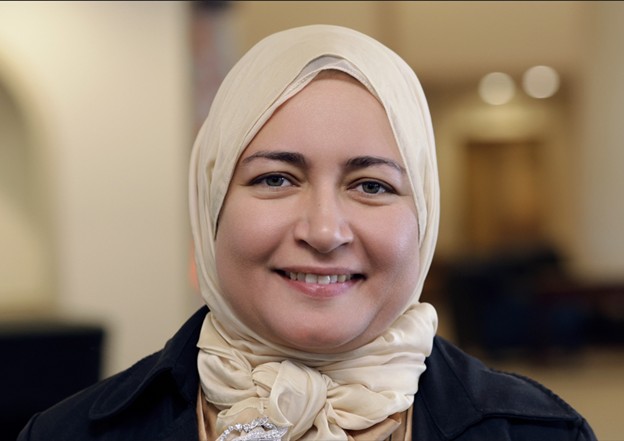 “A stranger is blind, even with a keen eye."
This powerful insight has fueled Heba Aref’s academic journey as a patient-focused doctoral student studying pharmaceutical practices. Drawing from her own experience as an international student, Heba brings a deep empathy to her clinical practice. Intimately aware of how systemic unfamiliarity can cause isolation, she is dedicated to ensuring her patients don’t feel lost in the medical system.
Long before arriving at the U of A, Heba, who was born and raised in Cairo, Egypt, discovered a passion for understanding human behaviour. As she moved through her degree program, she became increasingly interested in studying how people make decisions about their health. Recognizing the powerful connection between psychology and medicine, she uses these social frameworks to humanize healthcare encounters so that patients feel heard and truly empowered to make informed decisions.
Looking ahead, she plans to build a meaningful career that seamlessly integrates research, community engagement and mentorship, with a steadfast commitment to improving healthcare experiences for underserved communities and inspiring the next generation of learners.
Congratulations Heba!
Which degree are you receiving?
I am receiving a PhD in Pharmacy Practice from the Faculty of Pharmacy and Pharmaceutical Sciences at the University of Alberta. My research focused on shared decision-making and developing patient-centred decision support tools.
What are your previous degrees?
I previously completed a Bachelor of Pharmacy and two Master’s degrees from Egypt and the USA before pursuing my PhD at the U of A. My academic journey across different countries and healthcare systems helped shape my passion for patient-centred care, health communication and health services research.
Did you receive any financial awards throughout your studies?
I am incredibly grateful to have received support from several sources throughout my graduate journey, including the Alberta Graduate Excellence Scholarship, the Antoine Noujaim Graduate Scholarship, the Shoppers Drug Mart Graduate Scholarship, as well as the Research and Teaching awards from the Graduate Students’ Association and the Faculty of Graduate & Postdoctoral Studies.
While financial support certainly matters, what meant the most was the recognition and encouragement from my faculty, my university and my province. Knowing that others believed in my work and journey made a truly meaningful difference throughout my graduate studies.
What drew you to this area of study?
I have always been fascinated by patient behaviours, particularly how people make decisions about their health. Since my undergraduate studies, I found myself deeply interested in the intersection between psychology, health communication and healthcare — understanding not only what decisions people make, but why they make them and how communication shapes those decisions and impacts relationships. I became especially drawn to the complexity of healthcare decision-making when evidence is evolving and personal values, experiences and circumstances play an important role in decision-making.
Throughout my experiences, I often got the impression that patients may feel like strangers while navigating the healthcare system. I frequently heard people say, “I don’t know what I don’t know, so I’m not sure what to search for or ask about.”
There is an old Arabic proverb: “A stranger is blind, even with a keen eye”. That idea stayed with me throughout my journey. It shaped my desire to contribute to research that helps patients feel less like strangers within healthcare — helping them feel heard, informed, supported and empowered during difficult health decisions.
What moment are you most proud of from your time in the program?
When I reflect on my time in the program, I realize that I feel more grateful than proud. A PhD journey can include many milestones and accomplishments, but for me, what mattered most was not the achievements themselves — it was the meaning behind them and the people and support systems that made them possible.
I felt deeply grateful when I received the Graduate Student Teaching Award from the Faculty of Graduate & Postdoctoral Studies and was invited to speak about teaching. That experience reminded me how much I value creating meaningful learning experiences and supporting student growth.
Receiving the Alberta Graduate Excellence Scholarship was equally meaningful as it represented recognition for my research, not only from my university, but also from the Province of Alberta. Similar feelings accompanied the publication of my first authored papers, the successful defence of my PhD and the submission of my thesis. Each milestone reflected years of learning, perseverance and the support of mentors, colleagues, family and community members who made the journey possible.
One of the moments that stands out most was presenting my research at the U of A’s 3 Minute Thesis (3MT) Finals, where I was honoured to receive runner-up. What made that experience particularly meaningful was the opportunity to share my work with a broad audience and communicate why it matters. The 3MT reinforced a belief that has guided my research journey: research can and should be accessible, understandable and connected to people and real-world needs. This is how it will create impact far beyond academic publications.
More importantly, I am proud that throughout my PhD journey I worked on several different projects that remained grounded in patient and pharmacist experiences alongside meaningful community engagement.
Looking back, each milestone carried its own significance, but together they reinforced a lesson I will carry forward — the PhD journey is shaped not only by accomplishments but also by mentorship, opportunities, encouragement and the people who believe in you along the way.
What was your go-to spots on campus?
My office at Dianne and Irving Kipnes Health Research Institute became a second home during my PhD. I also loved quiet library spaces and coffee spots around campus where I could write, reflect, and recharge between research, teaching and meetings.
What did you learn about yourself during your time at the U of A?
While a PhD journey is often marked by publications, awards, presentations and milestones, I realized that what stayed with me most — beyond the accomplishments themselves — was the meaning behind each experience that led to an accomplishment.
I learned that teaching is not simply about delivering information; for me, it is about creating connections, building trust and fostering meaningful learning experiences. I discovered that I care deeply about helping people feel heard and supported — whether patients are navigating complex health decisions, pharmacy students are developing their professional identities and confidence as future healthcare providers, or graduate students are finding their voice and charting their own research journeys.
Most importantly, I learned that resilience is rarely an individual effort. Living and studying in Canada while balancing the roles of student, researcher, educator, daughter, wife, and mother helped me recognize that growth often happens in moments of difficulty or uncertainty, and that community, mentorship and kindness matter far more than I once ever realized.
What advice would you give to a student considering your area of study?
I would encourage students to stay curious and keep sight of the people behind the research questions. In healthcare research, technical skills are important but compassion, humility and listening are equally valuable. Paying attention, asking questions, and staying open to opportunities can lead to unexpected experiences and connections. I also found that reading emails and newsletters from organizations and groups such as GPS, GSA, WCHRI, AbSPORU, and others can open doors to events, networking opportunities and experiences that are easy to overlook.
There will inevitably be moments of uncertainty during the journey, but I think there is value in not giving up during those periods, as they often become important times of growth. Being open to leadership opportunities and experiences outside your comfort zone may also lead to meaningful learning. I found great value in stepping outside the lab or office and connecting with people across disciplines and cultures. Universities like U of A offer a unique environment where conversations beyond classrooms and research spaces can shape perspectives in unexpected ways. Some of the most meaningful lessons and ideas come from people in different disciplines.
What's next for you in your career?
I hope to continue building a meaningful career that integrates research, teaching, mentorship, community engagement and collaboration. My goal is to contribute to patient-centred care and improve healthcare experiences, particularly for underserved communities, while creating engaging and meaningful learning experiences that inspire future learners.
Moving forward, I hope to contribute to interdisciplinary and collaborative initiatives that bring together patients, healthcare professionals, researchers and community partners to address real-world challenges. Understanding how communication and sociobehavioural factors shape healthcare experiences and decisions remains a particular area of interest, especially when that knowledge can translate into practical and meaningful solutions.
I also remain open to opportunities across academia, healthcare, consulting, research and nonprofit sectors where I can contribute through research, education, knowledge translation and service.
Ultimately, I hope my work helps bridge research, practice, policy and patient needs in ways that create meaningful and lasting impact on communities.