Through the Valley of Death
Sasha Roeder Mah - 22 June 2026
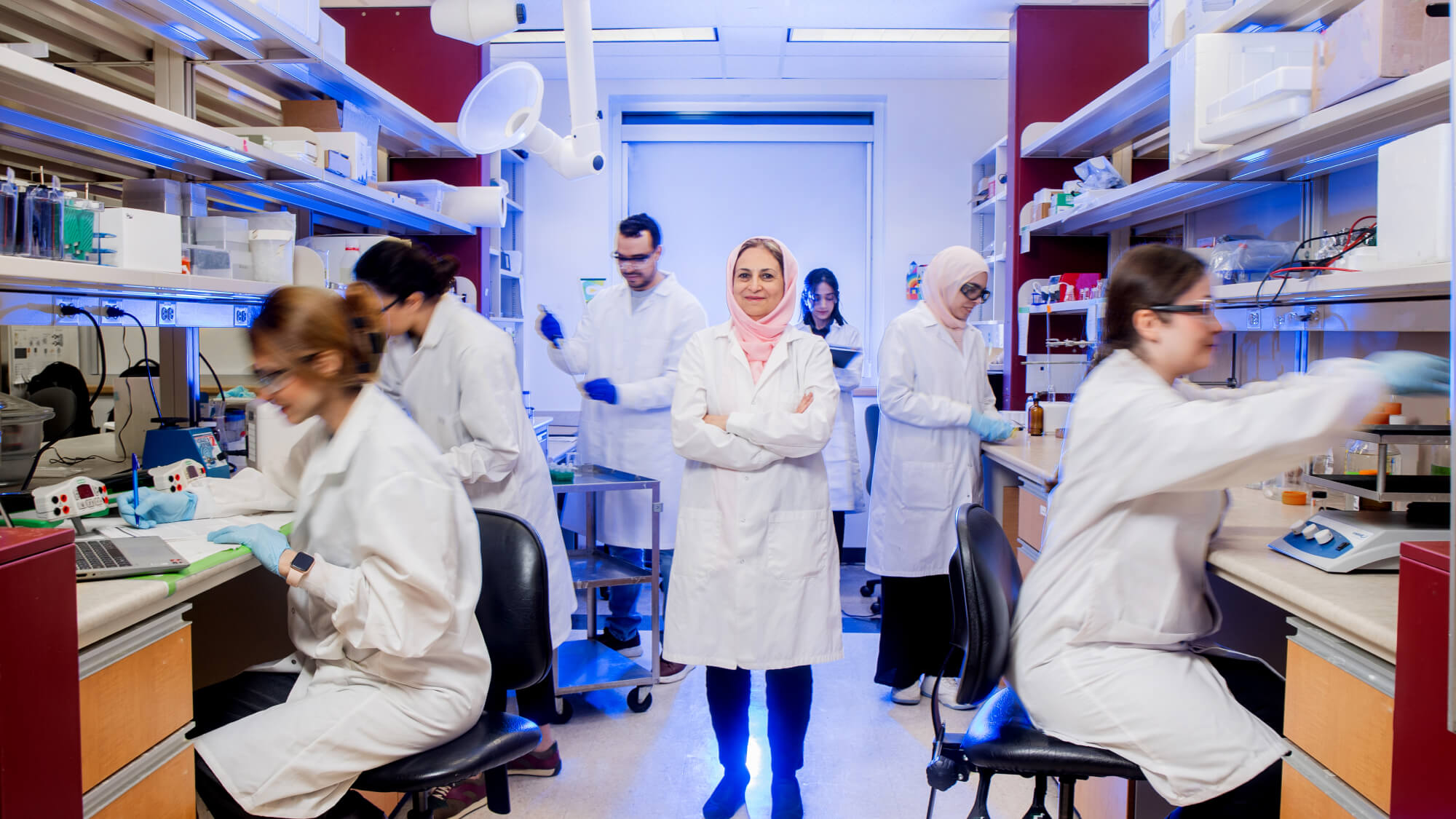
The road between discovering a biological drug target to treating a patient is often described as the “valley of death.” It can take up to 20 years for a drug to get from bench to bedside — and 90 per cent of drug candidates fail somewhere along the way.
Researchers in the Faculty of Pharmacy and Pharmaceutical Sciences are working hard to make drug development faster, cheaper and more effective. With experts situated along the development route, the environment is rich for breakthroughs.
Ai-Driven Discovery
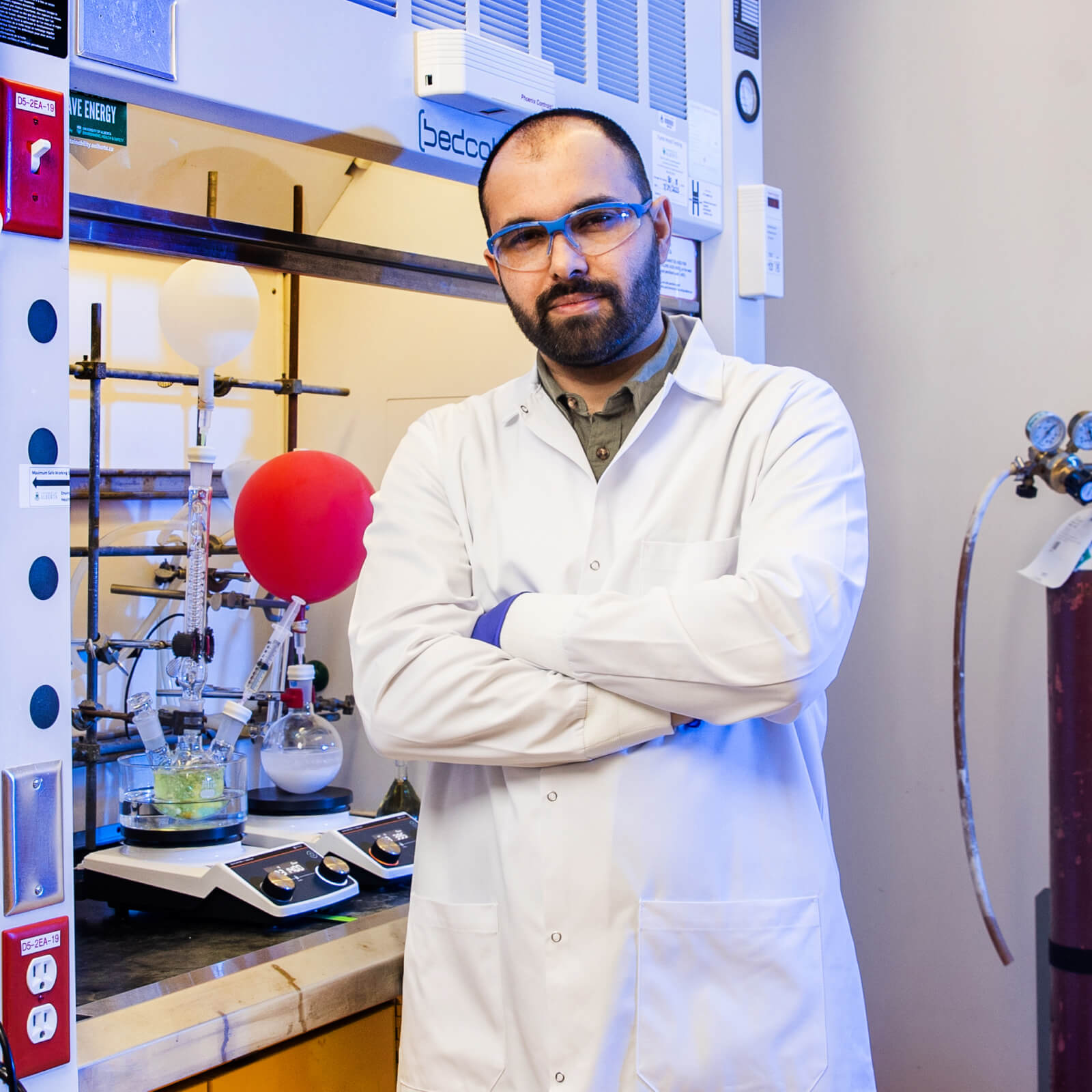
“There is a saying in drug discovery,” says Amir Tabatabaei, ’20 PhD, assistant professor. “‘If the search is going to fail, it’s best to fail fast and cheap.’”
Tabatabaei, who focuses on medicinal chemistry and translational drug discovery for obesity and Type 2 diabetes, is finding ways to hasten the process of identifying drug candidates, which usually takes years of trial and error.
Typically, the process starts with validating a biological target and screening massive chemical libraries. Medicinal chemists then balance a precarious set of trade-offs: a molecule must bind to its target effectively and remain highly selective to avoid toxic “off-target” interactions. The drug candidate must also meet criteria for absorption, distribution, metabolism and excretion.
Tabatabaei is familiar with this balancing act. Existing GLP-1 agonists — a class of medications that treat Type 2 diabetes and obesity by mimicking a natural hormone in the body called GLP-1 — effectively reduce a patient’s weight. However, as much as 40 per cent of that weight loss may come from the lean mass, which is not healthy. Tabatabaei’s research focuses on discovering drugs that promote weight loss while sparing muscle mass and ensuring a higher quality of long-term health. But the search is slow and meticulous.
This is where Tabatabaei’s lifelong passion for coding — something he honed on his own time during the COVID-19 pandemic — comes in.
His new platform uses artificial intelligence computer modelling to accelerate drug discovery through an iterative process — it learns every time it’s used. Tabatabaei intends for it to become the foundation of a fully automated facility that screens up to 200,000 compounds daily. The facility will include a liquid handler (a kind of “automated scientist” that prepares drug candidates to be tested), a surface plasmon resonance (a type of biosensor that can measure the interactions between the candidate and its target) and a robotic arm to load the candidates from the liquid handler into the surface plasmon resonance.
“The hope is that this will be able to find the drug for the target that we want in a matter of hours rather than years,” says Tabatabaei.
Out For Delivery
Researchers specializing in drug delivery are focused on designing a vehicle to ensure a drug candidate reaches its intended target with maximum potency and minimum side-effects.
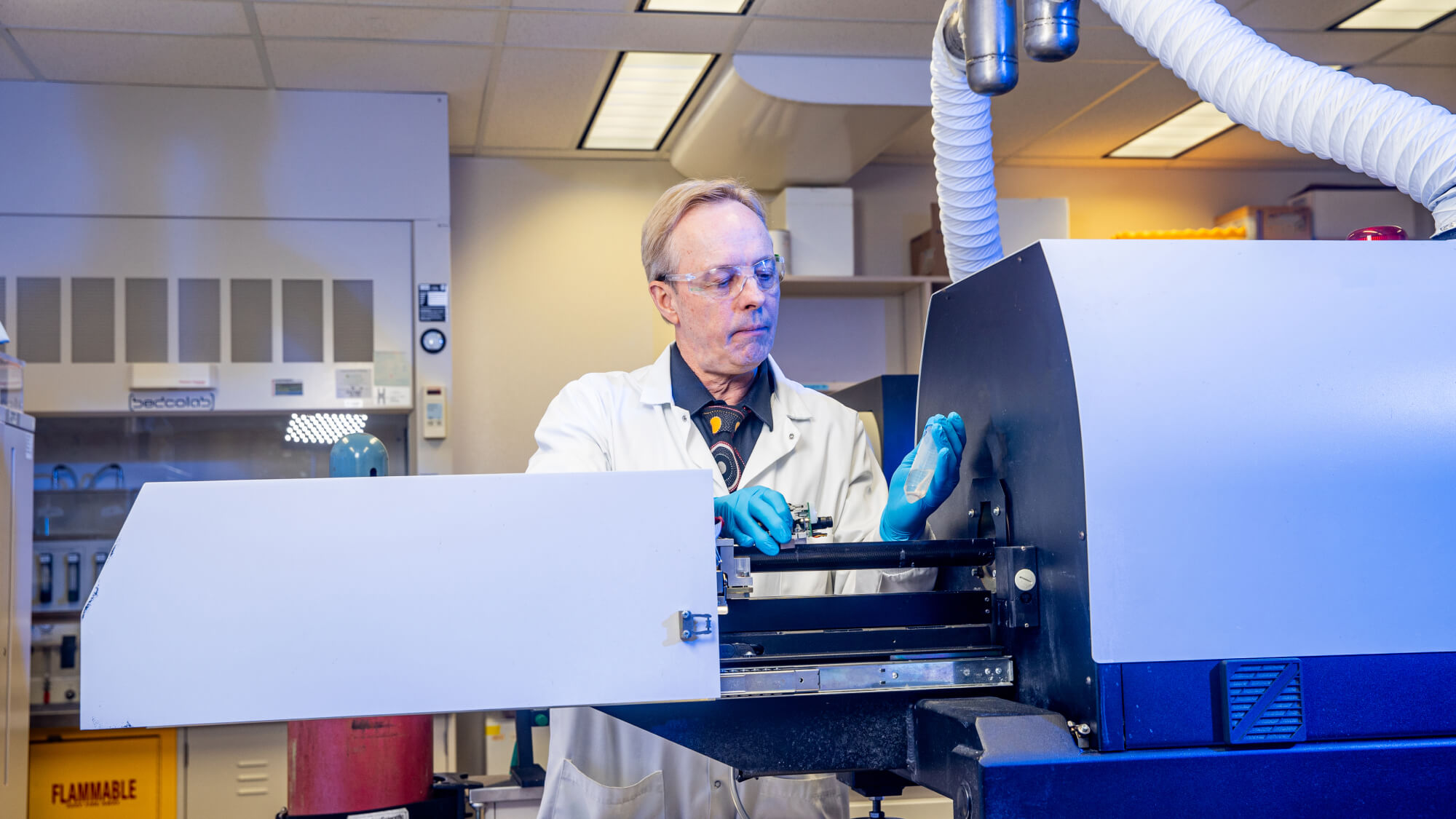
Michael Doschak, professor, has been researching bone disease for more than two decades to find better ways to guide medications past what he calls the “concrete sarcophagus” of mineral that encases bones and teeth. His bone-targeting therapeutics aim to reduce the pain and suffering attributed to bone diseases such as osteoporosis, arthritis and bone pain due to cancer.
“When we take pills orally, they’re absorbed and distributed through our soft tissues and organs,” he says. “But bone tissues need a different approach.”
Doschak’s team uses organic chemistry to reengineer existing compounds with special “cleaving” characteristics — meaning the ability for a drug to be separated from its transport mechanism when it reaches its target. This also helps it bypass other organs, reducing toxic side-effects in the liver and kidneys and promoting the release of the medication primarily where it’s needed.
To test his discoveries, he uses the Pharmacy MicroComputed Tomography Imaging Lab — a facility he established at the faculty in 2007 and has managed ever since. Micro-CT imaging allows researchers to see, in 3D and real-time, how treatments affect bone density in animal models. Doschak’s is the only in vivo micro-CT facility operating from within a faculty of pharmacy and pharmaceutical sciences in Canada.
The equipment takes a series of 2D x-ray projections, which are stacked to make a 3D reconstruction. Researchers can then examine the micro-architecture of the bone to identify characteristics like thickness and porosity. This type of imaging speeds up discovery by allowing researchers to see internal changes of the bone non-destructively instead of waiting until the end of a months-long study to harvest samples and look under a traditional microscope.
“In the last 15 years we’ve secured four U.S. patents,” says Doschak. “We’ve found a better way of delivering two peptide hormones, which have an incredible activity on bone cells. It can block osteoporosis or help grow new bone mass for people who have lost it, such as the elderly, and it has been proven to outperform current bone medications in pre-clinical imaging models of rats.”
A Race Against the Clock
So how does a properly packaged drug candidate get out of the lab and into the hands of patients?
Afsaneh Lavasanifar, ’01 PhD, professor, has been working on cancer drug delivery systems for more than 20 years. Her lab uses the precision of nanomedicine to package promising cancer drug candidates that are not water-soluble into extremely small transport vehicles (nanoparticles) that solubilize the medication, deliver it to where it’s needed and keep it away from where it shouldn’t be.
In 2007, she patented her nanomedicine delivery platform. Patenting is critical to the eventual development of approved medications, Lavasanifar says. It not only protects the intellectual property of the researcher, it also encourages industry partners to get on-board with clinical trials and final formulations. But securing a patent is neither fast nor cheap.
A patent’s 20-year lifespan starts at discovery. Scientists must prove that their drug is functional and “nonobvious,” meaning it’s something that other researchers wouldn’t have thought of. This can easily cost hundreds of thousands of dollars in government fees and specialized legal counsel. In Lavasanifar’s case, she recruited angel investors, applied for grants from organizations like Alberta Innovates and invested some of her own money into the process. Often, the entire clinical trial lifecycle — including safety, efficacy and comparison trials — also unfolds while the clock is ticking.
“Our patent process was relatively fast — and by relatively fast, I mean about five years,” Lavasanifar recalls. What keeps her motivated, she says, is “dealing with a disease like cancer, and the harsh side-effects we all know the therapeutics to have.
“You can make a real difference in patients’ lives by bringing the side-effects of a drug like chemotherapy down,” she says.
That’s why she launched a spinoff company, Meros Polymers: to make her nanomedicine delivery platform accessible to others. Meros, which holds the licence for Lavasanifar’s delivery-system technology, is using it to solve problems associated with existing medicines, repurpose older drugs and improve the therapeutic performance of new compounds — ultimately leading to treatments for more diseases that are easier on patients and allow them a better quality of life.
Making Up For Lost Time
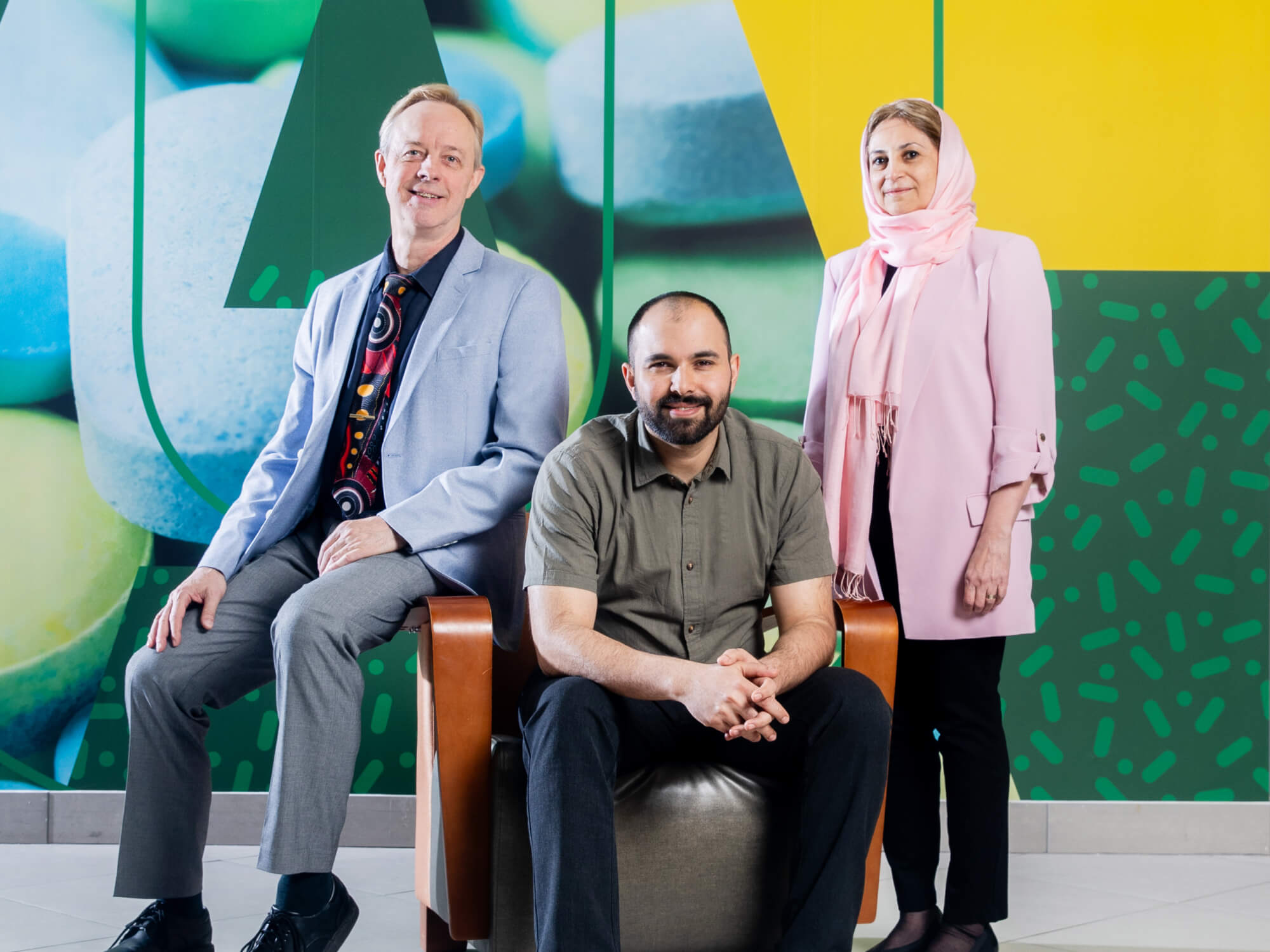
After years of working its way through the development pathway, one of Lavasanifar and her team’s cancer-treating drug candidates — an inhibitor of DNA repair — is now licensed to cancer research company Onco-Innovations for clinical trials. Doschak has moved several of his osteoporosis drugs to secure U.S. patents and is ready for a drug company to license them. Tabatabaei is applying for a grant from the Canada Foundation for Innovation in partnership with the U of A’s Cardiovascular Research Institute to kick-start his drug discovery facility.
At all points in the drug development process, the faculty’s mission remains clear: ensure that the next life-saving breakthrough makes it out of the lab and into the hands of the people who need it most.
“The faculty has the know-how,” says Doschak. “It takes leadership and cooperation to get all the players skating in the same direction. Instead of everyone having their own puck, we’re passing the puck to go for the gold.”
Photos by Curtis Comeau Photography