Building solutions from the ground up with pharmacy grad Lawrence Woo
22 October 2026
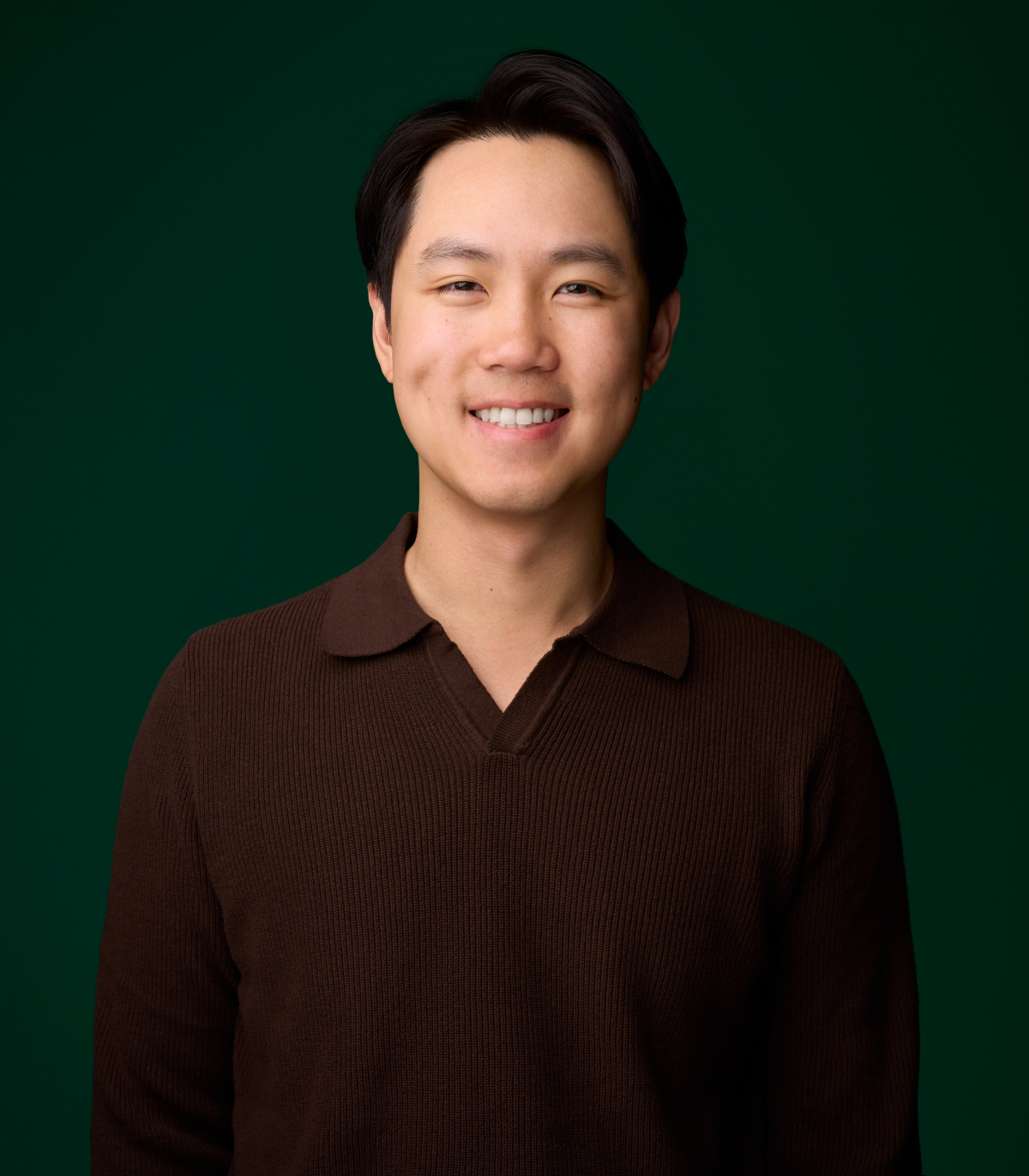
When U of A pharmacy grad Lawrence Woo, ’20 PharmD, entered the profession, he didn't necessarily predict he’d co-found a technology company. During his time as a student, Lawrence was heavily involved in student leadership, from participating in student council to revamping the Pharmacy Quarterly magazine and building community through student initiatives.
That passion for problem-solving and community building eventually led him to co-found Medi-scribe, an innovative clinical documentation tool designed to support clinical decision making and ease administrative burdens for practising pharmacists. Today, Lawrence balances his entrepreneurial path with relief shifts in community practice, keeping his clinical skills sharp while continuing to advocate for the evolving scope of pharmacy care.
We sat down with Lawrence to discuss his journey from student leader to tech innovator, the power of a U of A pharmacy degree and his advice for the next generation of pharmacists.
Q: What drew you to the field of pharmacy?
My parents originally planted the seed. While they hadn't attended university or worked in healthcare themselves, they always admired pharmacists as highly accessible and respected professionals and encouraged me to be a pharmacist and even open a pharmacy one day. I distinctly remember a grocery store pharmacist catching a potentially serious drug interaction in my mom’s medications, which left a lasting impression on me. I enjoyed health sciences and seeing the profession as the ideal blend of health care and entrepreneurship, I eventually worked up the courage to talk to a local pharmacist in my neighbourhood. That conversation convinced me to apply to the U of A.
Q: Looking back at your student years, did you ever picture yourself taking an unconventional, innovative path?
Early on, I realized I loved creating things and building teams. I was involved with the student council, participated in events like Mr. Pharmacy and worked on the Pharmacy Quarterly magazine as the Publications Director.
What I enjoyed most was helping fellow students step out of their comfort zones. For example, student writers were sometimes shy about approaching practicing pharmacists or professors for interviews. By framing it around our magazine, it gave them the confidence to break out of their shell, ask questions and learn directly from leaders in the field.
That early experience sparked two things for me: a love for bringing people together to solve problems and a deep passion for pharmacy advocacy.
Q: Where did the initial spark for Medi-scribe come from?
After graduating and practising in Alberta, I moved to B.C. to manage pharmacies. Alberta pharmacists are unique because of our advanced scope and clinical culture. When I moved to B.C., I saw that while the practice scope differed slightly, the fundamental challenge was universal: pharmacists everywhere want to deliver exceptional patient care, but the technology supporting them often feels outdated or fragmented.
A friend of mine Nathan Nguyen, who is a software developer and Computer Science Grad from U of A was visiting, and we started casually discussing the administrative bottlenecks pharmacists face. We began meeting on weekday evenings to build a prototype to help streamline medication monitoring and side-effect profiles during pharmacist-led medication renewals.
Initially, we weren't sure if the idea would take off. After testing a prototype with a few colleagues, we decided to pivot and shut down our makeshift server. The very next day, one of my colleagues and fellow U of A PharmD grad, Dimitri Kachenyuk, messaged us saying, "Hey, Medi-scribe seemed to stop working! I rely on this — can you please look into this to have it fixed?" Realizing that our tool genuinely made a colleague's daily workflow easier was the exact spark and confidence boost we needed to keep going.
Q: What core mindset guides how you approach challenges and build new tools for health care?
It comes down to validating the real problem, not just treating a symptom or building a "nice-to-have."
Pharmacists are resilient. They find workarounds for fragmented systems. But when you apply first-principles thinking, you realize the core problem often boils down to time and cognitive overload. Pharmacists have competing priorities every single second on the dispensary floor.
Because I am a practising pharmacist, I can empathize directly with that reality. Our philosophy with Medi-scribe has always been to build directly for the clinician on the ground. If you create a solution that genuinely improves a pharmacist's workday rather than adding more steps, the impact trickles down to better patient care and a stronger health-care system.
Q: From your experience practising in different provinces, what makes a University of Alberta pharmacy degree stand out?
Holding a U of A degree speaks volumes. Alberta’s pharmacy practice environment is widely recognized as a trailblazer in scope of practice, clinical culture, and patient care.
When I moved to B.C., my Alberta training opened doors immediately. I had the privilege of working with the British Columbia Pharmacy Association (BCPhA) to help build support programs for the rollout of pharmacist prescribing in B.C. and even guest-lectured at the University of British Columbia. Being trained in Alberta sharpens how you evaluate patient care and advocate for the profession, and that's a perspective you can take anywhere in the world.
Q: What gives you the most optimism when you interact with current U of A pharmacy students?
We offer a 4th-year specialty rotation and summer internships for pharmacy students at Medi-scribe, and I find that all our student pharmacists have adapted quickly in this “non-traditional” pharmacy role. Clinically, they are exceptionally sharp and come thoroughly prepared. They handle ambiguity well, communicate pharmacist feedback clearly, and critically appraise evidence with confidence.
Seeing them look at pharmacy clinical operations through a new, analytical lens gives me immense optimism. They aren't just learning to fit into existing workflows or care models; they are asking why things are done a certain way and how technology and the role of pharmacists can be used to improve patient care, safety, and workflow.
Q: What is your message or call to action for the graduating classes ahead?
Community pharmacy and healthcare often demand that we run at full speed from day one, which can quickly become overwhelming. Whether you are building your clinical confidence, managing a patient's complex blood pressure regimen, trying to build a healthcare product, or trying to solve dispensary workflow issues, give yourself permission to break challenges down and focus on daily, incremental improvements.
Don't be afraid to question established routines if you see a way to provide better care, reduce administrative burden, or improve patient safety. You have more agency to shape your career and your practice environment than you think!