Reflections on A Chip Odyssey
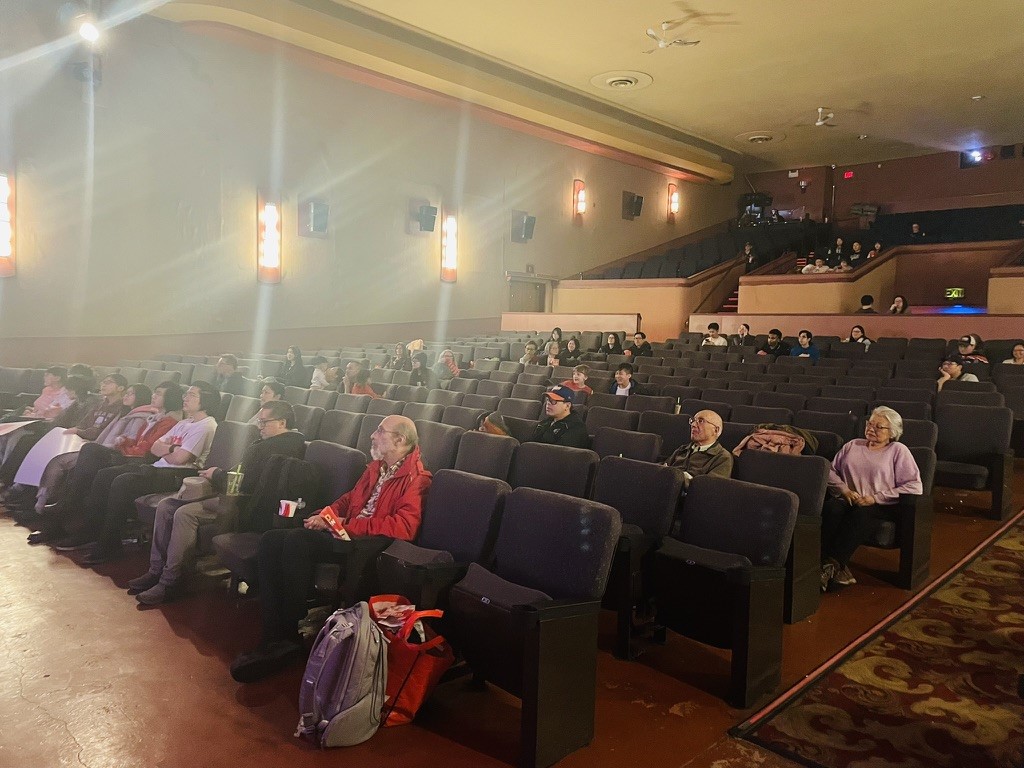
The Taiwan Studies Program at the University of Alberta, the Edmonton Taiwanese Association (E.T.A.), and the Taipei Economic and Cultural Office (TECO) in Vancouver jointly hosted a film screening event on March 19 at the Garneau Theatre. The documentary A Chip Odyssey (造山者) was featured, drawing a large and enthusiastic audience. A post-screening discussion was also held, generating lively engagement.
In the 21st century, Taiwan has gained global recognition for its high-tech industry and is often referred to as the “Silicon Island.” More than 90 percent of the world’s advanced semiconductor chips are produced by Taiwanese companies, which, through their exceptional manufacturing yields, have secured an irreplaceable and critical position in the highly competitive global market. Amid today’s complex and rapidly shifting geopolitical landscape, the semiconductor industry has become a vital pillar of Taiwan’s national security and economic development.
A Chip Odyssey chronicles the development of Taiwan’s high-tech industry from the late 1970s to the present. It revisits the international political and economic challenges Taiwan faced at the time, including its withdrawal from the United Nations and the global energy crisis. Through interviews with key decision-makers involved in the establishment of Taiwan’s science parks, alongside academic research and on-site footage from early production facilities, the film offers audiences an immersive understanding of the industry’s evolution.
Many countries around the world have attempted to establish science parks, hoping to replicate the success of Silicon Valley in the United States and the Hsinchu Science Park in Taiwan. However, these models have proven difficult not only to surpass but even to replicate. Taiwan’s success stems from the interplay of multiple factors: strong government policies and financial support, contributions from overseas talent, the integration of domestic small and medium-sized enterprise supply chains, and the hardworking, enterprising spirit of its people—along with a measure of favorable timing and circumstance. Had Taiwan not initiated industrial transformation in the 1980s and instead continued to rely on traditional international trade and export-oriented manufacturing, its present-day trajectory would likely be very different. The vision of policymakers and the efforts of entrepreneurs lie at the heart of the story this film seeks to tell.
However, we should not overly romanticize the achievements of high-tech industrial development while overlooking the costs it entails. For a long time, Taiwan has struggled to establish globally influential domestic brands. Following democratization in the 1990s, the government has also found it difficult to sustain the developmental state model of industrial policy; economic policymaking has increasingly been shaped by populist pressures and electoral cycles, often becoming short-term and slogan-driven, thereby slowing industrial upgrading. Moreover, the substantial energy demands of the high-tech sector, the environmental impact of factory development on local communities, and the long working hours of science park engineers, resulting in work–life imbalance, mental health concerns, and worsening income inequality, are all challenges that cannot be ignored.

This screening of A Chip Odyssey not only helped Canadian audiences gain a deeper understanding of the background and trajectory of Taiwan’s economic development, but also enhanced awareness of Taiwan’s role in the Indo-Pacific region. Such understanding may serve as a valuable reference for Canada in shaping and implementing its Indo-Pacific strategy. During the post-screening Q&A session, attendees also expressed hope that the Taiwan Studies Program will continue to engage with the broader community and share academic resources more widely.
In addition, the event partnered with the Edmonton’s Food Bank to collect food donations and monetary contributions from the public, adding a meaningful dimension of community support and social impact to the cultural exchange.
By Dr. Jackson Yeh, Research Associate in the Taiwan Studies Program