Bentley Lecture in Sustainable Agriculture
The 24th annual Bentley Lecture in Sustainable Agriculture was on Feb. 6, 2026.
"From soil pits to algorithms: Artificial Intelligence, Machine Learning and the future of agricultural soils" was presented by Tahmid Huq Easher from Olds College of Agriculture and Technology.
This presentation will explore the transformative role of Artificial Intelligence (AI) and Machine Learning (MLA) in modern soil science and data-driven agricultural decision-making. Tahmid Huq Easher will reflect on his evolution as a soil scientist, tracing the shift from traditional field-based classification to advanced digital soil mapping that predicts properties across complex landscapes.
Highlighting the work at Olds College Smart Farm, the talk will demonstrate how the integration of soil, crops, climate and sensory data is accelerating the development of next-generation agricultural technologies. Set against the backdrop of Prairie Canada, Huq Easher will analyze the current digital landscape and the nuance of technology adoption. Crucially, the lecture will address the human side of the data revolution — tackling data quality, privacy and sovereignty — to frame a future where AI and MLA are not just tools, but essential partners in sustaining soil health and agricultural resilience.
This event is free to attend and is hosted in Earth Sciences Building (ESB) 3-27, North Campus, U of A.
About the speaker
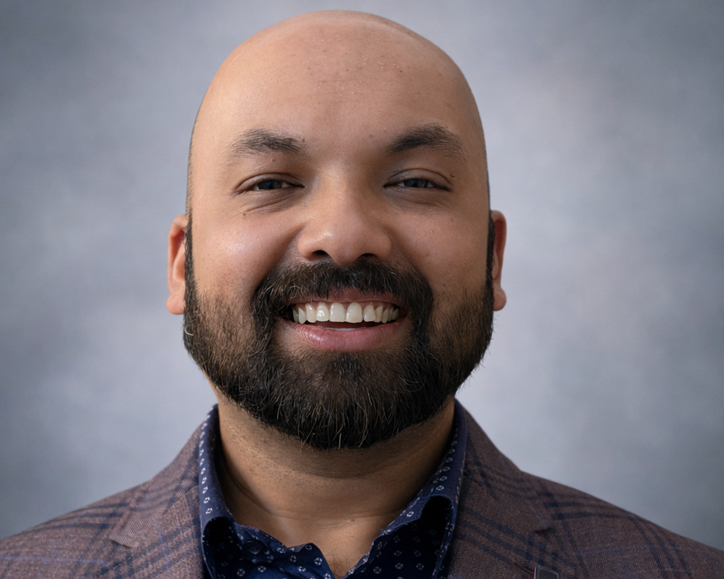
Tahmid Huq Easher is a faculty member and the Program Curriculum Committee Chair for the Bachelor of Digital Agriculture at the Werklund School of Agriculture Technology, Olds College, where he specializes in integrating soil and water management with agricultural data analytics and climate resilience. Holding a PhD from the University of Guelph and an MSc from McGill University, Huq Easher has held academic positions in Canada and Bangladesh, consistently focusing on leveraging digital tools and spatial analysis to drive sustainable agricultural practices. His core research applies machine learning to digital soil mapping and investigates technology adoption among Prairie farmers, supported by a long-term aspiration to utilize artificial intelligence to bridge the communication gap between complex science and actionable policy. This commitment to bridging sectors is rooted in his previous work with the Bangladesh climate negotiations group under the UNFCCC and his research on climate finance frameworks. Currently, he serves as the Chair of the Alberta Soil Science Workshop, while also contributing to a think tank for a provincial soil data portal. Originally from a family of educators in Dhaka, Bangladesh, he now resides in Carstairs, Alberta, with his wife, a social worker, and three furry children, balancing his academic leadership with a passion for experiential learning, cricket, baseball, and rock/metal music.
2025 Lecture
On February 19, 2025, the Honourable Rob Black, Senator for Ontario and former Chair of the Standing Senate Committee on Agriculture and Forestry presented: Critical Ground: Why Soil is Essential to Canada’s Economic, Environmental, Human, and Social Health.
His presentation explored the recently released report of the same name, which was a much-anticipated follow-up to the previous report released forty years ago. He highlighted the crucial role soil plays in the sustainability of our agricultural practices, economy and the well-being of Canadian society.
This free event invited ALES alumni, supporters and the greater community to engage in an important conversation about the future of agriculture and the environment in Canada. Following the lecture, the audience enjoyed a reception to view student poster presentations, share ideas and further discuss the challenges and solutions presented.
This edition of the lectureship was organized in partnership with the Alberta Soil Science Workshop (ASSW).
About the speaker
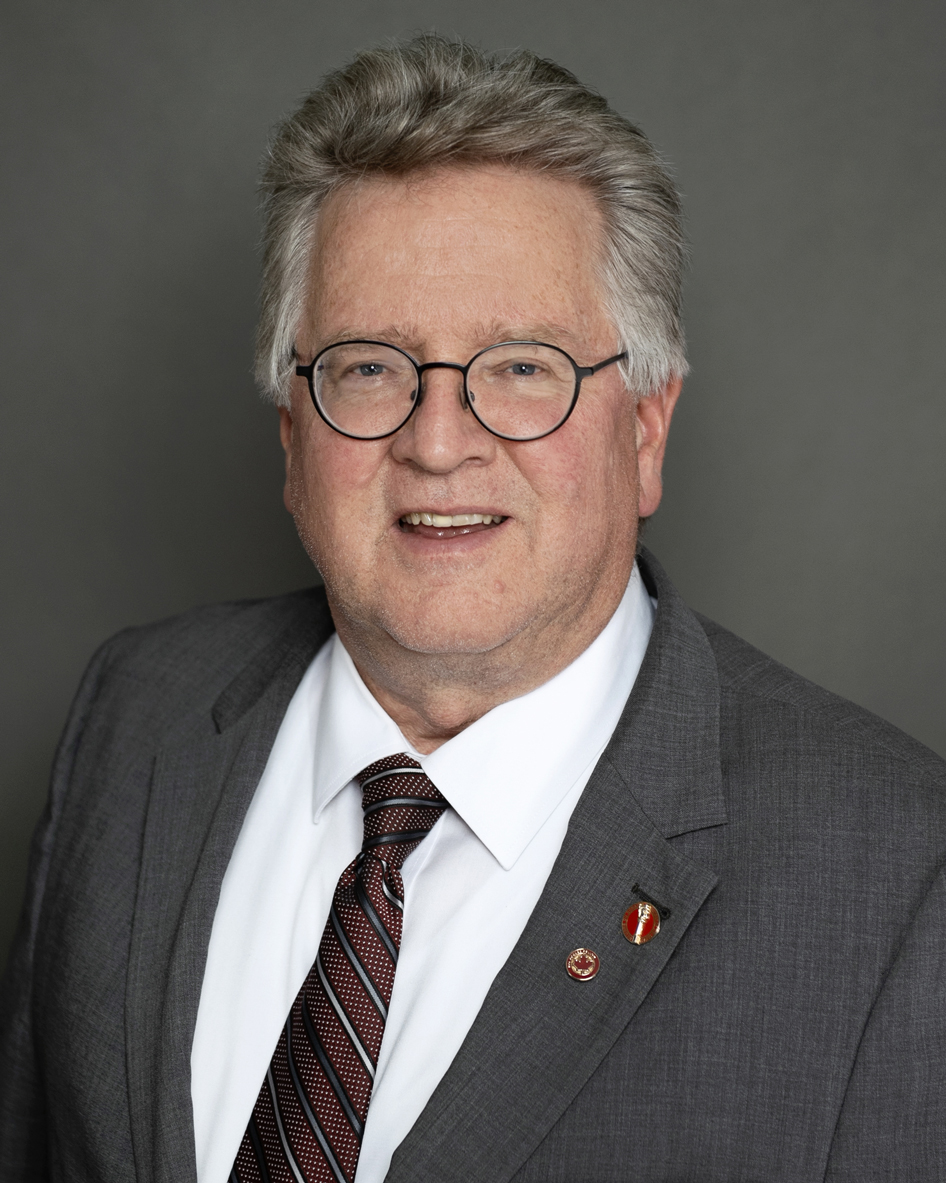
The Honourable Rob Black is a member of the Senate of Canada and the former Chair of the Standing Senate Committee on Agriculture and Forestry. Through this work, he has been at the forefront of discussions on the environmental challenges related to soil degradation, and has worked tirelessly to ensure that soil conservation and sustainable land management practices are integral to Canadian policy. His efforts are reflected in the committee’s Critical Ground report, which emphasizes why soil is essential to Canada’s economic, environmental, human and social health.
Senator Black’s deep commitment to Canada’s agricultural sector began long before his appointment to the Senate in 2018. He is a long-time leader in agricultural networks as an advocate for rural communities and champion of sustainable agriculture. His work has been recognized within the agricultural and environmental sectors, and his dedication to policy-making continues to have a lasting impact on Canada’s agricultural landscape. In February 2021, Senator Black was recognized as one of the Top 50 Most Influential People in Agriculture by Canadian Western Agribition, and in 2024 he was made an honorary member of the Canadian Society of Soil Science.
2024 Lecture
On February 13, 2024, Melissa Arcand presented: Perspectives on safeguarding soil health in Indigenous agroecosystems.
Agriculture is the dominant land use in First Nations in the Canadian Prairies. In this lecture, soil biochemist Melissa Arcand will provide an overview of the contemporary context of First Nations agriculture in the prairies and highlight strategies that First Nations are employing to safeguard soil health in their agricultural lands. She'll share recent activities and learnings from Canada’s first Indigenous-led Living Lab, Bridge to Land Water Sky as well as outreach and training activities to increase agricultural land management capacity for Indigenous people.
Undergraduate and graduate students participated in the event with a poster presentation, where they showcased their research from a variety of relevant areas.
About the speaker
Melissa Arcand, PhD, is an associate professor in the Department of Soil Science at the University of Saskatchewan and is a member of the Muskeg Lake Cree Nation in Treaty 6. Arcand researches soil health, carbon storage, and nutrient cycling in agroecosystems. Her recent interdisciplinary research focused on Indigenous agriculture in the Prairies, including hosting a SSHRC Connections Grant-funded Forum on Indigenous Agriculture in Saskatchewan. Arcand also collaborated with First Nations’ lands departments to assess soils on agricultural lands with support from the New Frontiers in Research Fund – Explorations Grant and the Agriculture and Agri-Food Canada, Agricultural Climate Solutions Living Labs. Arcand's team is developing and delivering outreach activities in soil health and agricultural beneficial management practices to First Nations through a Weston Family Foundation Soil Health Initiative project. In addition to her research and service work, she teaches and is the academic advisor for students in the Kanawayihetaytan Askiy (“Let us take care of the land” in Plains Cree) Indigenous Land and Resource Management Certificate program and is the academic lead for the kihci-okâwîmâw askiy Knowledge Centre at the University of Saskatchewan.
History
Contacts
Academic Lead
Guillermo Hernandez Ramirez
780 492 2428
ghernand@ualberta.ca
Academic Lead
Devin Serfas
serfas@ualberta.ca


The lecture is named in honor of professor Fred Bentley. Professor Bentley's academic career, mainly at the University of Alberta, spanned over 36 years and included dean of the Faculty of Agriculture from 1958 to 1968.
Each year the University of Alberta invites a speaker of international renown to present current research and updates in areas relating to soil science, agricultural production methods, and sustainable agriculture. Current students and faculty members as well as members of the public benefit from these presentations.
The purpose of the endowment is to support the Bentley Lecture in Sustainable Agriculture. This lecture series allows leading national and international speakers to present novel and innovative research and/or to discuss current issues in sustainable agriculture. The lecture series will also provide the opportunity for students to engage in these topical discussions. Funds may be used to provide honoraria, to reimburse travel-related expenses for the speaker (transportation, accommodation, hosting), and any other expenses related to the lecture series (publicity).