Convocation 2026: Robert Bissoondatt, BSc (Hons) Biochemistry
Donna McKinnon - 17 June 2026
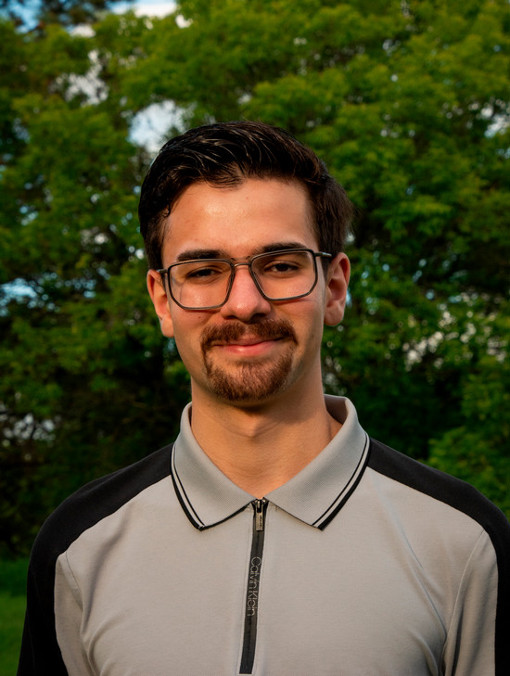
Robert Bissoondatt, BSc (Hons) in Biochemistry
Robert Bissoondatt entered university on an academic path sparked by a fascination for metabolic processes and a talent for numbers. When he discovered that biochemistry was the perfect fit for describing living systems through a quantitative lens, he was hooked.
The transition from a self-described shy first-year student to an active participant in the science community is truly remarkable, and while Robert remained deeply committed to his studies, many of his most memorable experiences happened outside the laboratory. As both a volunteer and as an intern, he immersed himself in the university experience, squeezing as much out of his education as possible.
It began with the Science Mentorship Program — a role he found so rewarding that he continued to mentor students through the program for four consecutive years. As a devoted community-builder, he took on various volunteer roles with the Interdepartmental Science Students’ Society and also served as a U of A Ambassador.
Beyond his volunteer work, Robert gained invaluable hands-on experience through a 16-month placement with the RCMP National Forensic Laboratory Services via the Science Internship Program (SIP). The internship also extended into the field, where he joined toxicology colleagues at the Office of the Chief Medical Examiner of Alberta to observe the work of a forensic pathologist and autopsy technicians.
“I was also invited to attend the Change of Command Ceremony for the Commanding Officer of the Alberta RCMP in August 2025 which was a true honour,” he says.
Reflecting on a transformative five years at the U of A, Robert encourages current and future students to take risks, step outside their comfort zones and embrace the power of community.
Congratulations Robert!
What program are you graduating from?
A Bachelor of Science (Hons) in Biochemistry.
What led you to choose your current area of study, and why the U of A for your studies?
My original decision to focus on biochemistry came from the fascination with which I learned about basic metabolic processes in high school biology class. I was awestruck at how we can understand life at the molecular level in such intimate detail. Another passion of mine is numbers and math and, thankfully, biochemistry enables quantitative descriptions of biological systems if one is so inclined.
I also chose the BSc in biochemistry program because of how versatile it is. Its concepts and principles are foundational to most of the other biomedical disciplines and thus prepares its students well for a variety of careers in research, industry or healthcare to name a few. The biochemistry program at the U of A has a reputation that precedes itself and has a rich history spanning 102 years of innovative discoveries and collaborations.
Tell us about your experience in your faculty.
I have thoroughly enjoyed my time in the Faculty of Science and have done as much as my schedule will allow me to be involved in my science community. My longest running commitment has been my participation in the Science Mentorship Program. This program, operated by the faculty, pairs first-year science undergrads with experienced upper-year students who can ease their transition to university life and welcome them into our science community. I spent four years with this program, one as a junior mentor and the following three as a senior mentor.
During my time with the program I helped to evolve its structure to better serve the needs of our mentees and foster strong bonds of friendship and collegiality among our students. One important change was the formation of four discrete mentorship cohorts — orientation, academics, community service and wellbeing — with specific goals and social events to execute. I also served in several roles with the Interdepartmental Science Students’ Society (ISSS) and am grateful for the opportunities they provided me to grow my leadership and soft skills.
Aside from my volunteer work, I was fortunate to gain experiential learning through the faculty’s Science Internship Program (SIP). I spent sixteen months with RCMP-National Forensic Laboratory Services (NFLS), the forensic laboratory division of the Royal Canadian Mounted Police. I got to work on several projects during my time there including the Paint Data Query (PDQ) Program. PDQ is a database of over 25,000 civilian automotive paint samples against which samples recovered from the scenes of hit-and-runs are compared to identify the likely year/make/model of a suspect vehicle. Part of the PDQ Program includes training our law enforcement partners to use the database and realize its full potential as an investigative tool. To this end, it was a great pleasure to virtually train partners of ours from agencies like CSIS, the FBI, CIA and Interpol. I was also invited to attend the Change of Command Ceremony for the Commanding Officer of the Alberta RCMP in August 2025 which was a true honour.
It was also a privilege to accompany some of my toxicology colleagues on a visit to the Office of the Chief Medical Examiner of Alberta to observe some autopsies and learn about the work of a forensic pathologist and autopsy technicians.
On the topic of academics, I fondly think back on my time completing my honors research project in Dr. David Stuart’s laboratory. My project was looking into the production and release of small proteins called nanobodies from genetically engineered yeast cells. I am incredibly grateful for the friendships I formed in that lab and the guidance and support I received from my grad student supervisors.
What is one of your favourite memories from your time at U of A?
Reflecting upon my time as a U of A Ambassador, assisting with the Cap ‘n’ Gown ceremony at U of A Days in September 2025 was a special memory for me. This event welcomed alumni who graduated from the university in 1965 and 1975 to cross the stage once more and reunite with their former classmates. To see the powerful, and at times emotional, reunions between classmates who haven’t seen each other in decades was incredibly moving and a special moment for my fellow ambassadors and I to share in.
Tell us about your favourite professor and/or class.
One of my favourite courses from my undergrad was BIOCH 481/BIOCH 482 (Design and Construction of Synthetic Biological Systems), a two-part senior biochemistry course which explores the design of genetic circuits to solve real problems. My labmate and I designed a bacterial sensor for detecting levels of fluoride, nitrate and arsenic in drinking water. This sensor, if further developed and tested, could be of use to farmers for efficiently and reliably testing the quality of water when tapping a new well. Aside from the course content, which I found thoroughly engaging, I also appreciated the strong sense of collegiality in our classroom environment. Our instructor, Dr. Richard Fahlman always found a way to take complex and abstract concepts and demonstrate how we could apply them as tools to solve practical problems. Dr. Fahlman is one of my favourite professors because of his down-to-earth approachability and constant supply of entertaining analogies and anecdotes!
What advice do you have for current and future students?
What I would say to current and future students is this: don’t be afraid to take risks. Don’t be afraid to put yourself out there, introduce yourself to your classmates during lecture and ask for help when you need it. When I began university I was relatively shy and reluctant to draw much attention to myself. But as I met like-minded people I soon came to understand the importance of community work and the spirit of being involved.
University is of course a time for learning and preparing for one’s future career and goals. But, it is also a time for making friendships and connections that last long after graduation. It’s about making your mark. Your professors and instructors are your mentors, your classmates are your future colleagues. It may take time to find people you can relate to, and this is okay! Be patient, trust in the process. My last five years at the U of A have transformed my life in countless ways and brought me experiences I could have never foreseen.
How do you plan on celebrating convocation?
I am excited to celebrate my graduation with my family and to take lots of photos with my friends who are also graduating this spring. Later this summer I also hope to visit my grandparents who live in rural Alberta and are unable to attend my convocation in-person. I am also looking forward to a little grad trip to the mountains in July as I enjoy hiking and it has been several years since I last visited our beautiful national parks.
What’s next after graduation?
I am delighted to share that I have been granted admission to the Doctor of Dental Surgery (DDS) Program here at the U of A, beginning August 2026. Naturally I am excited for the challenges and opportunities that await me in this program, and I feel so fortunate to get to continue my time at the U of A as I pursue the care-focused world of dentistry. In short, I get to fulfill a lifelong dream of mine!