Convocation Profile: Eric Awuah
M. Whitecotton-Carroll - 10 June 2026
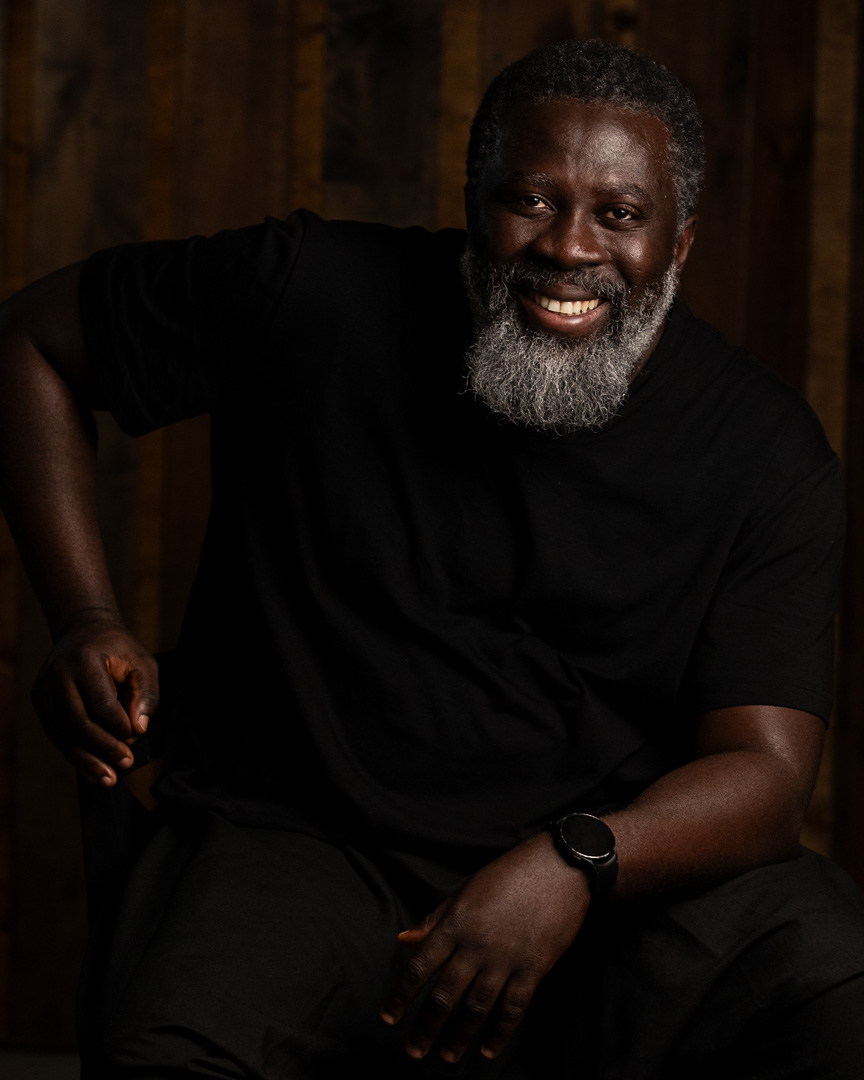
We caught up with this busy scholar to ask a few questions!
What program are you graduating from?
I am graduating with a PhD in Anthropology from the Department of Anthropology at the University of Alberta.What led you to choose your current area of study, and why the U of A for your studies?
My work has always been grounded in the body, movement, culture, and community. Coming from Ghana, where dance, drumming, storytelling, ritual, and everyday life are deeply connected, I was drawn to anthropology because it gave me the tools to study embodied knowledge not only as performance, but as an effective way people remember, transmit history, negotiate identity, and build community. I chose the University of Alberta because it offered the intellectual space to bring together anthropology, African dance studies, diaspora studies, and community-engaged research. The U of A gave me the opportunity to think deeply about Ghanaian movement systems within a Canadian context, especially among Ghanaian and African diasporic communities in Alberta. It also allowed me to connect scholarly research with creative practice, teaching, and public engagement.
Tell us about your experience in your faculty.
My experience in the Faculty of Arts and the Department of Anthropology has been deeply transformative. I found a space where I could grow as a researcher, teacher, artist, and community organizer. My work was not limited to the classroom alone; it extended into studios, community halls, rehearsals, performances, workshops, and conversations with African, Caribbean, and Black communities in Alberta. Throughout my doctoral journey, I was encouraged to think critically about knowledge, culture, power, identity, and representation. I was also able to develop my own voice as a scholar working at the intersection of anthropology, dance-music studies, intangible cultural heritage, and African diasporic performance practices. The faculty gave me room to build bridges between academic research and community life, which has been one of the most meaningful parts of my time at the University of Alberta.
What is one of your favourite memories from your time at U of A?
One of my favourite memories was bringing together scholars, artists, students, and community members through the Evolving Rhythms: African Diaspora Movement Practices in Canada symposium which I created and co-convened with my supervisor with the help of my home department. Seeing African, Caribbean, and Black dance practices recognized within the university space, while also being shared with the wider Edmonton community, was very special. Another unforgettable moment was staging Paper Ship: A Choreographic Odyssey of Struggle and Liberation, a performance that brought together many performers from different generations and backgrounds. It reminded me that research can move beyond the page. It can be danced, heard, felt, witnessed, and shared collectively.
Tell us about your favourite professor and/or class.
I have been fortunate to learn from and be supported by many generous professors at the University of Alberta. My supervisor, Professor Marko Zivkovic, has been especially important in my doctoral journey. His guidance helped me sharpen my thinking, trust my scholarly voice, and situate my work within broader anthropological conversations. He was a constant voice of encouragement, correction, and mentorship. I am also grateful to professors and mentors who challenged and supported me throughout the process, including those whose work helped me think more deeply about music, performance, identity, culture, and community. I am grateful to my dissertation committee as well who supported my journey with constructive advice.
What advice do you have for current and future students?
My advice is to trust the journey, even when it feels uncertain. Graduate school can be demanding, but it is also a place where you can discover the depth of your own voice. Do not be afraid to bring your full self into your work including your history, your community, your questions, your culture, and your lived experiences. I would also encourage students to build relationships. Find mentors, support your peers, listen deeply, and remain open to learning from people both inside and outside the university. Some of the most important knowledge you will encounter may come from classrooms, but it may also come from communities, elders, artists, family members, and the everyday lives of the people around you.
How do you plan on celebrating convocation?
I plan to celebrate convocation with gratitude. This achievement belongs not only to me, but also to my family (especially my wife and son), church, mentors, collaborators, friends, and the communities who supported and inspired my work. I hope to mark the moment with my loved ones, reflect on the journey, and give thanks to God for the grace, encouragement, and resilience that carried me through.
What's next after graduation?
After graduation, I plan to continue building work that connects scholarship, performance, community engagement, and cultural preservation. I will continue developing research and creative projects focused on African and African diasporic dance-music forms, embodied knowledge, and intangible cultural heritage. I am also committed to expanding initiatives that support African, Caribbean, and Black communities in Canada, including archival, educational, and performance-based projects. My goal is to keep creating spaces where African movement systems are studied, preserved, taught, celebrated, and understood as crucial Indigenous Knowledge Systems for development.
Information about Eric’s upcoming book, Revitalizing Decolonization Through Dance Scholarship: Dancing the African Personality can be found here.