Keynote Speakers
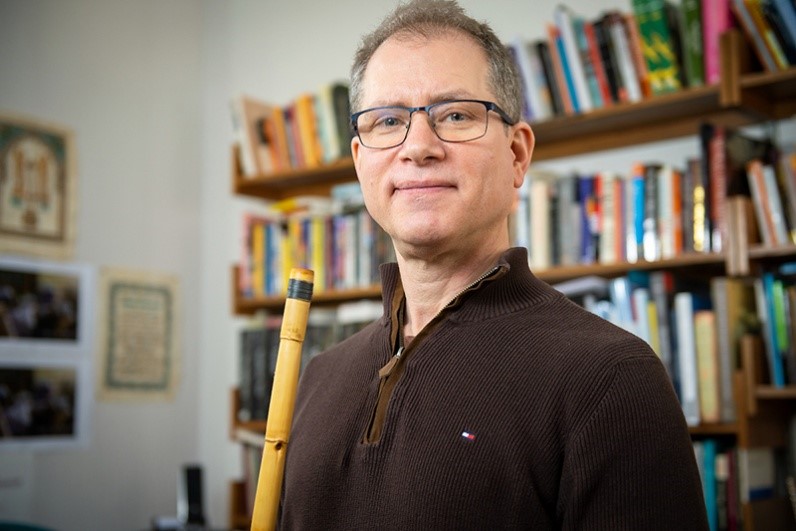 Dr. Michael Frishkopf
Bio:
Michael Frishkopf, Ph.D. (frishkopf.org, m4ghd.org), is a professor of music, director of the Canadian Centre for Ethnomusicology, adjunct professor of medicine and adjunct professor of religious studies at the University of Alberta. His research in the Arab world and West Africa centres on sound and Islam, Arab music, music and architecture, music and development, music as medicine and virtual and augmented reality. Recent publications include ‘Music for global human development’, in Transforming Ethnomusicology (Oxford University Press, 2021), ‘My musical journey’, in Global Middle East: Into the Twenty-First Century (University of California Press, 2021), ‘Aesthetics, creativity, and mysticism: An investigation of three modes of consciousness’, in Zygon (2019), ‘Identity maintenance through ritual language performance among contemporary Egyptian Sufi orders’, in Aspects of Performance in Faith Settings (Cambridge Scholars Publishing, 2019), ‘Paralinguistic ramification of language performance in Islamic ritual’, in Yale Journal of Music and Religion (2018) and Music, Sound, and Architecture in Islam (University of Texas Press, 2018).
 Dr. Cudjoe Emmanuel
Bio:
Tenure-Track Faculty | ACM-Andrew Mellon Fellow | Dance Scholar & Cultural Advocate
Dr. Cudjoe Emmanuel is a tenure-track faculty member and Andrew Mellon Faculty Fellow in the Department of Theatre and Dance at Ball State University. A Ghanaian-born scholar, choreographer, and performer, Dr. Cudjoe holds a Ph.D. in Dance Studies from Temple University, where his Afrocentric and practice-led research, From Palace to Academy, explored the embodiment, transmission, and discontinuity of Asante Kete court dance traditions. With a background in theatre and and MA in African studies from the University of Ghana and an MA in International Dance Knowledge from the Erasmus Mundus Choreomundus program, Dr. Cudjoe brings over 20 years of international and indigenous experience to his academic and creative work. His research centers on Afrocentric theory, dance as intangible cultural heritage, postcolonial critique, and the decolonization of Asante embodied knowledge.
He has published and presented extensively across Africa, Europe, North America, and Asia, and his work has been supported by numerous fellowships and awards, including the Erasmus Mundus Scholarship and the Edrie Ferdun Emerging Scholar Award. His recent book, The Embodiment and Transmission of Ghanaian Kete Royal Dance: From Palace to Academy, published by Anthem Press, is the first to apply Afrocentric theory to Ghanaian dance scholarship. Dr. Cudjoe’s choreographic collaborations include Paper Ship (University of Alberta) and Groove (Ball State University), blending traditional African movement with contemporary expressions of diaspora identity and resilience. He also serves on the Inclusive Excellence Committee at Ball State and co-directs Star that Shines, an NGO facilitating cultural education and international exchange in Ghana.
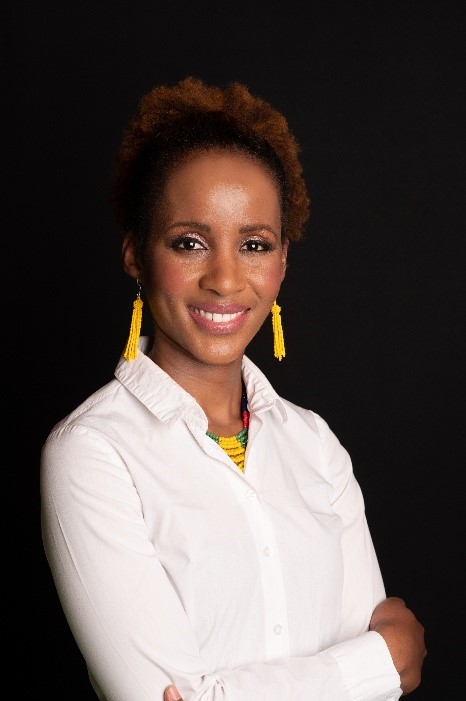 Lebo Disele-Pitso Ph.D
Bio:
Lebo Disele-Pitso Ph.D is a lecturer at the University of Botswana in the Visual and Performing Arts (VAPA) Programme. She obtained her PhD in Performance Studies from the University of Alberta in Edmonton, Canada. Her focus in theatre and performance includes dance, acting, directing, voice and more recently, dramaturgy. Lebo is a performer-researcher/scholartist focused on interdisciplinary work that explores the link between performance, gender and sustainable development. She is particularly interested in the use of Botswana traditional performance in research to cultivate and document women's leadership as a step towards gender equity in leadership. Dr. Disele-Pitso is also an active theatre-maker with a focus in movement, acting, directing, and dramaturgy. She recently played Nomkhubulwane and other characters in Tololwa Mollel’s Anthem of Life (Theatre Prospero 2024). She also co-created and performed in Breaking Ground (2024). Other performance credits include Ogboingba tries to change her fate at the Jabulani Arts Festival (Ribbon rouge Foundation 2024), The Wolves (Maggie Tree/Citadel), The Space Between (NextFest 2021, Expanse Festival 2022), “Radical Imagination” in Brandon Wint’s Freedom Journal: Antidotes to Violence as Care (2022); All That Binds Us (Azimuth Theatre, 2020) and What (Black) Life Requires (Expanse Festival, 2018).
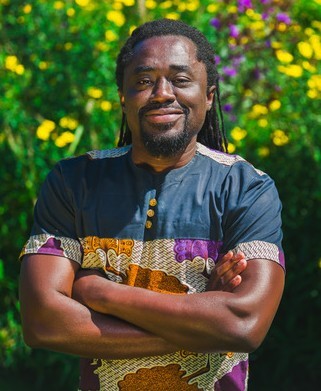 Mustapha Braimah
Bio:
Choreographer | Educator | Performer | Cultural Curator
Mustapha Braimah is a distinguished artist-scholar hailing from Ghana, West Africa, bringing with him an impressive career that spans over two decades of international experience and high artistic acclaim. His lifelong commitment to the arts encompasses a multifaceted role as a choreographer, educator, curator, performer, musician, and administrator, demonstrating his versatility and dedication to the diverse realms of artistic expression. He has attained a robust academic background, holding three degrees that underscore his dance-making, performance, and cultural studies expertise. Mustapha earned his Master of Fine Arts (M.F.A.) in Dance from the University of Maryland, College Park, where he honed his skills and deepened his understanding of choreography, pedagogy, and performance. His academic journey continued with a Master of Arts (M.A.) in African Studies from Ohio University, further enriching his understanding of global contexts in which his art is rooted. Additionally, he holds a Bachelor of Fine Arts (B.F.A.) in Dance from the University of Ghana, Legon, which provided the foundational stones for his artistic pursuits in dance.
Currently an Assistant Professor of Dance at Mount Holyoke College and a faculty member of the Five College Consortium, Mustapha is deeply committed to teaching, mentorship, and fostering inclusive artistic spaces. His dynamic career includes directing the Dance Program at the University of North Carolina Asheville and performing globally with Azaguno Inc., under the leadership of Paschal Yao Younge and Zelma Badu-Younge. Blending contemporary, popular, and traditional African dance styles, Mustapha’s community-centered work promotes creative innovation, cross-cultural dialogue, and the transformative power of the arts in society.