Melissa Lavecchia
Helping patients with gynecologic cancers live well
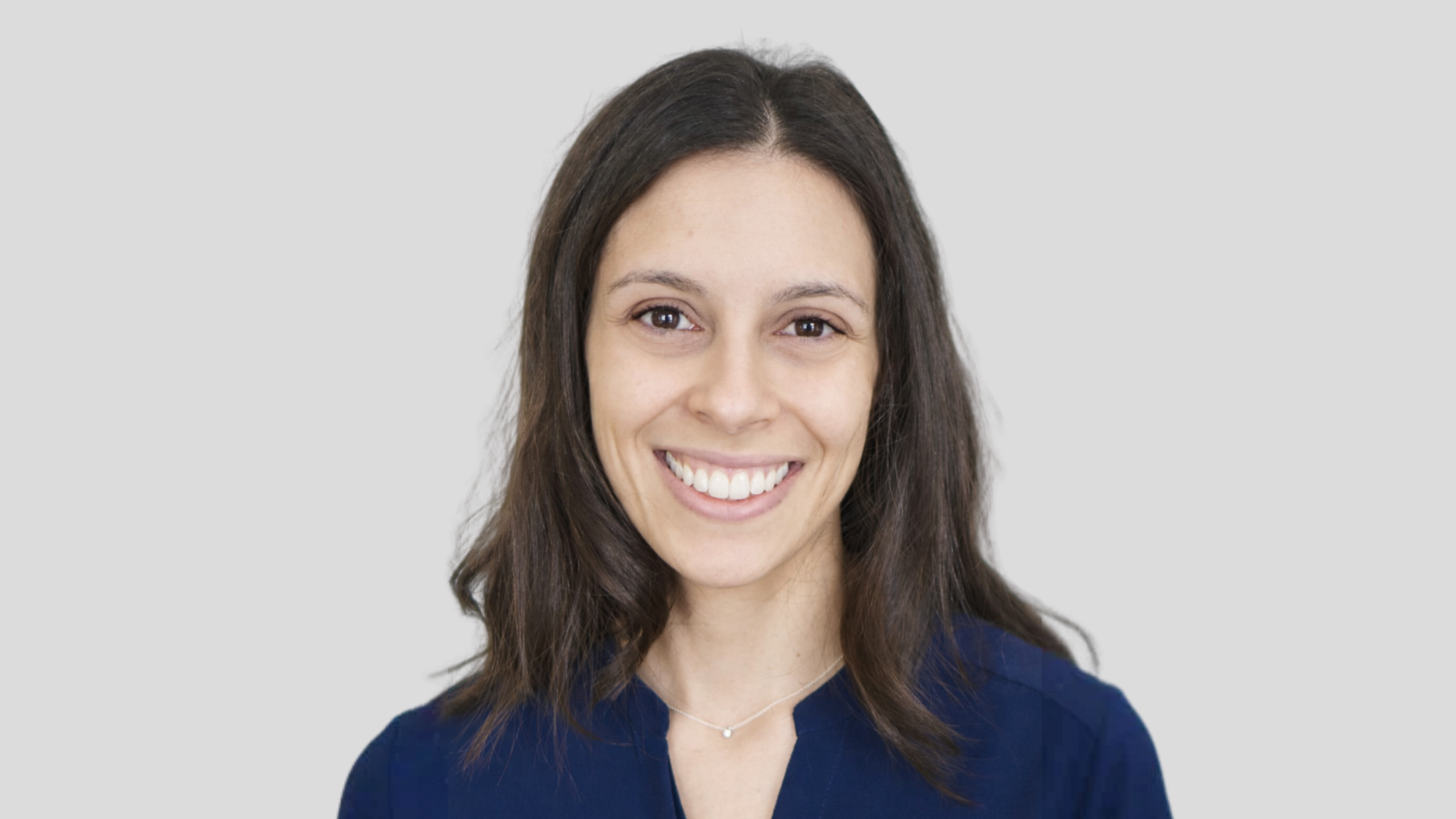
Melissa Lavecchia is a Gynecologic Oncologist and an Assistant Professor (Special Continuing) in the Department of Obstetrics and Gynecology at the University of Alberta. Her research program focuses on gynecological cancers with an emphasis on quality of life and survivorship.
- How did you get into your area of research?
- During my Obstetrics and Gynecology residency, I really enjoyed the surgeries, as well the patient populations that Gynecologic Oncologists were treating, and that led me to pursue further training through a fellowship. I also quickly realized that with my interest and background in clinical research there were a lot of possibilities for projects aimed at impacting and improving patient care. Throughout my Gynecologic Oncology fellowship, I started additional training with a PhD in Clinical Epidemiology, which gave me even more tools to be able to guide and teach learners and answer the clinical questions I saw every day in my practice.
- Please explain your research.
- Most of my research program is focused on survivorship and patient-important outcomes. We're getting a lot better at treating patients, helping them live longer, but a lot of the treatments and procedures we have to offer have long-term effects on quality of life and survivorship. Part of my research focuses on those long-term effects to make sure we're not only helping people live longer after their cancer diagnosis, but also helping patients live well, with a good quality of life.
- We’re trying to tailor our research questions toward patient-oriented and patient-important outcomes. One of my main focuses right now has to do with vulvar cancer and HPV-independent pre-invasive and invasive lesions, which is one of the rarer variants of vulvar cancer. We don't have many treatments or options for these patients, and several individuals end up suffering in silence. My team’s current projects are exploring practice patterns, and alternative options for patients with these rare vulvar cancers, or cancer precursors. We’re collaborating closely with the Pathology Department for drug screens and drug repurposing to identify conservative topical options.
- Other survivorship projects are looking at hormone replacement therapy in patients who undergo endometrial cancer surgery. Part of a staging surgery involves removing the ovaries, but inevitably, especially in patients who are premenopausal, we’re putting those patients into surgical menopause; and we have more and more evidence this can affect long-term morbidity and mortality. Early surgical menopause is associated with higher risk of osteoporosis, cardiovascular disease, early onset dementia, depression, anxiety, changes in sexual function. Because most endometrial cancers are hormone dependant, there’s a historical hesitancy to prescribe hormone replacement therapy after treatment. However, we have more and more evidence that the risks of not prescribing hormone replacement might be more detrimental in the long term than the theoretical risk of promoting residual cancer cell growth and recurrence in some patients. Right now, we’re looking into a large cohort of patients to try and determine if it’s actually safe to prescribe hormone replacement therapy and importantly looking at survivorship outcomes and quality of life in the long run.
- What impact is your research making?
- I really hope that my research can contribute to a greater focus on the outcomes that matter most to patients. Things like survivorship, quality of life, and overall well-being. In gynecologic cancer research, I think there’s a real opportunity to put more emphasis on understanding how our treatments affect people’s lives, beyond the traditional clinical measures we often use in research. I want my research to be useful at the patient level and help us answer questions that are meaningful to the people we’re treating. At the end of the day, I think research should not only help us advance knowledge, but also help our patients feel better, live better, and achieve the outcomes that are important to them.
- Where do you see your area of research going in the future?
- I think women’s health and gynecologic cancer research is moving more and more toward targeted and personalized therapies. There’s a lot of exciting work happening around the world with antibody-drug conjugates, immunotherapy, and other new therapies, and I think we’ll continue to see rapid advances in these areas.
- What research challenges do you face?
- As a clinician researcher, I think one of the biggest challenges is always finding that balance between clinical work, academic responsibilities, and research. And then, of course, there’s the unique challenges in women’s health research. Historically, women’s health research has been underfunded and it’s still a challenge to get a lot of people interested, involved, and excited about supporting research in this area. Even though there’s a growing recognition of the importance of women’s health research, it’s still underfunded. I’m hopeful that there continues to be that recognition, interest, collaboration and funding for research.
- Which elements of your work do you find the most rewarding?
- The most rewarding part of my academic work is teaching. Being involved with the Department of Obstetrics and Gynecology, I get to interact and teach multiple levels of learners – undergraduate students, medical students and residents. I mentor and supervise several learners working on various research projects and a very rewarding part of my academic work is being able to use my background in clinical epidemiology to teach these skills in order to get learners interested in doing clinical research as they progress and develop throughout their professional careers.
- What are you looking for in potential collaborators?
- I’m really open to collaborating with anyone who’s interested in women's health and wants to make a difference in terms of women health outcomes and gynecologic cancer care. I’d especially love to connect with people who bring different areas of expertise and perspectives, because I think that’s where some of the most interesting and impactful collaborations come from. There’s so much we can learn from people with different knowledge and skill sets, and I’m always excited to meet people who are interested in working together to improve care for patients.
- What is your main piece of advice to learners?
- Do something you're passionate about. If you enjoy the topic that you're researching or the work you’re doing, it makes such a difference. You’re motivated, more productive, and ultimately will be happier with what you do. Research and academic work can be challenging at times, so I think finding something that you genuinely enjoy makes the journey that much more rewarding.
- If you hadn't become a researcher, what might you be doing?
- I’ve always loved math and computer science and found both really fun and interesting. If I hadn’t gone into medicine, I could see myself doing something in one of those fields.
- What's one thing people may be surprised to learn about you?
- I don't know if people would be surprised to learn this about me, but I really enjoy being outside and spending time in nature. I love camping and hiking with my family in the mountains. We’re pretty spontaneous about it and often decide last minute and just follow the sunshine.
- How has CRINA helped support your work?
- CRINA has helped in terms of connecting me with other researchers, and seeing what others are doing. It’s also a great resource for my students. I often direct them to the CRINA website for resources and to see the different opportunities that are available.