Afsaneh Lavasanifar
Using nanotechnology to make cancer treatments safer, more targeted, and more effective for patients
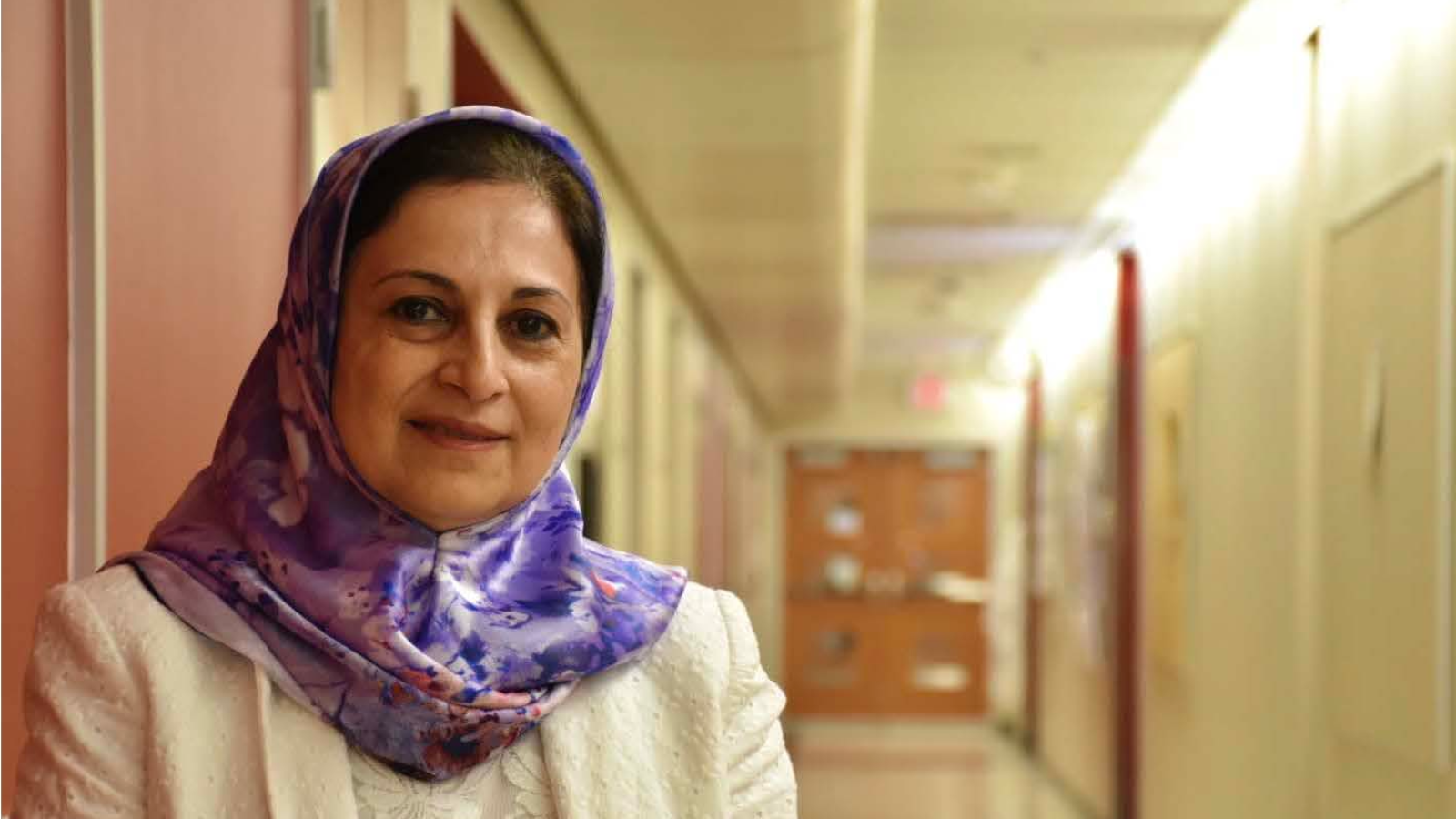
Afsaneh Lavasanifar is a Professor in the Faculty of Pharmacy & Pharmaceutical Science at the University of Alberta. She is also the Scientific Chief Officer and cofounder of Meros Pharma, a spinoff company based on the technology developed in her lab. Her research is focused on the development of better drug delivery systems with an emphasis on nanomedicine for cancer chemo and immunotherapy.
- How did you get into your area of research?
- While I was working on nanodelivery systems during my PhD, I became interested in cancer research using nanotechnology. I saw more translational opportunities in this area. There were already a few prototypes on the market used for cancer patients that had good results and lowered the toxicity of anti-cancer medications.
- I also saw opportunities for development of cancer vaccines and boosting immunotherapies using nanotechnology. My former PhD co-supervisor unfortunately passed away from cancer, and up until the very last moments of his life, I saw him devoted to discovering which treatments work and which don’t. I am trying to make a difference in the lives of those affected by cancer.
- Please explain your research.
- What we are trying to do is make anti-cancer medications go to the right place in the body and limit their effect on normal, healthy tissues. By doing this, we are trying to reduce the side effects of these anti-cancer medications and make them more tolerable for patients.
- Nanodelivery based systems can achieve this goal because of their specific size and surface properties. Nano-delivery systems can be engineered in a way to stay in blood for prolonged periods, similar to red blood cells that can circulate for days in the blood. The size of nano drug carriers is large enough not to pass through the vasculature in normal tissues, but small enough to escape the leaky vasculature in solid tumors. This is how nano-delivery systems can avoid the exposure of their cargo to normal tissues, but lead to better accumulation in solid tumors. In addition to the above, nanoparticles provide a safer means for administration of anticancer agents, particularly the ones that are less water soluble, avoiding many acute side effects imposed by conventional carriers of these chemotherapeutics.
- Which elements of your work do you find the most rewarding?
- I find it most rewarding when I see the trainees that graduate from my lab become successful and have their own careers, going on to make a difference elsewhere.
- I am also looking forward to bringing some of the things we have developed in our lab into the clinic. We have made great progress in this area recently. I am looking forward to seeing the results of these new developments towards clinical translation of our laboratory research over several years.
- What are you looking for in potential collaborators?
- In order to progress further into areas we’re working on, we will need to work with 3D culture models developed using patient samples that are more realistic than cell lines and better mimic what happens in vivo. I am interested in finding collaborators with expertise in this area.
- We need to establish more collaborations or acquire infrastructure to be able to better characterize the interaction of our nanodelivery systems with the biological environment, in order to understand their behaviour better and use that information to design better nano-delivery systems.
- We have also started working on the AI front, and are open to collaborations in this area as well, with the goal of designing more effective delivery systems for different therapeutics and better function in patients.
- If you hadn't become a researcher, what might you be doing?
- I like cooking! Maybe I would have become a chef. I think there is some element of innovation that goes into cooking. I like when people enjoy food that I have cooked. I also think that I could have been an author.
- What's one thing people may be surprised to learn about you?
- I started learning piano a year and a half ago not knowing anything about music. I always wanted to learn an instrument and always liked piano but never had time. At this stage in my life, my kids have left home, and I wanted a hobby to keep my mind off the regular stress of my job as a researcher.
- It's not easy to learn as an adult! It’s quite difficult. I am proud that I have started this, and I keep trying, even if I’m not that good. My instructor is always very encouraging.
- How has CRINA helped support your work?
- I have had several students receive studentship funding from CRINA, which is a great support. The seminar series is also really important to see what research is occurring both here at the University of Alberta and at other institutions across Canada. The annual CRINA Research Day is also a great networking opportunity. I appreciate the effort CRINA puts into showcasing the research occurring in the labs of CRINA members and the environment CRINA has provided for trainees as well as researchers.