Andrew Simmonds
Using fruit flies to understand cancer progression
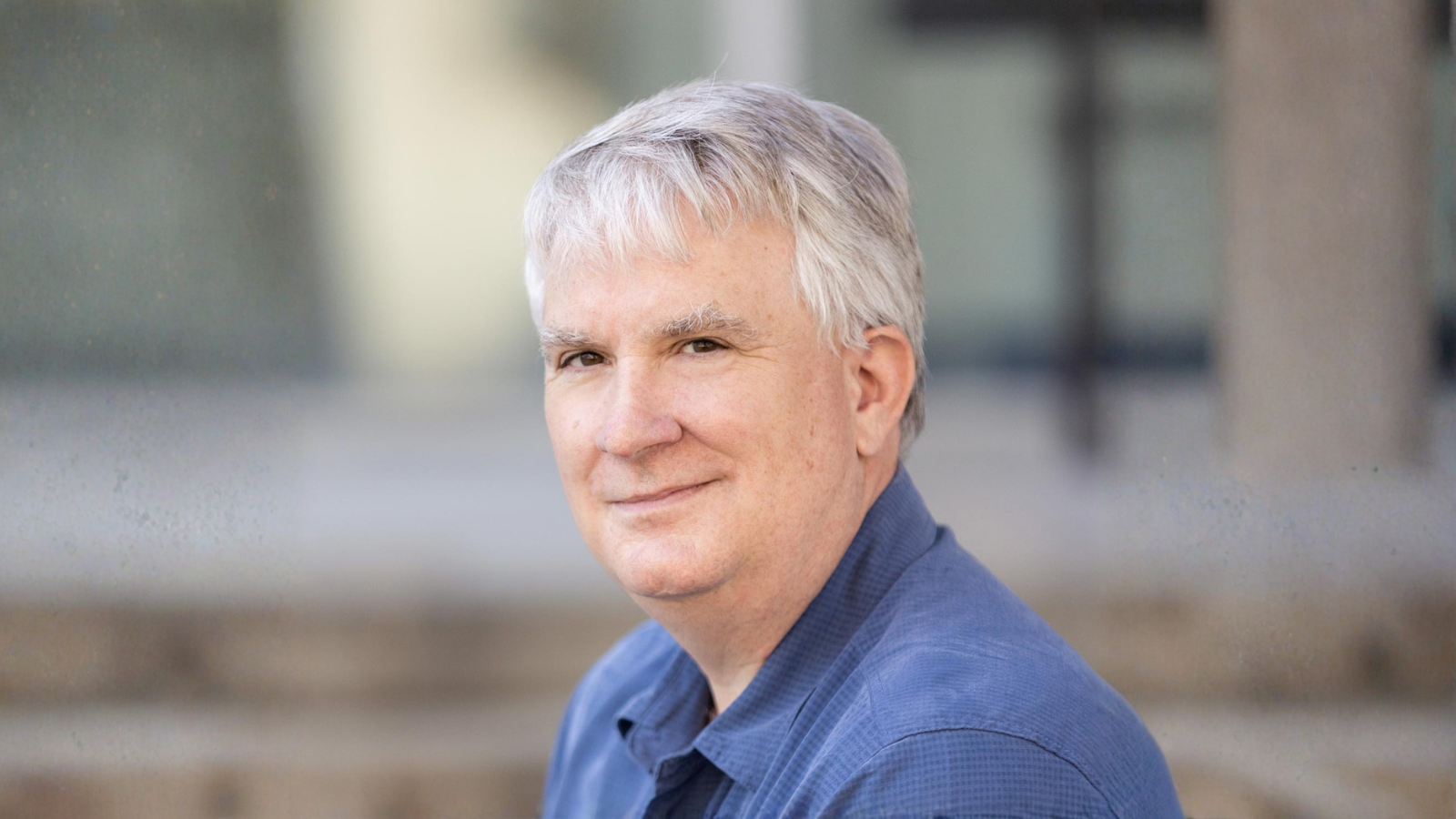
Andrew Simmonds is a Professor & Department Chair in Cell Biology at the University of Alberta. His lab uses fruit flies to understand the fundamental cellular processes that go wrong in human diseases like cancer.
- How did you get into your area of research?
- I started my undergraduate degree in computer science, then switched to genetics halfway through since it seemed more interesting. I went to grad school at the University of Alberta (Department of Genetics - working on flies but studying chromosomal defects that cause cancer in people) and thought it was fun and interesting so I kept going. I did a postdoc at the C.H. Best Institute at University of Toronto (funded by the National Cancer Institute of Canada) using flies to understand how critical regulatory pathways cause several human cancers at the fundamental cellular level. Based on that body of work I applied for a position in Cell Biology at U of A. Essentially, I kept getting support to do what I felt was important research to understand human disease at each step, so I kept going further, and here I am today. Did I have a “master plan”? Not so much. My career is more of a product of funders and more importantly people, supporting me at critical times, allowing me to succeed.
- Please explain your research.
- I work on fruit flies, which I think are the best laboratory animal to study human diseases. Why? They have been used in the lab for over 100 years and they are about as simple as you can get. Despite being simple, they still have a brain, eyes, limbs, and exhibit behaviours, allowing us to model disease on a smaller, understandable scale. This allows me to move quickly when looking at how genetic mutations lead to diseases. One of the major areas of cancer research in my laboratory is understanding how Vestigial-like genes function. The original ‘vestigial’ gene was discovered over 100 years ago in flies, as mutations caused the wings to disappear. My early work in flies (only 30 years ago) helped determine how the vestigial genes are needed to make the wings grow. Importantly, while people don’t have wings, my work helped show that the same cellular mechanisms fly wings use to grow is the same some human cancers use to spread. My work, combined with a lot of work from others, showed that humans have the exact types of genes that when discovered were named “Vestigial-like” as they were so similar between people and files. We now know there are two types of Vesigial-like genes, one acts to push the "gas pedal" for cell growth and is often overexpressed in aggressive cancers (e.g., Triple-Negative Breast Cancer). The second is a tumour suppressor (the brake for cell growth). We are trying to understand how the balance between the function of these two Vestigial-like genes maintains normal cell growth in flies to better understand how a lack of balance causes cancer progression in humans.
- What impact is your research making, or do you hope it will make in the future?
- I always hope my research is impactful. There are, of course, the classic metrics such as papers being well-cited by peers and people I respect. In my later career, I have started to work more directly with patient groups. It is gratifying when we come to a mutual understanding of the importance of research, and that it is not instantaneous. Both goals and success are long term.
- Where do you see your area of research going in the future?
- The future is studying the fundamental unit of life - the cell. We are leaving the era of reductionist science, where we break things down to their simplest parts (molecules). We now know all the genes and all the proteins; what we don’t know is how it fits together to make the magic that is the living cell. The cell is the unit in which all biology coalesces.
- Which elements of your work do you find the most rewarding?
- What I find rewarding has changed over the course of my career, but I think that the thrill of a new discovery is always rewarding. I also enjoy teaching. As you get to my stage, it is far less about “me” and more about the next generation, especially when in an administrative role such as a lab lead or even Department Chair.
- What research challenges are you facing?
- I find it difficult sometimes to convince people all over the world that top medical research comes from Canada. Unlike many others, all of my training was completed in Canada. Most decide to go abroad for at least some portion of their training. As recent events have shown, we can, and must support a robust training and research environment in Canada.
- What are you looking for in potential collaborators?
- We have simple laboratory animals and we are looking for complex problems that we can help solve using this model. Currently, we are working with patient groups to model rare diseases. Working with simple animals like the fly we can find the subtle changes that others often miss because we can analyze a lot of animals quickly. It is a delicate balance between complexity/relevance and simplicity/speed.
- If you hadn't become a researcher what would you be?
- For the first two years of my undergraduate degree I was doing computer science; I probably would have ended up working as a programmer. However, now that computational analysis is becoming a major part of biomedical research, I’m dusting those skills off again!
- What's one thing people may be surprised to learn about you?
- Whenever I visit a new city, one of the first places I go is to the local art gallery. I am very interested in art.
- How has CRINA helped support your work?
- The biggest support for me was that CRINA provided bridge funding for my cancer-related project at an opportune time. I’ve been working on the Vestigial-like project since I was a graduate student (over 30 years). It is a really difficult project, and granting agencies aren’t always on board as it takes a long time to understand the subtle but critical details of how it works. Right when I was about to shut that project down, CRINA gave me a bridge grant that allowed the work to continue, and for me to obtain stable funding that I hold today.