Cheng-Han Lee
Identifying more effective treatments for gynecologic cancers
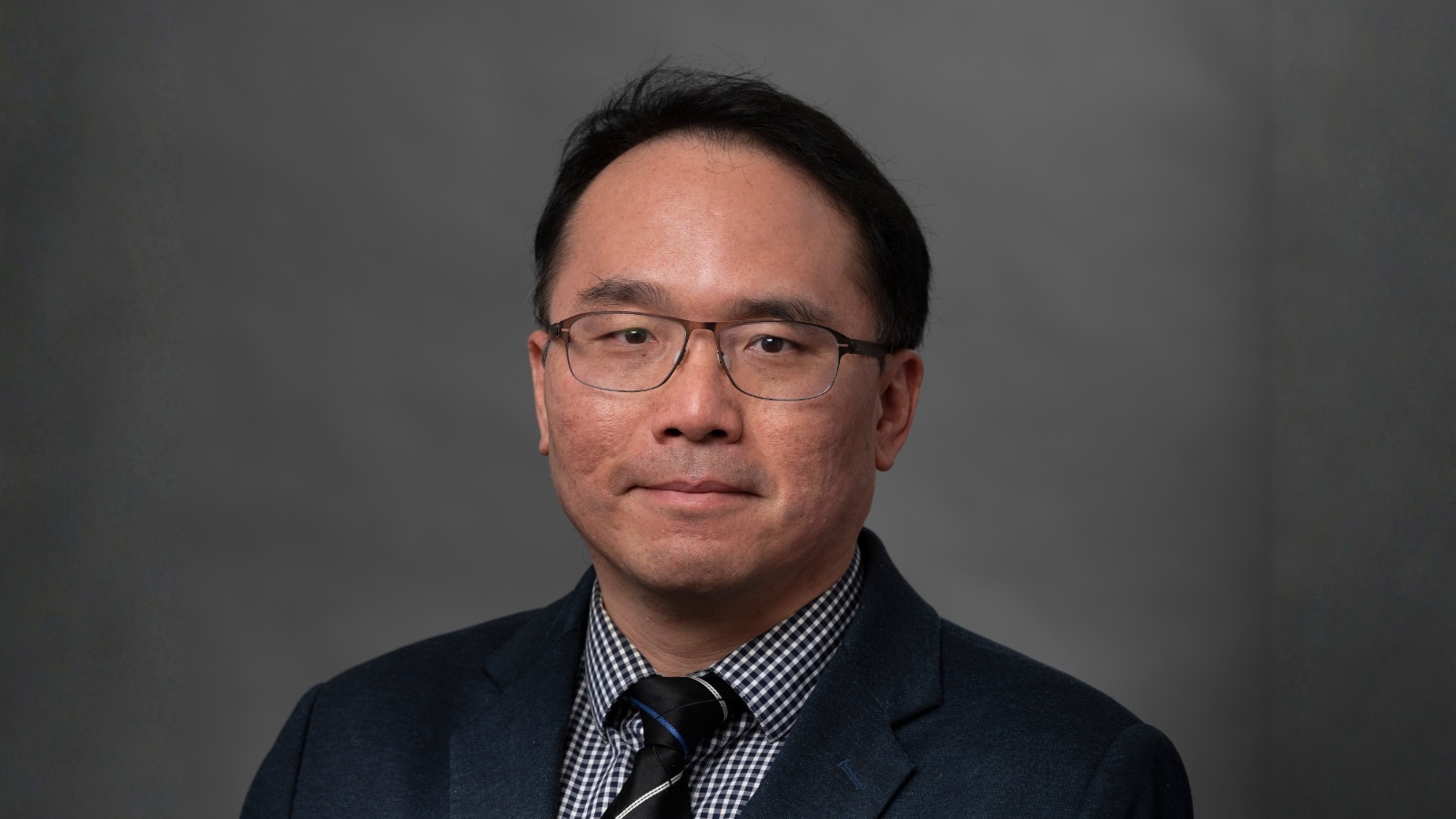
Cheng-Han Lee is an Associate Professor in the Department of Laboratory Medicine & Pathology at the University of Alberta and holds the Sawin-Baldwin Chair for ovarian cancer research. His laboratory uses high-throughput drug screening on patient-derived cancer models to identify promising new therapies for gynecological cancers. Clinically, he is a pathologist at the Royal Alexandra Hospital with a diagnostic focus on gynecologic and sarcoma pathology.
- How did you get into your area of research?
- I started doing cancer research as a pathologist-in-training in the early 2000s. Soon after that, the wave of next-generation sequencing technology started and I was able to apply it to identify new disease types and driver mutations through it. While the newly gained genetic knowledge was important for classifying different cancer types, it did not result in improved cancer treatments in most cases; hence at the end of the day, it wasn’t actually curing anyone.
- To give an example, I identified a new type of uterine sarcoma in 2009 when I was doing research in Boston. When I came back to Vancouver, I actually diagnosed a case of a young woman with this type of sarcoma I helped to identify. It was exciting from that perspective, but that young woman passed away from her disease 3 years later as it was a new disease and we had no idea how to treat it. That's when it dawned on me that we can't really alter the course for patients. That is the true bottleneck in cancer research nowadays as research is constantly revealing the diversity in cancer while therapy for these different cancer types lags behind. It was seeing these cancers that we continue not to be able to do much about that put me on my current research path.
- Please explain your research.
- My lab studies gynecologic tract cancers using fresh patient derived tumor samples to develop preclinical models that we can directly test. We can identify more effective drugs or do more detailed analysis to get more therapeutic insights.
- What impact is your research making, or do you hope it will make in the future?
- If I can take my research from discovering a new cancer type all the way to curing patients, hopefully the cancer type I helped to discover, that would be the goal. Impact for me will be really making a difference in cancer patients’ lives. That’s my only focus, and I always tell people that when that day happens, perhaps I can retire.
- Which elements of your work do you find the most rewarding?
- Well, anytime we can gain some therapeutic insight, it's rewarding. However, the ultimate reward will be when we actually improve patients' lives. We’re not quite there yet but we have 3 potential lead drugs that have a good chance of making it into clinical trials.
- It’s also rewarding working with students, seeing them grow and present their research at national conferences. And it’s rewarding to work and collaborate with like-minded researchers and health care professionals who want to better the lives of women affected by these aggressive cancers.
- What research challenges are you facing?
- My lab is developing models from patient derived tumor samples, testing drugs, and figuring out what drugs work better. We need to validate the results on more tumor samples, and then we can move onto clinical trials. The challenge I face is that these are very logical studies, but they are not ground breaking. It’s difficult to get funding for them even though there is a reasonable probability of the findings reaching and benefiting patients. There is very limited opportunity to pitch my research as it's not a clinical trial and it's not basic science. It's translational.
- What are you looking for in potential collaborators?
- I’m looking for more collaborations around different techniques: microenvironment characterization studies, ex vivo model systems, drug sensitivity/resistance assays, faster metabolic assay, animal imaging studies.
- What is your main piece of advice for graduate students?
- Figure out what you like to do. For research, you have to enjoy problem solving. Unfortunately, a lot of research attempts are going to come out as negative findings. True passion and curiosity will keep you going until you eventually reach a moment of realization - the Eureka moment – of this is how it works, which makes all the struggles and hard work worth it.
- Imagination is important so don't be afraid to imagine. Sometimes you propose an idea and people laugh at you; however, remember there are many instances where people's theories were scoffed at and turned out to be correct.
- If you hadn't become a researcher what would you be?
- I would love to be a hockey player. On my way to the Royal Alexandra Hospital for work, I bike past Rogers Place. I joke with people that I always slow down a little bit, just in case they need someone to play with Connor McDavid that night. I’m waiting to be called up!
- What's one thing people may be surprised to learn about you?
- People might be surprised to learn that I’m a cancer survivor. I had colon cancer that was successfully treated and I played hockey till cycle 10 of my 12-cycle chemotherapy.
- How has CRINA helped support your work?
- The CRINA Connects Seminar Series has been very helpful for developing collaborations. In 2023, I attended a seminar presented by Jeffrey Rathmell of Vanderbilt University. After his talk, I reached out to him to let him know that Christa Aubrey and I had tissue samples of obesity-associated endometrial cancers. Our subsequent collaboration resulted in a high impact paper in Nature.
- No pun intended, but it really is the CRINA Connects Seminar Series because it connects people!