Craig Jones
Applying AI to medical imaging to find clinical solutions
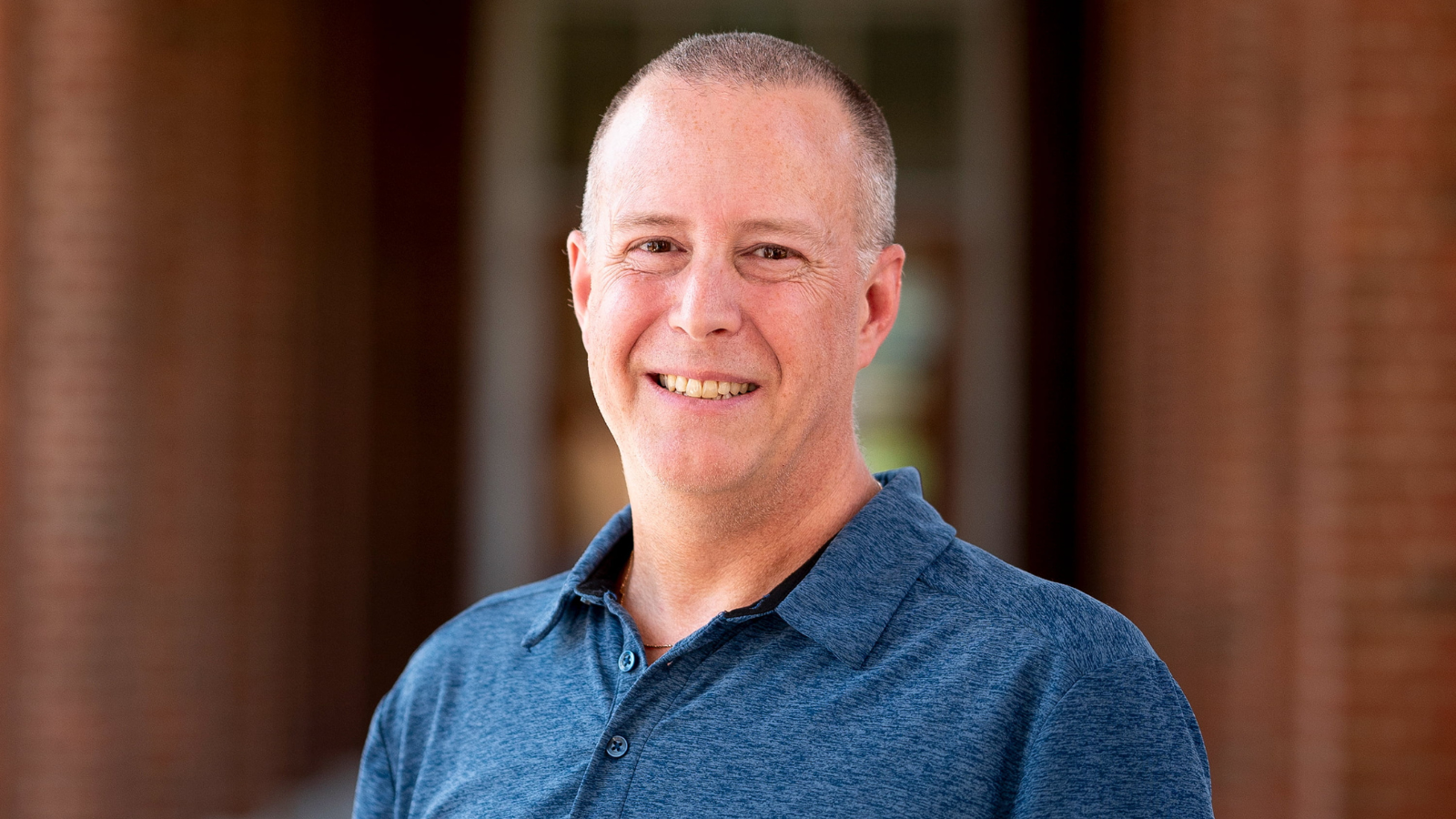
Craig Jones is a Professor in the Department of Biomedical Engineering at the University of Alberta and a Fellow at the Alberta Machine Intelligence Institute. His research applies AI and machine learning to medical imaging with the goal of improving diagnosis and outcomes for patients.
- How did you get into your area of research?
- My undergraduate degree was in mathematics and computer science. I found a job after undergrad at the University of Western Ontario with a researcher who was doing medical imaging research (which I had no experience with). It really started there. I loved the imaging work where we're able to see things that normally we can't see, using MRI, CT or ultrasound. My passion grew and went to math, computing and medical imaging in particular, and how I can tie those all together.
- Please explain your research.
- My research involves AI and computer vision. What I love to do is collaborate with clinicians, to look at where they need help with image processing or the analysis of their data, and how I can bring my knowledge into their field and work with them to answer clinical questions.
- One of the areas of my research is longitudinal analysis. This is the idea that there are multiple time points of data for a patient, not just a single time point. We might have MRIs across time, and we look at what we can learn from the temporal analysis and what it tells us about the disease progression.
- The second thing that I'm very interested in is looking at uncertainty in the prediction. If we train an algorithm, we really want to know more than just is it cancer. The physician needs to know that the algorithm's is 80% sure it's cancer, or 20% sure it's cancer, because that distinction is obviously extremely relevant for the patient and physician.
- The third area is how can we give information to the algorithm based on prior information about the person. For instance, if we're looking at pancreatic cancer, if we can learn about the shape of the pancreas, and the difference between people's pancreases, how can we add that information into the algorithm to create a better understanding of the diagnosis.
- Where do you see your area of research going in the future?
- There's definitely a big focus here in Canada on not just creating research or writing a paper, but on how we can move that research all the way through to being used to help patients or implemented in a system. That’s something that I want to focus on more – how can I actually move my research into production in a way that it's being used by clinicians.
- Which elements of your work do you find the most rewarding?
- Working with students. It's very rewarding and a lot of fun. Showing them that we’re doing science, not programming, and that we need to be thinking through how we’re doing the experiments and organizing the data. When they start understanding the thought process, that we're doing science, it's very rewarding to see that they get it.
- What research challenges do you face?
- The biggest challenge always is data. Getting data, getting permission to obtain the data, working through the process of being able to get the data. Even once you've got the date then the next step is technical–curating the data, organizing the data so that it will work for an algorithm. What I tell my students is that when you're doing this type of research, 80% of the work is getting the data ready and then the remaining 20% is the fun part.
- I think the other challenge is that a lot of these current algorithms are very data hungry, so they need a lot of data. It means that we need a lot of compute, GPUs. We need the compute to be able to process through patient data. It's always going to be a need, because of the amount of data that we typically need for these types of algorithms.
- What are you looking for in potential collaborators?
- Physicians who have data and are interested in looking at their data in a different way or are interested in seeing if we can find interesting patterns in their data. Any physicians who are interested in collaborating in AI research and seeing how their medical questions can be answered.
- What is your main piece of advice for graduate students?
- Two things come to mind. The first one is be curious. Doing graduate work just to get something done is less helpful and is not going to be beneficial in the long term. Focusing on curiosity and wanting to learn is a very important aspect of what we do.
- It's also very important that we remember that we're doing science and that we need to do the experiments, write them up and present them properly in a scientific way. Showing where the results came from, what data and algorithm were used. Just showing a set of results is not enough. We need to see the whole process up to that point.
- If you hadn't become a researcher what would you be?
- In my early years I thought about becoming a medical doctor. The other thing that I always wanted to do since I was young is become a firefighter. When I was living in the United States, there were volunteer stations and I actually volunteered as a firefighter EMT for 22 years. I thoroughly enjoyed it.