Lisa Willis
Harnessing cell surface sugars to improve human health
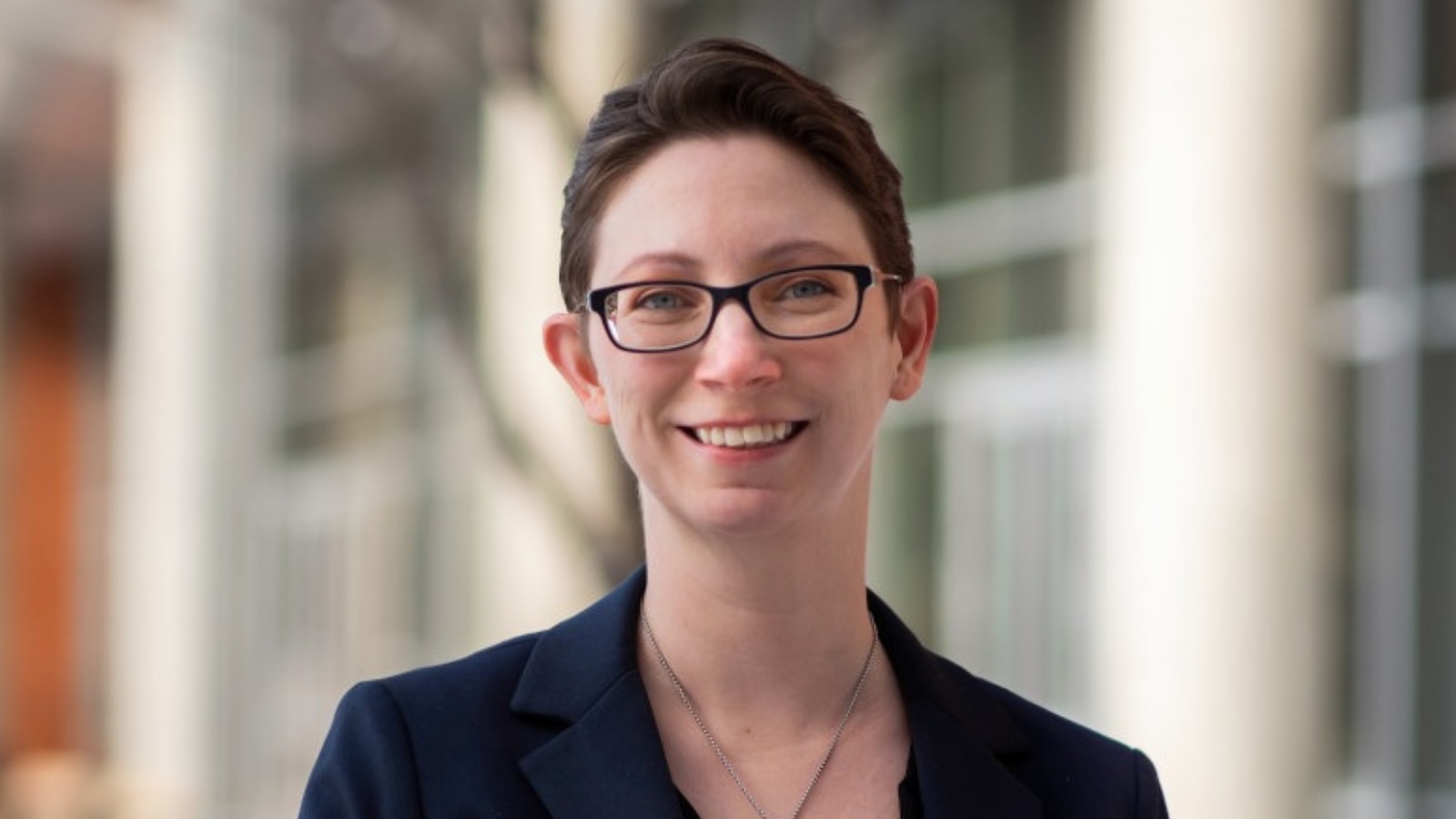
Lisa Willis is an Associate Professor in the Department of Biological Science and Adjunct Professor in Medical Microbiology and Immunology at the University of Alberta. Her research investigates the role of glycans in human health and disease. Specifically, her lab explores glycan function within the immune system, red blood cells, and platelets, with an interest in chronic conditions such as autoimmune diseases and cancer.
- How did you get into your area of research?
- When I was an undergrad, I studied biochemistry and had the opportunity to do cooperative research at the National Research Council. I worked on a project looking at sugars on bacterial motility structures, specifically Helicobacter pylori. If Helicobacter aren't motile, they can't get through the stomach lining to hide from the acid in the stomach. There was this cool connection between glycoscience and human disease that was really fascinating. I loved the puzzle and the challenge, so I kept working on sugars for every internship. I thought there would be more funding opportunities and a lot more potential for impact in the kind of human research that I wanted to do so that's what I started doing, and then I just followed whatever I was super passionate about to where I am now.
- Please explain your research.
- My lab is very interested in how sugars on the surface of white blood cells affect their migration and how they become altered in people with cancer or chronic autoimmune diseases. We’re also working to understand how changes in glycosylation of cancer cells contribute to metastasis. Understanding the interplay between cancer cell and immune cell glycosylation may provide new therapeutic targets to treat cancer. We also have a blood test where we use changes in glycosylation as a predictive marker for early detection and prognostication of different cancers.
- A second project in the lab looks at red blood cells and platelets. These cells have a really sophisticated network of sugars on the cell surface but we don't actually know what the sugars do. We think they're important for half-life and stability and circulation in the blood, but we're really interested in the nuanced understanding of how these sugars work. When you take red blood cells or platelets from a donor the sugars start to fall off, and that has consequences for what happens in the transfusion recipient. We think that sugars falling off is bad so we're trying to understand why and if we can prevent them from falling off to create a more stable product.
- The sugars are also very important for how these cells interact with the immune system. Antigens on red blood cells and platelets are genetically encoded, and you can't give blood from one person to another with different antigens, because they can develop an immune reaction to those antigens. One of our projects is looking at developing universal blood, so that red blood cells and platelets can be given from any human to any other human. And that's really important, because we don't have enough donors. We also need a way to make the blood go further and reduce the potential for harmful side effects, especially in people who are chronic transfusion recipients like cancer patients. There are cancer patients who are palliative simply because there is not a single matched platelet available for them. With our technology, they would no longer be palliative.
- What impact is your research making?
- Our work is focused on finding solutions to problems that real Canadians and people around the world face. For the project on cancer and autoimmune disease diagnosis and prognosis, we've talked to a lot of lung cancer patients, and we hear the same thing. They wish they'd known earlier, and they wish they could have more confidence in how much time they have left. Our work will help solve this problem by detecting cancer early and then predicting whether someone is going to get metastatic disease. We want to be able to give people some comfort as they face the terrifying reality that is cancer.
- Where do you see your area of research going in the future?
- I don't know and that’s not a bad thing. Partly it depends on what my trainees are interested in. I like supporting their creativity and interests. I also like exploring new things, new ideas. I like being innovative. We will do an exploratory study, and then we let the data tell us where we should be going. We chase down the things that we find interesting or impactful. Not knowing where we’ll be in the next five years is part of the excitement of discovery.
- What research challenges do you face?
- Definitely finding enough time to do everything. Also, keeping up with the literature, especially with so many predatory journals which publish a lot of garbage. Even with good journals, it's hard when I'm not an expert in a field to know what research is actually robustly done and reproducible.
- Funding for really ground-breaking research is also a challenge. At CIHR there's just not enough money to go around, and so they tend to be very conservative. They want to know that something is done before they will fund it. I’m more excited about exploring the unknown.
- Which elements of your work do you find the most rewarding?
- I love data! I love it when my trainees bring me data. It doesn't matter if the experiment worked or didn't work. I love puzzling through it. What can we try next? What does this mean? What else could have given this result? My trainees laugh at me because of how much I love data.
- I also love it when my trainees get excited about their data and start asking questions. It's so exciting to see my passion reflected in them.
- What are you looking for in potential collaborators?
- I'm looking for people who are excited about science and who want to work together.
- I really love it when people have samples that can be put into our pipeline. I’m also interested in people who have complementary methodologies who want to take some of our findings and put it into their models, or who can help us with something that we're interested in.
- What is your main piece of advice for graduate students?
- For students who are looking for a position, your relationship with your supervisor matters more than the research project. You want to pick a person that you can work with. Grad school is a long time. You want someone who's going to champion you, who's going to support your progress.
- The second piece of advice is to work hard and play hard. When you show up to work, work hard and then take time off to really relax. Science is challenging. It's going to be very hard training your brain to think differently. You really need to get in there and do it and be open to new ideas and open to learning new things. Be a sponge.
- If you hadn't become a researcher, what might you be doing?
- Either gardener, chef at a gluten-free restaurant, or musician. I was a very talented musician when I was a teenager, and I had a choice between music and science. I chose science and it was the right decision.
- What's one thing people may be surprised to learn about you?
- I know the names of all of the countries in the world, and can tell you where they are on the map. I also know almost all of the capitals.
- How has CRINA helped support your work?
- CRINA is really amazing for helping make connections. Through CRINA, I was connected to people who are now collaborators on my grants. I’ve also learned about important resources such as the Alberta Tomorrow Project.