Marya Ahmed
Engineering Cancer Fighting Nanoparticles
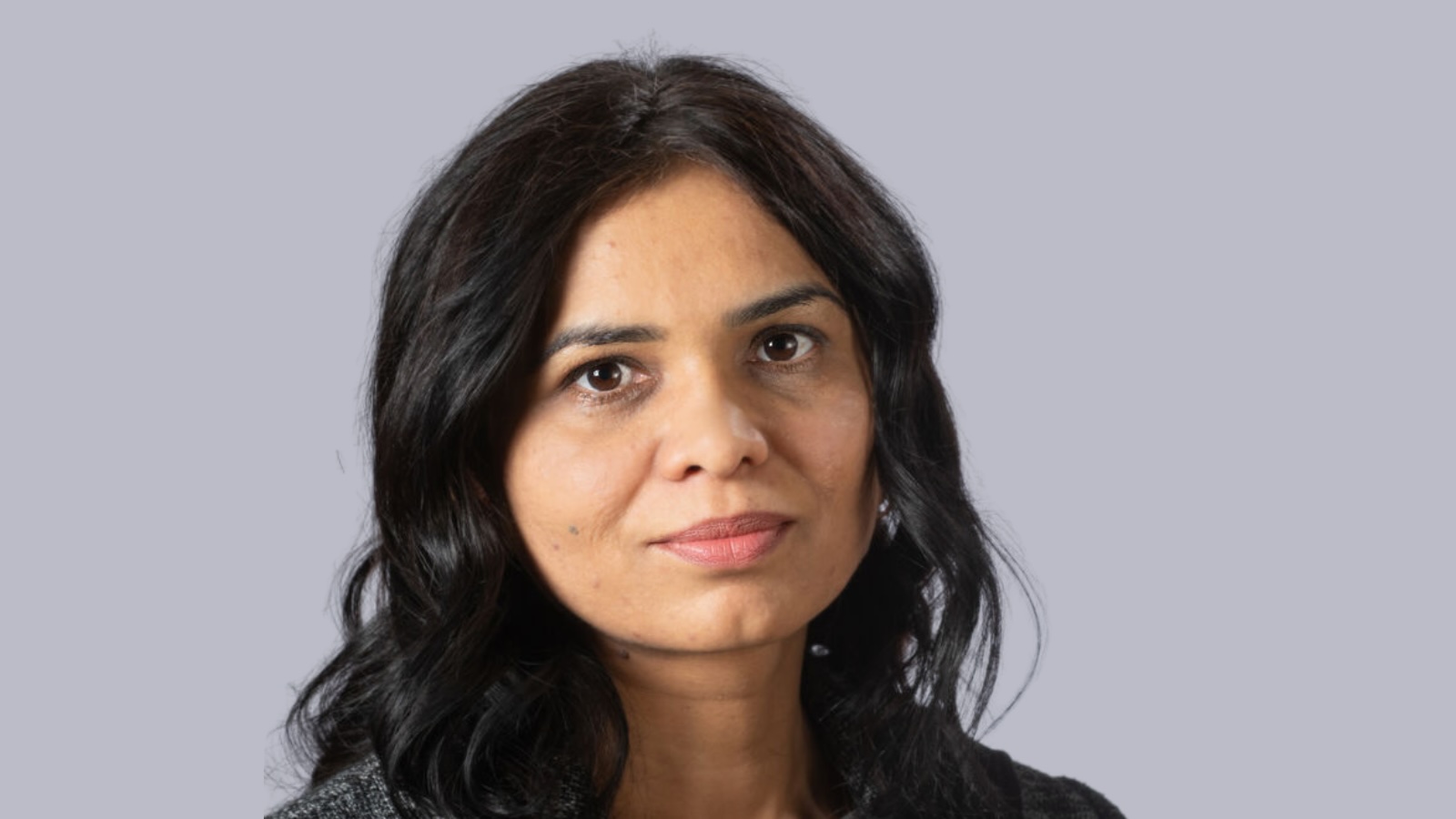
Marya Ahmed is an Associate Professor in the Department of Chemical and Materials Engineering. Her research focuses on two main themes: synthesis of macromolecular crowders with applications in cryopreservation and protein stabilization, and synthesis of self-assembling peptides with immunomodulatory properties and drug delivery applications.
- How did you get into your area of research?
- I was trained as a chemical engineer with expertise in polymer synthesis, nanoparticle formulations and with some applications in gene therapy. I got really fascinated with how changing the structure of polymers, or changing basic properties, had such a huge impact on the biological side.
- The reason I was interested in cancer is because of my personal family background. I wanted to develop something novel, something promising for cancer treatment. During my postdoc, I got more into cancer therapy where I started working on antibody-based therapies for breast tumor models. I was working on antibody dependent cell cytotoxicity. If we load nanoparticles with antibodies, what happens to those properties? And how do we tweak those nanoparticles to change or improve the properties of the antibody? That’s where I got very fascinated by immune cells and cancer cells and the correlation between them, and how we tune that correlation in the presence of nanomaterials.
- Please explain your research.
- In terms of cancer therapy, my work is on developing peptide-based materials to stimulate the immune response to cancer. We are developing nano peptides (small fragments of proteins) that can help immune cells identify and kill cancer cells. The peptides have the ability to self-assemble into nanoparticles and then we load them with a drug cargo. In the tumor microenvironment, the carrier bursts open releasing the chemotherapeutic into the tumor microenvironment. The peptides activate the immune cells, specifically macrophages, while the drug kills the cancer cells.
- We are at the in vivo stage now and are waiting for results from preclinical models to see how promising it is in living systems.
- What impact is your research making, or do you hope it will make in the future?
- So far, our results are very promising. Immunochemotherapy compared to just chemotherapy seems to work really well. Also, the type of nanoparticles we are designing are unique, because they have the stimuli-responsive properties to release the drug while activating the immune system at the same time. The particles act at an innate level of the immune response, not acquired, so we are hoping that by activating the innate immune response, we will leverage T cell activation and the adaptive immune response in the process. That's where some of the PD-1, PD-L1 therapies have challenges. We're hoping that with this new system we will have a better impact on immunochemotherapy.
- Which elements of your work do you find the most rewarding?
- I think graduate students are the most rewarding part of my work. I really like discussing results with them, having deep discussions of how their project is going, getting them to bring their own ideas, and asking them to be the driver of their project. I'm really impressed by their ideas and the work they do without too much input from me.
- What are you looking for in potential collaborators?
- I’m looking for people with new types of cancer models. Testing our materials in those models would provide more preclinical models that can be used for future work. I’m also looking for collaborators with expertise in breast cancer and who have patient samples.
- What is your main piece of advice for graduate students?
- Sometimes I feel like graduate students want to see a quick result from their work. If the project is not going as well as expected or according to their expectations, they can be frustrated and want to give up or change their project. I think that patience is the key when it comes to research. Be patient. Don't give up. It requires dedication and patience to get something to work.
- What's one thing people may be surprised to learn about you?
- I asked my students this question. They told me that I don't look very approachable, but that I actually am.
- How has CRINA helped support your work?
- CRINA has provided me with a platform to introduce myself to other researchers. I gave a talk last year in the CRINA seminar series that helped me connect with researchers. CRINA has also helped with grant review.