Nawaid Usmani
Improving prostate cancer treatment
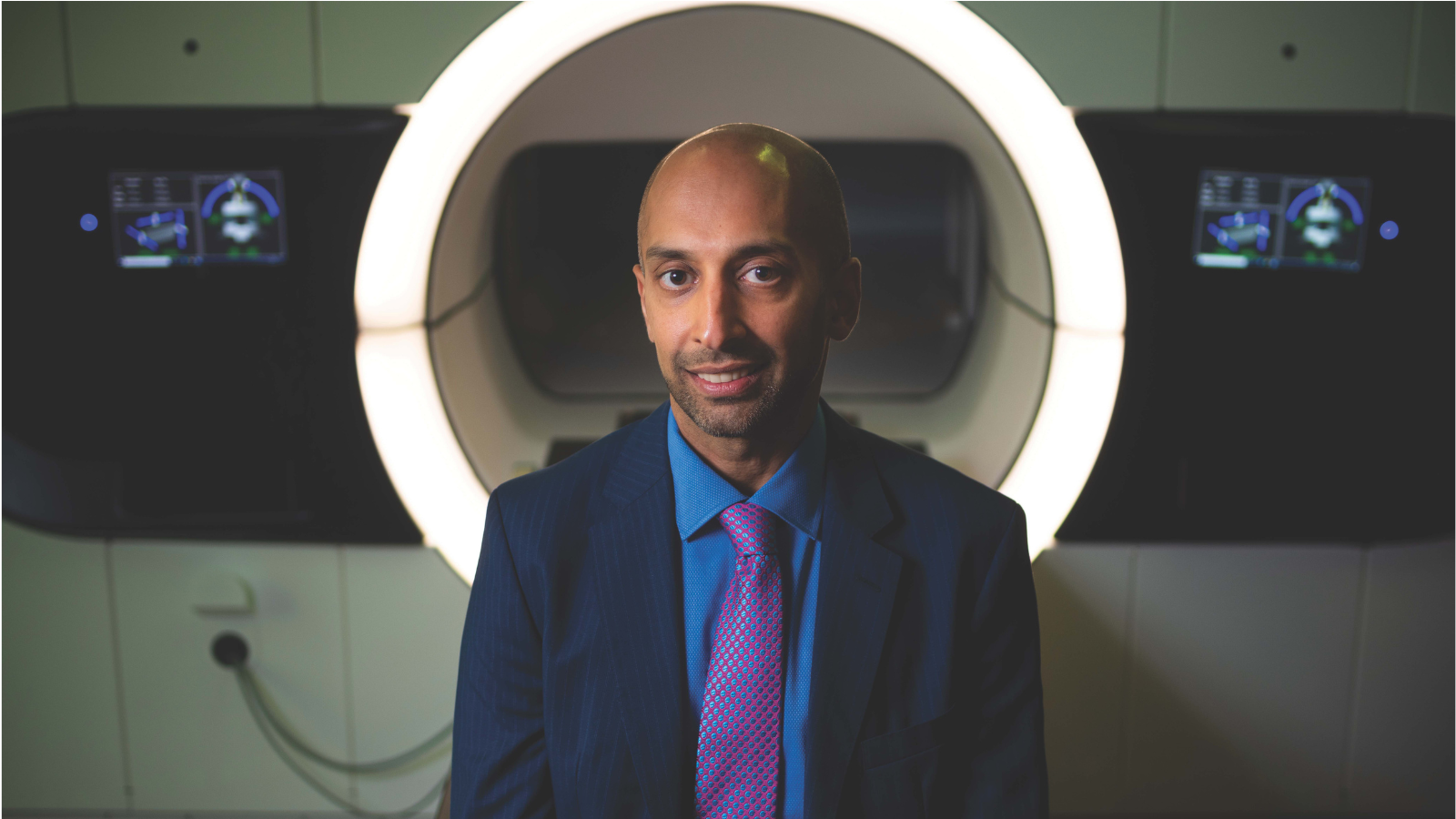
Nawaid Usmani is a Radiation Oncologist and Clinician-Scientist in the Department of Oncology at the University of Alberta. His research focuses on improving outcomes for men undergoing radiation therapy for prostate cancer.
- How did you get into your area of research?
- I am a clinician (radiation oncologist). When I took my position at the University of Alberta, I entered as an academic and wanted to become involved in research. The different projects I have worked on have evolved over time. There was not one specific starting point—it has been more of an organic progression rather than something planned from the beginning.
- Please explain your research.
- In my clinical practice, I treat cancer using radiation therapy. As a result, much of my research focuses on improving radiation treatments for patients. Most of my work is in prostate cancer, with an emphasis on minimizing treatment side effects. One recent area of interest is the harmful effects of hormonal therapy, and how these side effects might be reduced through approaches such as exercise or drug therapies.
- Another area of my research involves developing and implementing new technology, including the Linac-MR (a system that combines radiation therapy with MRI). This technology allows us to better visualize tumours during treatment and improve the precision of radiation delivery. I am also involved in designing clinical trials that use this technology to further evaluate and implement it in practice.
- What impact is your research making?
- I am very fortunate to conduct research that is highly clinical in nature. I am involved in clinical trials where we have been able to identify ways to reduce side effects from new treatments. By enrolling patients in these trials, we are also helping to evaluate and implement new technologies such as the Linac-MR, making them available for patient care.
- Which elements of your work do you find the most rewarding?
- The most rewarding aspect of my work is working with patients. I enjoy seeing patients in the clinic, guiding them through their cancer journey, and offering treatments that help them understand there are effective options available. Seeing patients do well at follow-up—particularly when they are cured and no longer need to worry about cancer recurrence—is especially rewarding.
- What are you looking for in potential collaborators?
- I am always keen to collaborate with basic science or clinical researchers who are looking for clinicians studying prostate cancer.
- If you hadn't become a researcher, what might you be doing?
- In an alternate universe, I would be an astronaut. I have always dreamed of becoming one, and the recent Artemis missions have brought that interest back to mind. I think it would have been an exciting career path!
- What's one thing people may be surprised to learn about you?
- I am a very passionate sports fan and enjoy both watching and playing sports. I play in a recreational hockey league—not at a high level—but I really enjoy it.
- How has CRINA helped support your work?
- CRINA has been very helpful in promoting research within our department and has supported the development of collaborations. It has been a great way to connect with other researchers at the University of Alberta. Often, when I learn about their work—or they learn about mine—we discover shared interests that lead to collaboration and new projects. CRINA has played an important role in fostering these connections.