Vera Mazurak
Fighting Cancer Related Malnutrition
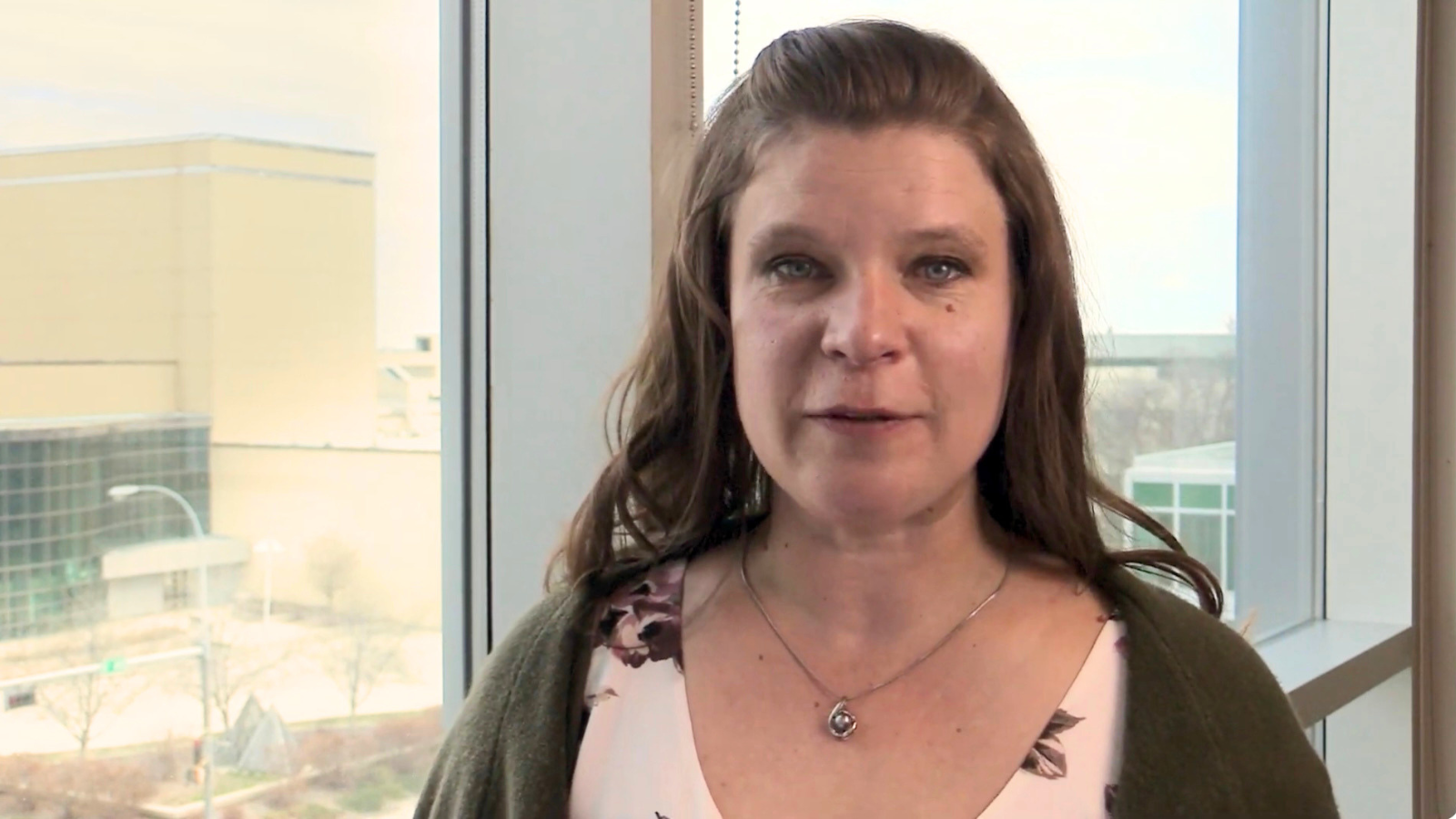
Vera Mazurak is a Professor in the Department of Agricultural, Food & Nutritional Science at the University of Alberta. Her research focuses on metabolism of fats in diseases characterized by inflammation, in order to define nutritional interventions for those at risk of malnutrition. She is currently investigating how essential fatty acids change physiological processes and improve outcomes during cancer treatment.
- How did you get into your area of research?
- I became interested in metabolism and how our body works in high school biology. I was also interested in food so I started in the nutrition and food science program at the University of Alberta, thinking maybe I'd be a home economics teacher. In the third year of my undergrad program, one of my professors suggested I apply for an NSERC summer research award. At that time, I wasn't aware of what “research” even was! I talked to several professors about their work and when Catherine Field told me about her diabetic rats, I thought this was something I needed to know more about! She was studying the immune response to different nutrients, and after working in her lab that summer I was hooked. It took me on a path that I hadn’t even known existed.
- Please explain your research.
- I study lipid metabolism in disease with a particular emphasis on the essential fatty acids, such as omega-3 fatty acids. My research explores nutritional requirements for people who have cancer and ways of preventing or overcoming malnutrition during chemotherapy and advanced disease. I investigate how fatty acids and their derivatives act as signals that alter many processes including gene expression and proteins involved in the immune system and inflammatory processes. Additionally, I study how omega-3 fatty acids improve the effectiveness of chemotherapy while protecting the body from toxic side effects. To address these questions, my research program spans humans, animals and cells.
- What impact is your research making?
- We’d like to understand the metabolic challenges that patients are experiencing at a cellular level so we can better target these pathways with nutrients that can act as signals or substrates. I think we can do so much better than we are now but it takes an understanding of how patients’ requirements change during treatment and then tailoring their intake to something they might actually enjoy eating. For example, an oral nutritional supplement available in chocolate or strawberry flavour may taste awful to them and also doesn't align with what most people even consider to be food. Ultimately, as we understand more about what causes wasting, we can develop effective therapeutics and intervene appropropriately at each stage: prior to, during, and after cancer treatment.
- What research challenges do you face?
- Human trials are becoming more and more challenging with the administrative burden and financial costs. My lab has excellent collaborations with surgeons, so one approach we take is to get tissue from patients during cancer surgeries and take it back to the lab for biological evaluation. That's how I'm continuing the clinical aspects of my research.
- Conducting research in a terminally ill population is also challenging. I primarily work with people who have cancers that evoke disease associated wasting, such as lung, head and neck, and gastrointestinal cancers. Patients have been given a terminal diagnosis, and so they have priorities other than participating in research. Their disease may progress and they may be sick with side effects from their treatments. We consider these aspects in our approaches. Sometimes it results in a smaller sample size; for example, you may need a sample size of 50, but only 20 people complete the trial. It's unpredictable that way but we are grateful for all of the participants that have been part of our work.
- Which elements of your work do you find the most rewarding?
- I enjoy talking about nutrition and metabolism with students and trainees. It's really fun to see the lights come on when they make connections about how nutrients regulate metabolism, how different pathways intersect and how tissues communicate with each other. That may be why I really like teaching. I teach a the course “Nutrition and Metabolism Related to Cancer” that I developed in collaboration with Dr. Vickie Baracos. This enables numerous discussions about cancer to take place. It’s also rewarding working with trainees and colleagues when a project reveals interesting findings or finally comes to fruition when it’s something we've been working on for a while.
- What are you looking for in potential collaborators?
- I have established a lipidomics platform, so we can measure all kinds of lipid metabolites in very small quantities. My freezer has tissue samples (including adipose tissue, liver, muscle, intestine and tumor) from humans and animal models that researchers may be interested in.
- What is your main piece of advice for graduate students?
- You don't always know where your path is going to take you. You might have a question, or just get thrown into a project, and it leads you to a new path.
- If you hadn't become a researcher, what might you be doing?
- My first answer is I'd probably be a farmer and rancher. I also wanted to be a forensic scientist. I guess that's still research - investigating crime scenes, gathering all the clues and piecing them together into a story.
- What's one thing people may be surprised to learn about you?
- I’m a small-town Alberta girl. I grew up on a farm near Esther, Alberta. Edmonton's been my home for many, many years, but growing my own food, being in nature, and having lots of animals is still appealing to me.
- How has CRINA helped support your work?
- Collaborations and networking. I've forged a lot of new collaborations with CRINA researchers that I may not have otherwise met. I’ve also had a lot of really good opportunities for my trainees - training programs, studentships.