Xingyu Li
Building AI tools to support pathologists
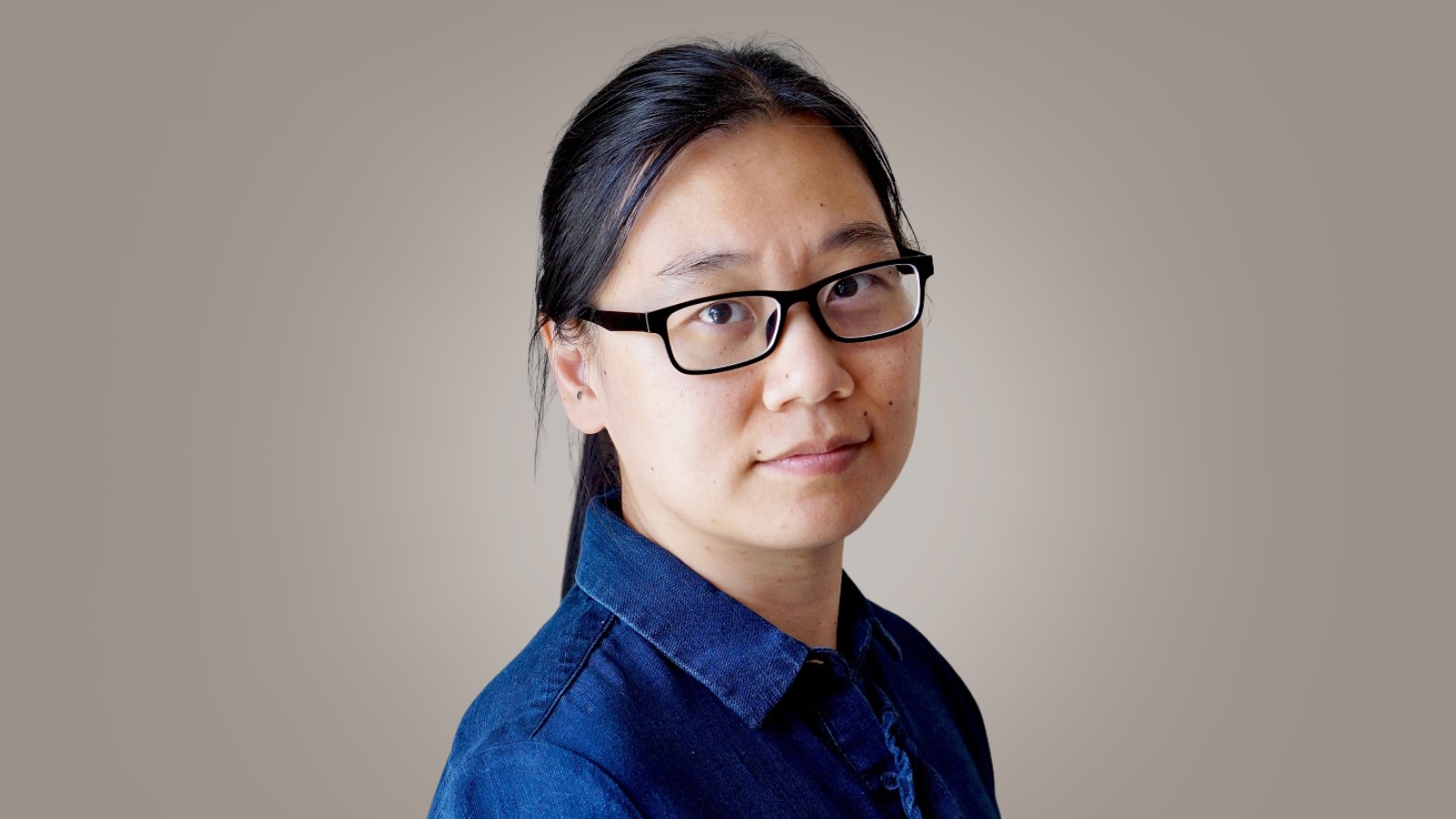
Xingyu Li is an Associate Professor in the Department of Electrical and Computer Engineering at the University of Alberta. She is also a Fellow at the Alberta Machine Intelligence Institute (Amii) and a Canada CIFAR AI Chair. One of her main research interests is digital histopathology and applying AI techniques to medical imaging and medical data.
- How did you get into your area of research?
- I got into this area during my PhD, when I was first exposed to histopathology data. During my graduate studies, there were only a few groups in the world working in this area.
- As an AI researcher, I was looking for problems where machine learning could make a meaningful difference, not just perform well on benchmarks. Pathology really caught my attention because it plays such a central role in diagnosis, but there is also a real shortage of pathologists and a growing workload. At the same time, whole-slide imaging was becoming available for clinical use, which meant pathology slides could be digitized at high resolution. That opened the door for AI methods to help analyze these very large and complex images.
- For me, the motivation came from seeing a strong match between an important clinical need and what AI could potentially offer. I became interested in digital pathology because it is technically challenging, but also closely connected to improving real clinical workflows.
- Upon finishing my PhD I could have gone back into industry, having previously worked in the private sector, but I already knew what that path looked like. Instead I decided to stay in academia where there’s more freedom to pursue your own questions and what you want to understand.
- At this time, the UofA had openings for AI for anything. So, I thought okay, AI for health, which is exactly aligned with my PhD thesis as well as my research interest.
- Please explain your research.
- One of my current research focuses is applying AI to digital pathology. In simple terms, pathologists diagnose diseases by examining tissue samples under a microscope. Now, many of these tissue slides can be scanned into high-resolution digital images. These images are extremely large and complex, so my research is about developing AI methods that can analyze them and help identify meaningful patterns related to disease.
- I would not describe the goal as replacing pathologists. Instead, the goal is to build tools that can support them — for example, by highlighting suspicious regions, helping quantify tissue features, or making the diagnostic workflow more efficient and consistent.
- For someone outside my field, I would say my work sits at the intersection of AI and medicine: I use machine learning to help extract clinically useful information from pathology images, with the broader goal of supporting better and more scalable diagnosis.
- What impact is your research making?
- I hope one day, more AI technology will be adopted. However, there are still a lot of technical limitations with AI.
- One of the major criticisms coming from the domain experts is that we don't know when we should trust and when we shouldn't trust the decisions made by AI.
- Where do you see your area of research going in the future?
- Right now, AI research is very advanced and it's evolved too fast. Sometimes we say that every day we hear something new - the model has changed, the data has changed, the methodology has changed. However, for my research, instead of pursuing the model architectures and detailed design, given the model, I want to evaluate its robustness, reliability, generalizability. It's more about trustworthiness. If we use these models, if we use these technologies, can we trust them.
- For medical data, trust is very important. Trustworthiness is the key component that decides if an AI technology can be applied in the clinic.
- What research challenges do you face?
- One major challenge is data scarcity. Currently, many advanced AI models are trained on all Internet data. You can imagine the scale of the data. For the most advanced models the trainable parameters, which means what they need to learn, is up to hundreds of millions. So, we say that in machine learning, if we want to get a good model with a reasonable scale of data, it should be quite similar. It’s impossible right now for histopathology. In digital pathology, high-quality annotated data is difficult to obtain because labeling usually requires expert pathologists, and their time is limited. Also, medical data often has privacy and institutional restrictions, so it is not as easy to collect or share as natural image datasets.
- Another challenge is that AI researchers cannot treat pathology images as just ordinary images. To properly verify the data quality, model outputs, and visual patterns, we need at least a basic understanding of histopathology. For example, we need to know whether a region is meaningful tissue, artifact, poor staining, or simply irrelevant background. Without that domain knowledge, it is easy to misinterpret what the model is learning. My job is usually the AI part which means that in most of cases, for each of the projects, I need to collaborate with someone, pathologists or physicians, who know the domain, who know the bottleneck or most critical questions that we can use AI to help.
- For me, the main challenges are not only technical, such as limited data, but also interdisciplinary. I need to combine AI methods with histopathology knowledge and collaborate closely with domain experts to make sure the models are reliable and clinically meaningful.
- What are you looking for in potential collaborators?
- I’m looking for people who are willing to share what challenges they are facing, and where we can try to solve their questions using AI. I prefer domain experts to tell me where the problems are, what are the true questions they are facing.
- I’m also looking for collaborators who can provide specific data and then tell me what information they are looking for in the data. I can then think about whether AI technologies can help.
- What is your main piece of advice for graduate students?
- Focus on your main research, but at the same time, broaden your horizon. For example, my research on computational histopathology is very interdisciplinary. If I knew nothing about histopathology, I could not do this research. The same is true for the students. Explore more beyond your research focus. Usually it provides more opportunities and you will find that there are a lot of things that can be done.
- If you hadn't become a researcher, what might you be doing?
- I'm very enthusiastic about camping and outdoor activities. If I didn’t need to worry about my living expenses, I would be a travel vlogger. I would tow my trailer and explore different countries and share the travel experience!
- How has CRINA helped support your work?
- Through CRINA, I’ve met many researchers. Not only in histopathology or cancer prognosis and diagnosis but in different areas of research. It’s helped me understand where AI technology can also be applied.
- In my opinion, AI is just a technique. What things we should focus on is more about the domain. I’m not a domain expert, but after joining CRINA, I found that there are so many different areas where AI may have potential to contribute.