CTL Welcomes Elder Evelyn Day
25 September 2025
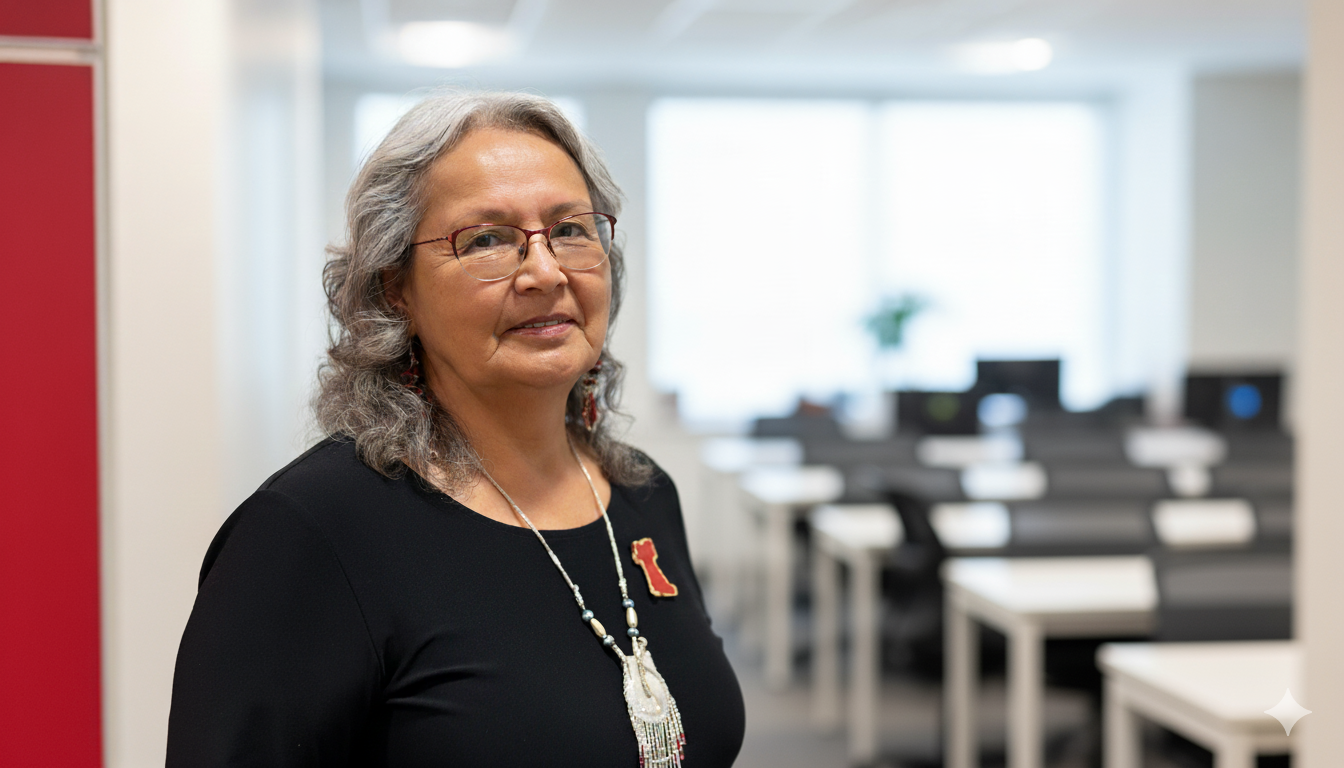
As the university community prepares to observe the National Day for Truth and Reconciliation on September 30, we are reminded of our responsibility to listen to Indigenous voices and recommit to the work of reconciliation. Observed annually, the National Day honours survivors of Indian residential and day schools, their families, and communities, and calls us to confront the ongoing impacts of this history. It is also a time for reflection, learning, and action as we consider our shared responsibilities within the university community.
For educators, this responsibility includes responding to the 94 Calls to Action released in 2015 as part of the final report issued by the Truth and Reconciliation Commission of Canada. The Calls outline concrete steps to redress the legacy of residential schools and advance reconciliation across education, justice, health, language, culture, and child welfare, affecting every aspect of society. Ten years later, they remain a vital guide and a reminder of the responsibilities that still lie before members of the University of Alberta’s teaching and learning community, in classrooms, in curriculum, and in daily teaching practices.
As part of advancing this responsibility, the Centre for Teaching and Learning (CTL) is honoured to announce a new role: Elder Day will join the Centre as CTL’s first embedded Elder. To mark this occasion, Elder Day sat down with Deanna Davis, Executive Director of CTL, to share what reconciliation means to her.
"I am honoured to be welcomed into the team at the Centre for Teaching and Learning and for being entrusted with such an important responsibility as we walk through the past generation and into the generations of now,” says Elder Evelyn Day. “Reconciliation is about walking together, listening to one another, and creating space for stories, reflection, and care. CTL meets instructors at the intersection of two traditions that shape the University of Alberta: the Indigenous university, which resides with Elders and with First Nations, Métis, and Inuit peoples, and the university shaped by Western and non-Western settler perspectives. This work calls for respect for both traditions and for openness, relationality, and the reciprocal sharing of knowledge.”
Elder Day’s words echo the commitments described in the University of Alberta’s inaugural Indigenous strategic plan, Braiding Past, Present and Future, which calls on the teaching and learning community to honour Indigenous histories and knowledge, confront ongoing colonial impacts, and build a future where education fosters belonging, respect, and healing.
Florence Glanfield, Vice-Provost (Indigenous Programming and Research), emphasized the importance of Elders’ guidance in reconciliation as it is one of the 10 Principles of Reconciliation. “I am grateful to see CTL taking this important step in supporting instructors with access to an Elder and Indigenous Knowledge Holder. There is a need on our campus for this kind of work, and reconciliation must happen with guidance from our Elders. Elder Day’s role at CTL is a crucial step in advancing the commitments of Braiding Past, Present, and Future. It reflects a shared responsibility to honour Indigenous histories and knowledges to ensure reconciliation is part of the daily fabric of teaching and learning at the University of Alberta.”
Elder Day’s involvement with CTL strengthens this commitment by ensuring instructors have the support and guidance they need to carry reconciliation into their classrooms and academic programs. From the university’s learning mission perspective, Karsten Mündel, Vice-Provost (Learning Initiatives), emphasized the impact of having an Elder embedded in CTL. “Teaching and learning are at the heart of how we prepare students for their lives and responsibilities beyond the university. We recognize that our instructors and students are at different stages in their understanding of what reconciliation means in the classroom. Elder Day’s guidance will help instructors navigate this work, reflect on their teaching practices, and strengthen our classrooms as spaces that invite and value Indigenous knowledge, perspectives, and lived experiences.”
Many on campus will already be familiar with Elder Day from the Festival of Teaching and Learning, AI Day, New to the U, and other CTL events. In this new role, she will be increasingly engaged in guiding the university community through her presence, teachings, and participation in CTL’s programming.
Deanna Davis, CTL's Executive Director, noted that welcoming Elder Day is part of the Centre’s ongoing renewal and a reflection of its evolving priorities. “Elder Day’s presence has already meant so much to the campus community, and we are thrilled to have her embedded in the CTL team on a more regular basis,” she says. “Over the past year and a half, I have deeply appreciated the relational approach she brings to her interactions, which has meant so much as I’ve come to know her. This is the next step in the Centre’s evolution. Weaving an Elder’s presence into CTL reflects the principles guiding our work and opens new ways to support the teaching and learning community. Our community is diverse, and people engage with truth and reconciliation from many perspectives and experiences. CTL is here to support instructors in growing their teaching practice—whether taking first steps in reflection or deepening the integration of Indigenous knowledge, perspectives, and content into courses and programs.”
Note: This audio file is available only to U of A faculty, staff, and students, at Elder Day’s request. Please log in with your CCID ualberta email to access it.
Elder Evelyn Day
Elder Evelyn Day is a member of the Tahltan Band from Telegraph Creek, British Columbia, and has made Edmonton her home for more than 30 years. Entrusted with the traditional wisdom of her Ancestors from a young age, she has long supported the healing journeys of Indigenous Peoples and communities.
A Residential School Survivor, Elder Evelyn pursued education later in life, completing her Grade 12 education, studying American Sign Language, and working for over a decade as a Health Care Aide. She has also shared Indigenous perspectives through community initiatives, including in Jasper, where she operated her own business. Today, she continues to be engaged in education, health, and community, offering teachings and guidance across diverse settings.
Elder Evelyn has been actively involved in reconciliation efforts within several churches and frequently facilitates KAIROS Blanket Exercises and other educational programs with the Edmonton Public School Board and the University of Alberta.
Deepening your understanding
- University of Alberta, TRC Report to the Community: Explore the Truth and Reconciliation Commission, access resources, and see how the University of Alberta is advancing its response and commitment to reconciliation.
- University of Alberta. Braiding Past, Present, and Future: University of Alberta Indigenous Strategic Plan.
- National Day for Truth and Reconciliation subject guide: The university's National Day for Truth and Reconciliation subject guide includes many resources to support learning and reflection
- Presenting our presence: Listen to Vice-Provost, Dr. Florence Glanfield, in Presenting Our Presence — or POP — a monthly vodcast that amplifies the voices and visibility of the Indigenous knowledge-holders, learners, and change-makers who enliven the University of Alberta community. The
- Faculty of Native Studies continuing education: Explore the diverse histories and contemporary perspectives of Indigenous peoples living in Canada through the Faculty of Native Studies' online courses.
- National Centre for Truth and Reconciliation: Access archives, records, educational materials, memorials and research about Canada’s residential school legacy, and see how survivors, communities, academics, and the public can engage in healing, learning, and reconciliation.
- Edmonton Public Libraries, National Day for Truth and Reconciliation: Explore the history and meaning of National Day for Truth and Reconciliation, find educational resources, and see how Edmonton Public Library is honouring survivors of residential schools and inviting collective reflection.
- City of Edmonton: The City of Edmonton acknowledges the National Day for Truth and Reconciliation through public awareness, educational initiatives with Indigenous partners, ceremonial events and more. Learn more about the events across the that are fostering growth, learning, and reconciliation.
- UN Declaration of the Rights of Indigenous Peoples: The United Nations Declaration on the Rights of Indigenous Peoples (UNDRIP) is a landmark document that outlines the rights of indigenous peoples worldwide.
Teaching and learning resources
- Lindstrom, G., and Anselmo, L. Indigenous Ways of Knowing course design. Taylor Institute for Teaching and Learning, U of Calgary.
- Taylor Institute for Teaching and Learning. Indigenous guiding principles for curriculum development workshop series. University of Calgary.
- Centre for Teaching and Learning, Learning About the Land: Land Acknowledgements that Teach Us. University of Alberta
- First Peoples’ House. University of Alberta.