Bridging the classroom and the field with Jo Sheppard
31 March 2026
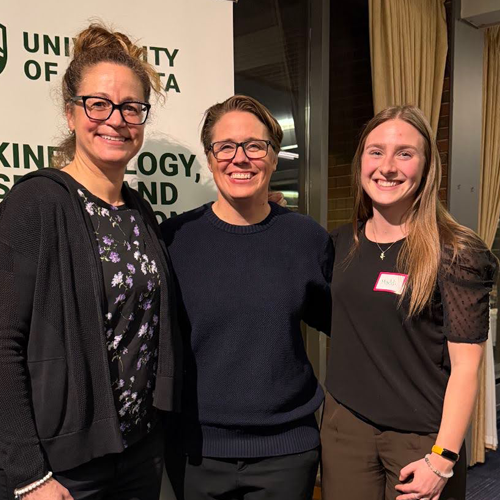
Jo Sheppard, center.
Work-integrated learning, a form of experiential learning, helps students connect what they learn in the classroom with what they experience in practice. It can build confidence, deepen reflection, and create meaningful opportunities for growth. As part of National Co-op and Work-Integrated Learning Month, Instructional Designer Michelle Anderson-Draper sat down with Jo Sheppard from the Faculty of Kinesiology, Sport, and Recreation to talk about how relationships and practical experience help bridge the gap between the classroom and the field.
Jo, can you tell me a bit about what work-integrated learning looks like in your teaching context, and what you hope students develop?
In my teaching in the Faculty of Kinesiology, Sport, and Recreation, work-integrated learning primarily occurs through In-Field Learning Experiences and professional practicums where students engage with community organizations, sport and recreation programs, health settings, and research environments. These experiences help students move beyond classroom theory and see how concepts are applied in practice while working alongside professionals and participating in meaningful work. Through these experiences and structured reflection, students develop professional confidence, practical skills, key professional competencies, and a stronger sense of professional identity.
I appreciate your comment about “meaningful work,” opportunities where students contribute in ways that matter and see the impact of their efforts. How do you prepare and support students for these experiences, especially diverse learners?
I prepare students by intentionally scaffolding their experiences before they enter the field. Students complete preparation activities such as career exploration, professional portfolio development, and discussions about workplace expectations, professional communication, and conduct, so they enter placements with confidence and clarity. Throughout the experience, I maintain ongoing communication with students and supervisors to ensure placements remain meaningful learning environments where students feel supported and confident as they develop their professional pathways.
With many students to support, are there any GenAI tools you use to assist with field placements?
I use the CampusBRIDGE Experiential Learning platform to manage In-Field Experiences. It makes the process more student-centred, letting students explore opportunities, apply to placements, and engage with organizations in a way that mirrors recruitment. I also use AI tools to identify themes in student reflections, giving insight into what students are learning and where they might need more support. Together, these tools streamline administrative tasks, so I can focus on supporting students and building relationships with community partners.
How do you approach assessment to ensure meaningful learning has taken place?
My approach focuses less on traditional testing and more on growth, reflection, and professional competency development. I emphasize structured reflection and professional development activities, like goal setting and portfolio work, to help students connect field experiences with academic learning and think critically about what they are learning. Feedback from agency supervisors provides insight into how students demonstrate professionalism, communication, teamwork, and initiative. Ultimately, meaningful learning is shown when students reflect on experiences, connect theory to practice, and articulate how the experience has shaped their skills, perspectives, and professional identity.
What is one practical takeaway or call to action you would share with colleagues?
Building genuine relationships with students is at the core of meaningful work-integrated learning. In my teaching, I create spaces for these relationships to develop informally, for example, through our UNO Club, which connects students outside the classroom. These moments help students feel comfortable approaching faculty, asking questions, and exploring opportunities like research, volunteering, or in-field placements. My call to action for colleagues is to intentionally create small opportunities to connect with students beyond the curriculum, because those relationships often provide the foundation that supports meaningful work-integrated learning.
About National Co-op and Work-Integrated Learning Month
Co-operative Education and Work Integrated Learning Canada (CEWIL Canada) is the lead organization for work-integrated learning in Canada. CEWIL works with post-secondary institutions, employers, community partners, government, and students to advance high-quality WIL across the country. Work-integrated learning connects students’ academic studies with structured learning experiences in the workplace or practice settings, helping to bridge classroom learning and field experience. March is recognized as National Co-op and Work-Integrated Learning Month, a time to celebrate the partnerships, programs, and experiences that support student learning and growth. Learn more about Work-integrated Learning Month, including access to resources, stories and more.
Learn more about experiential learning at the U of A, and get involved! Connect with other colleagues by joining CTL's monthly experiential learning gatherings. Explore topics such as assessment design and feedback strategies while connecting across disciplines, sharing challenges, and sparking ideas within a supportive community.