Honouring the Memory of Thomas Slimmon
By Dr. Doug Ivey - 8 September 2026
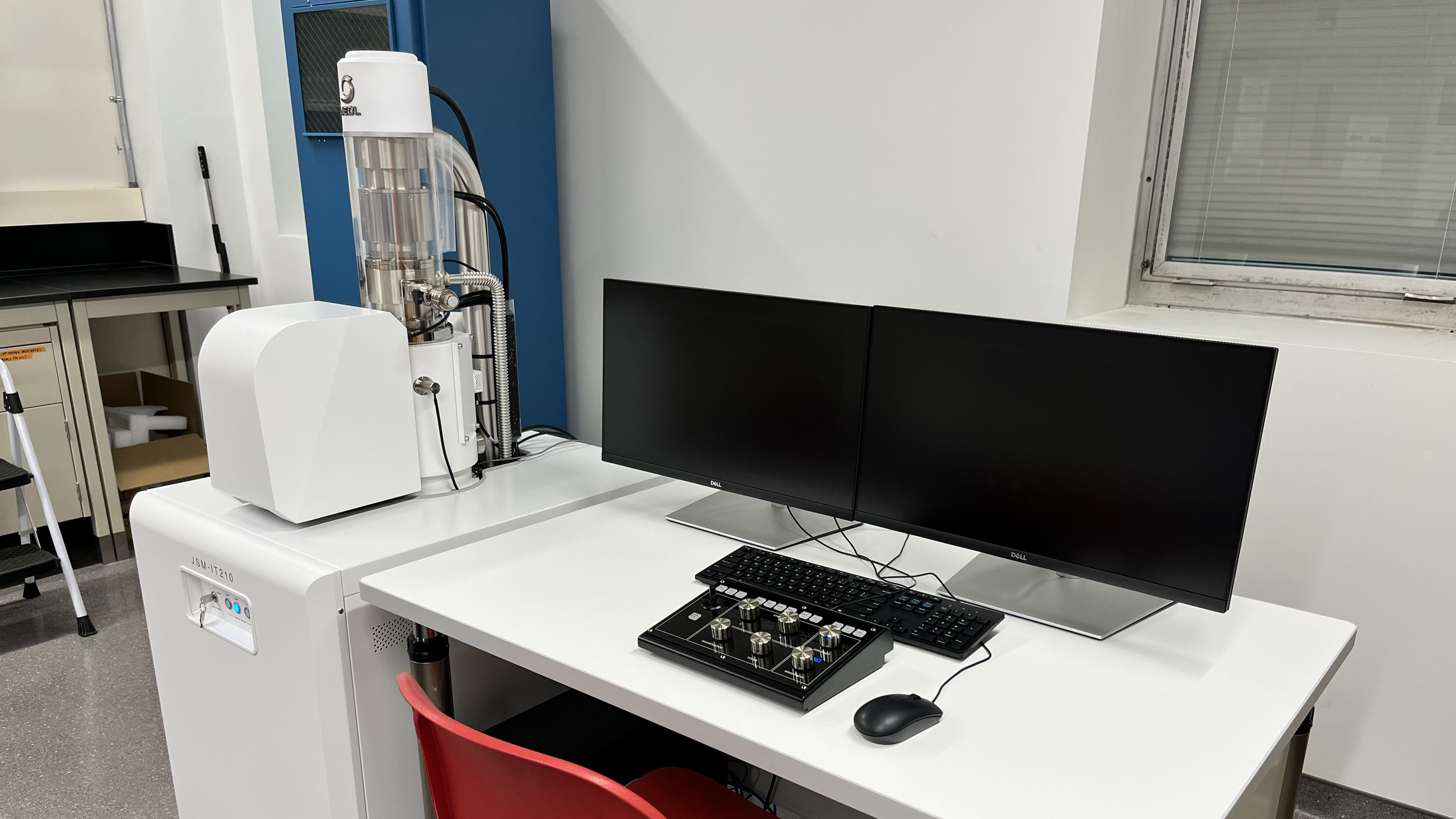
The Faculty of Engineering’s Department of Chemical and Materials Engineering is proud to share news of a meaningful legacy gift from alumna Mary Slimmon (BSc '64, Medical Lab Science) in memory of her late husband, Thomas "Tom" Slimmon (BSc '64, Metallurgical Engineering).
Tom was incredibly proud of his education and had a distinguished career travelling the world to advance pipeline safety and quality. To honour his lifelong dedication and passion for the field, Mary established a legacy that will support and inspire engineering excellence for generations to come:
- Thomas Slimmon Memorial Graduate Award in Materials Engineering (specific to research in metallurgy/corrosion).
- Thomas Slimmon Memorial Undergraduate Award in Materials Engineering.
- Funding for developing corrosion-specific classroom kits for the DiscoverE outreach program.
- Funding for a new scanning electron microscope (SEM), which allows hands-on learning for both undergraduate and graduate engineering students. This is the first-ever microscope of its type in the Faculty of Engineering specifically geared towards student experiential learning.
About the SEM
The specific SEM is the JEOL JSM-IT210, a compact research-grade SEM engineered to deliver high-throughput, high-resolution imaging and elemental analysis within a compact footprint. The SEM is designed to accommodate users of varying skill levels and is controlled via a responsive multi-touch screen and a conventional keyboard and mouse interface. The microscope features a tungsten filament electron source capable of achieving an imaging resolution of 3.0 nm at 30 kV in high-vacuum mode and 4.0 nm in low-vacuum mode. The SEM can be automated to enable unattended routine imaging, as well as advanced automatic beam alignment, autofocus, and astigmatism corrections. For materials analysis, the JSM-IT210 SEM has an energy-dispersive X-ray spectrometer system for real-time elemental analysis and live compositional mapping. It also possesses a high-sensitivity quadrant backscattered electron (BSE) detector to provide atomic number contrast during imaging. To support a diverse range of sample types without requiring extensive preparation, the SEM can operate in both high and low vacuum modes, making it suitable for both conductive and non-conductive or sensitive specimens. The microscope will be a welcome addition to the CME Department and should prove to be a highly capable workhorse for materials engineering, including microstructural characterization and corrosion and failure analysis.
The newly acquired SEM will primarily serve educational purposes at both undergraduate and graduate levels. This includes undergraduate laboratory courses (MAT E 361, 362, and 461) as well as MAT E 211 (Materials Characterization), which incorporates a laboratory component. Undergraduate research project courses, such as CME 458 and 459 (Special Projects in Chemical and Materials Engineering I/II), will also benefit from access to the new SEM. The SEM will also be used in laboratories for the graduate course MAT E 666 (Materials Engineering Applications of SEM). In all instances, the new SEM will help students gain more hands-on experience and enhance their experiential learning. Any additional time allocated to the SEM will be used to support graduate research projects within the CME Department, although priority will be given to teaching purposes.
We are profoundly grateful to Mary and her family for this generous support. Tom's legacy will continue to shape materials and metallurgical engineering by inspiring young innovators to carry his passion forward and tackle the challenges of tomorrow.