
Essential, Unmissable and Surprising
Be inspired as you hear from university researchers and their partners on how they are solving some of the world’s biggest challenges – together.
The Connector Sessions is a community-engaged initiative that brings together leading University of Alberta researchers with their partners to share how their collaborations are helping to solve some of the world's biggest challenges. This event provides a unique platform for business leaders from across the province to hear firsthand how these partnerships are moving innovative ideas from the lab to the real world. By fostering these connections, the session highlights how collaboration can transform inspiration into tangible impact, ultimately creating a better future for everyone in our community and beyond.
Ready to make an impact?
Join us to tackle real challenges that matter to Edmonton, Alberta, and the world. Contact govrel@ualberta.ca for more information.
Stories

Plugging into the future
A partnership between FortisAlberta and the U of A is helping power grids gear up for the coming surge in demand.

Thinking outside the bubble
A mutually beneficial partnership between Cenovus Energy and the U of A has been ahead of its time for nearly two decades.

Securing Canada’s defence future
With the U of A as a trusted partner, Lockheed Martin taps into a wealth of technical expertise with the aim of protecting citizens and sovereignty.
Presenters
Ryan (Yunwei) Li + Monique Soboren
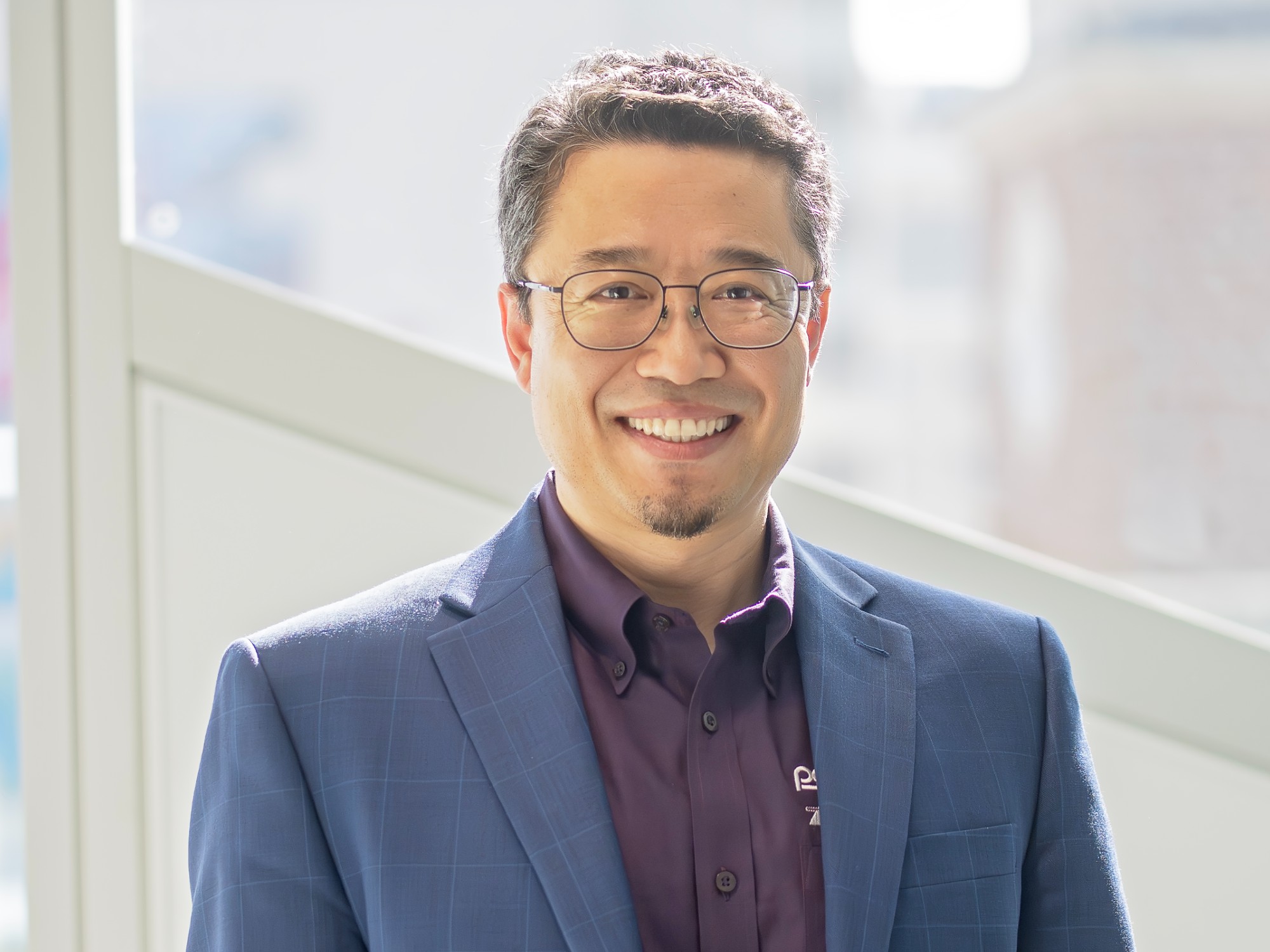
Ryan (Yunwei) Li
University of Alberta
As a professor and researcher, Ryan (Yunwei) Li is a strong believer in the power of collaboration. He believes that true innovation comes from diverse perspectives, whether from students or industry partners. For Ryan, working together is essential for making technological advancements that benefit society.
Ryan is a Senior Engineering Research chair at the university, and has served many different leadership roles with the IEEE Power Electronics Society. He has partnered with FortisAlberta to develop a cost-effective solution for electric vehicle (EV) charging. This research aims to help EV owners avoid expensive electrical infrastructure upgrades, which can cost upwards of $50,000 per home. By focusing on converting electrical energy before it reaches the home, Ryan and his team are developing a more efficient and affordable approach.
Ryan emphasizes the importance of these industry collaborations, which allow his team to test technology in a real-world environment. This practical validation ensures that his research has transformative applications and directly addresses the challenges faced by partners. These connections also provide valuable insight into evolving industry needs, allowing Ryan to align his research and development activities with emerging trends and demands.

Monique Soboren
FortisAlberta
How can we make a difference for our customers? That's a question Monique Soboren, a Senior Engineer at FortisAlberta, has been asking for years. Today, she’s tackling a major challenge: making sure customers in Alberta and across Canada can afford to charge their electric vehicles (EVs) at home.
Monique is drawing on her past experience with direct current (DC) power, gained while working on C-trains for the City of Calgary Electric System (now ENMAX). She’s now applying that expertise to a modern problem: finding a solution that avoids the exorbitant cost of replacing existing residential alternating current (AC) lines with new DC lines, which are necessary to handle the increased power demands of EV charging.
The guiding principle? Customer first. By partnering with Ryan Li at the University of Alberta, Monique is not just exploring a new technology; she’s helping to literally “flip the switch” on a major obstacle, ensuring clean energy and affordable solutions for everyone.
Amit Kumar + Amos Ben-Zvi

Amit Kumar
University of Alberta
As the Tier-1 Canada Research Chair in Assessment of Energy Systems, Amit Kumar is a top expert focused on tackling the complex challenges of reducing greenhouse gas emissions. He works across residential, industrial and transportation sectors, using a three-part approach: improving energy efficiency, integrating renewable energy, and advancing carbon capture and storage technologies.
Amit holds the Cenovus Energy Endowed Chair and serves as Director of the Canadian Centre for Hydrogen Innovation, Workforce Development and Outreach. His work in applied research has made him a trusted policy advisor, contributing to major initiatives like the Alberta Hydrogen Roadmap. Globally, he is the Deputy Director of Future Energy Systems and Associate Director of the NSF Global Centre for Sustainable Bioproducts, linking research institutions across six countries.
He believes that partnerships are crucial for progress. Building on a 17-year partnership with Cenovus Energy, which started as a five-year program to develop decarbonization pathways. The program quickly grew, uniting key industry partners to create a unique model for technology assessment.
Amit is driven by a desire to bridge the gap between technology and policy, ensuring that innovation leads to real benefits for people and the planet.

Amos Ben-Zvi
Cenovus Energy
Amos Ben-Zvi has a big dream: to build big things and make a significant impact on the world. He knows that doing so is risky and requires combining skills and resources of a broad interdisciplinary team. Nobody alone can possess all the knowledge needed to create meaningful change. That's why he's dedicated to building coalitions, seeking out diverse perspectives, and crafting a vision that inspires others to join the journey.
Amos currently serves as the Senior Manager of Strategic Technology at Cenovus. In this role, he is tasked with advancing the development of clean technologies and collaborating with research teams. He thrives at the intersection of corporate challenges and academic curiosity, where his partners become integral parts of the innovation engine.
For Amos, success isn't just a polished presentation; it's when something is built or created that adds material value to society. He's particularly excited about working with Amit Kumar at the University of Alberta, where they are making strides in clean energy innovation. It's a partnership that truly embodies his belief in collective success.
James Hogan + Jamie Fitzpatrick

James Hogan
University of Alberta
James Hogan has always been driven by a passion for ensuring the safety and security of Canadians. Inspired by family members who served in the military, he pursued a career in mechanical engineering with a focus on delivering cutting-edge technology.
As a Director at CARDD-Tech, James specializes in developing applied technology solutions that are transformational for end users. His work focuses on improving our response to critical safety and security challenges, including wildfires, search and rescue operations, disaster response, and autonomous systems.
Working in collaboration with industry partners like Jamie Fitzpatrick from Lockheed Martin Canada, James leverages the university's secure infrastructure and partnerships to bridge the gap between research and real-world application. He is dedicated to creating dual-use solutions that will not only enhance Canadian security and defence but also provide significant benefits for civilian applications.
This commitment to developing practical, impactful technology is central to his mission: to provide innovative solutions that make a tangible difference in the safety and security landscape for all Canadians.
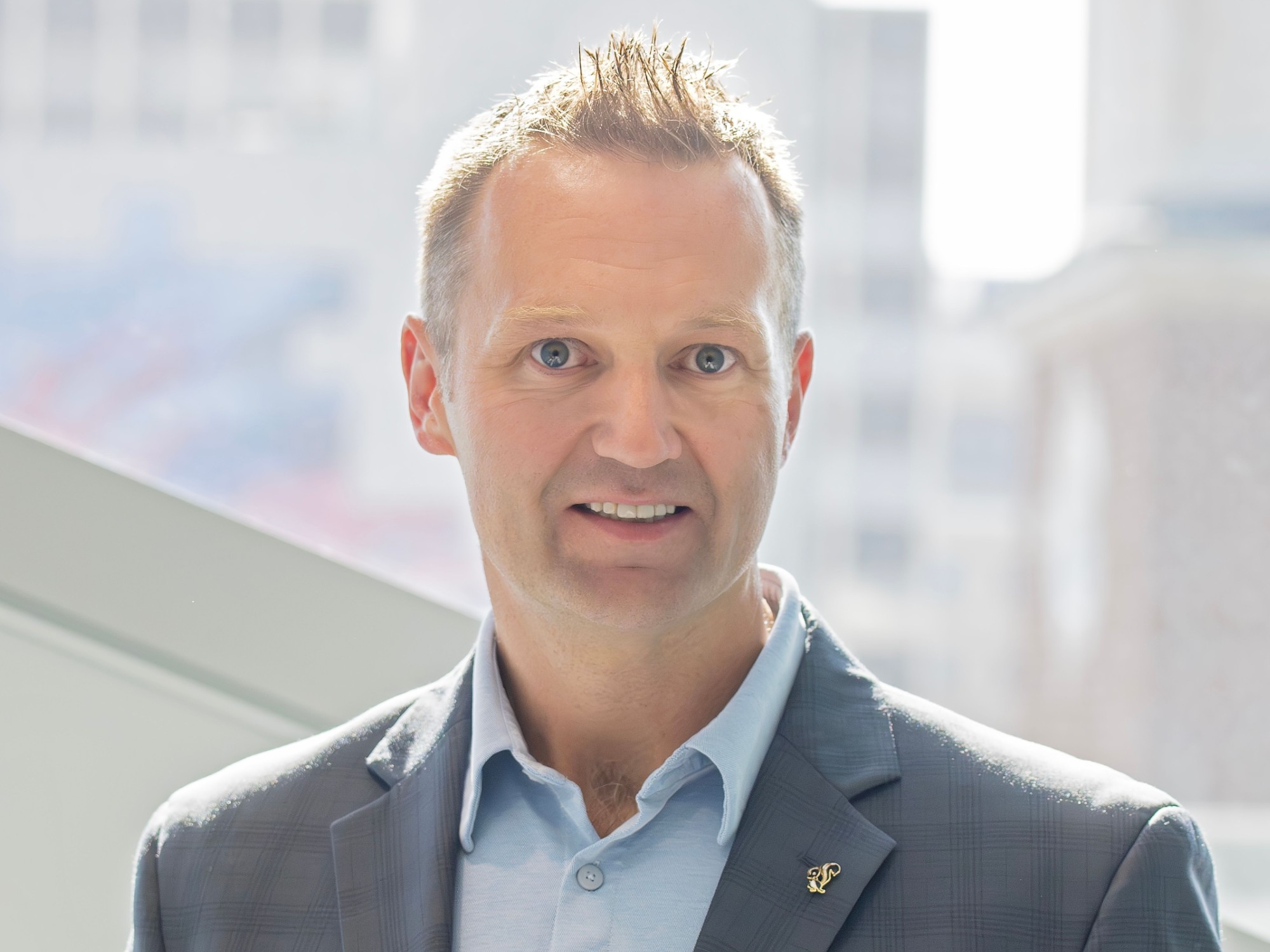
Jamie Fitzpatrick
Lockheed Martin Canada
For Jamie Fitzpatrick, a 20-year veteran of the Canadian military, the ultimate goal is clear: in the chaos of a mission, men, women, and their equipment must operate as one cohesive unit. That's why he's so passionate about making sure military personnel have access to advanced, effective technology.
As a former Sergeant Major in Special Operations, Jamie understands firsthand the need for equipment that works in unique and challenging missions. This led him to Lockheed Martin Canada, where he now develops command and control software for unmanned systems. His focus is on simplifying the drone operator’s job, so the operator and the drone can work together as a single, unified force.
Lockheed Martin accelerates innovation through key partnerships, which allows them to outsource the research and testing of new ideas to external teams. This is especially critical for unmanned technology, where real-world trial and error is too risky and impractical. The insights from James Hogan’s team, for example, are invaluable as they review technology and provide detailed feedback to improve operations.
Additionally, collaborations like the one with the University of Alberta enable Lockheed Martin to not only prove the value of new technology to clients but also to send crucial feedback back to their own engineers.

Callie Lissinna
Wyvern
Callie Lissinna grew up on the Canadian prairies, thinking a career in space was an "out of this world" dream for a girl like her. Two decades later, she's a co-founder of a successful aerospace company, Wyvern, proving that dream was well within reach.
Her first step toward the stars was attending the WISEST (Women in Scholarship, Engineering, Science and Technology) program at the University of Alberta in high school. The program sparked her interest in engineering, and she enrolled in the university's mechanical engineering program. But it wasn't the lectures that truly captured her imagination; it was her work with AlbertaSat, a student and faculty club working to educate and engage to build a strong foundation in Alberta’s space industry.
After countless late nights operating the satellite and sending it commands, Callie discovered her passion. She also learned a powerful lesson about the importance of teamwork and collaboration. The AlbertaSat project taught her that bringing big ideas to life—like building and launching a satellite—requires strong partnerships. Something she has taken with her to Wyvern, where they provide a new perspective on Earth for industries and government organizations.

Mia Abdulla
University of Alberta
As a graduate student at the University of Alberta, Mia Abdulla is focused on driving change within Canada's supply chain. Her groundbreaking research involves leveraging 3D printers to manufacture components for industries using high pressure processes. By meticulously designing and creating parts that will then be welded into place, she's tackling critical challenges of precision and efficiency in a field where quality is paramount.
Beyond her academic pursuits, Mia is a vocal advocate for empowering women in male-dominated fields. She firmly believes that women can — and should —excel in these industries without ever compromising their authentic selves. This conviction is deeply rooted in her background as a former competitive figure skater and soccer player, where discipline and grace coexisted.
Mia believes that meaningful connections are not just a byproduct of academic and professional pursuits but are, in fact, the very engine of innovation and change. She is committed to fostering collaborations that bridge diverse perspectives and disciplines, confident that these interwoven relationships will be the key to unlocking new solutions and creating lasting impact.