Mary Olukotun
20 February 2026
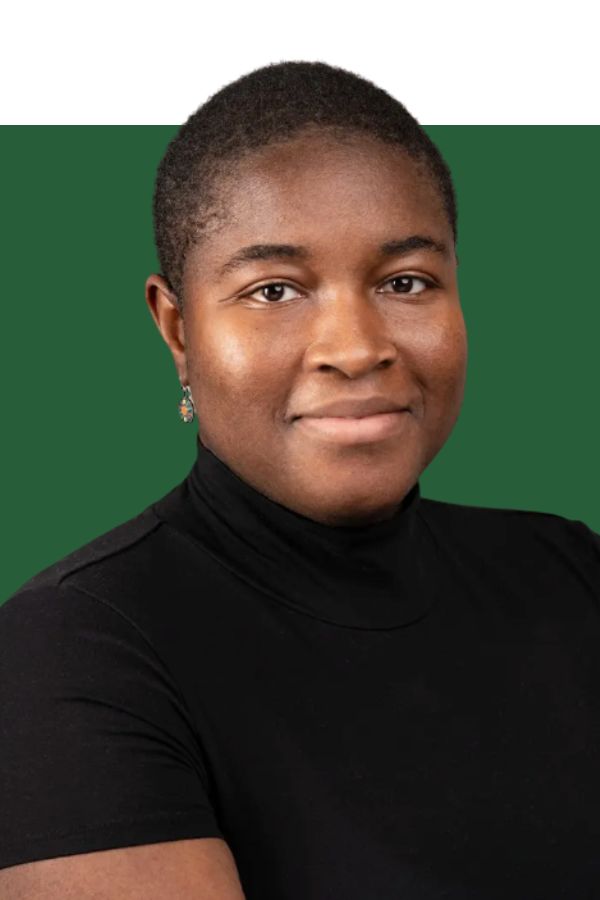
Mary Olukotun
PhD in Nursing (in leadership) | Final year
Current and past leadership roles:
- Planning Committee, Black Scholar Summer Institute, BARE Research Program
- Peer Group Facilitator, Mesh of Mothers Foundation
- Trainee Member, One Child Every Child EDI Advisory Council
Mary Olukotun (she/her) is a registered nurse with a clinical background in hematology/oncology, palliative care/hospice, general medicine and maternal/newborn health. She earned her bachelor of science in nursing from the University of Wisconsin-Milwaukee and is currently a PhD candidate in the Faculty of Nursing at the University of Alberta, where her research focuses on care access for Black preterm babies in the community. Mary's broader research interests include perinatal and child health, immigrant health, and the health and wellbeing of Black populations — especially the spaces where these topics overlap. However, she is particularly interested in exploring how intersecting social identities influence access, health and wellbeing for young Black children and their families. Mary is working towards defending her dissertation this year. Her doctoral work has been supported by ARNET, WCHRI, AbSPORU, ENRICH, CIHR and the University of Alberta.
What does leadership mean to you?
One of my long-time mentors has always emphasized the importance of leadership in the nursing community, particularly through role-modeling and mentorship. These are pillars in my own practice, fostered by mature nurses who took me under their wings as an eager, young nurse; and today, senior Black scholars who are intentional about creating and holding space for students and early-career researchers. It reminds me of the proverb, "each one, teach one," which I try to embody in my nursing scholarship (i.e., relationships, service, practices, research). This proverb emphasizes the value of knowledge-sharing and a commitment to paying it forward for the benefit and wellbeing of the community. This is especially apt considering the hidden curriculum within many academic and non-academic institutions which disadvantage Black nursing students and trainees. Consequently, when I am presented with an opportunity to offer support, guide or “teach one,” I happily offer whatever personal, professional or academic support that is within my capacity. For me, genuine leadership is only possible through conscientious engagement with one’s communities, which means being intentional in how we relate with each other.
What is one memorable highlight from your nursing studies ?
Reflecting on my journey, I am genuinely stunned by the immense growth I have had over the past several years. I started my graduate program with very little research experience, and have since had so many opportunities to learn and grow as a research trainee.
What does it mean to you as a Black student to pursue a career in health care, and how do you hope to make an impact in your community?
Though I am not at the bedside anymore, there are many moments during my clinical nursing practice that still remain with me today. One such recurring moment that others may be familiar with is being assigned to a patient who is labeled as difficult, only for a conversation to reveal they had simply been misunderstood, not listened to or dismissed. A growing body of research highlights such incidents as a lived experience for many Black people accessing or utilizing health care in Canada. On the other side of these interactions is the ease and relief Black patients feel after this initial conversation with a Black nurse, realizing that their concerns will be heard and they will be well-cared for. Black nurses are systematically underrepresented in the clinical workforce (e.g., specialty areas, advanced practice), leadership roles (e.g., managers, executive roles) and faculty positions; though, Black patients report receiving better quality care from Black nurses. Representation is not the entire answer, but it matters, and it is one way to address inequities in health care and outcomes within the Black community. To me, being a Black nurse and researcher means I get to make a difference simply by showing up and leading with compassion in all I do. It means showing up with integrity and a commitment to equity for Black students, Black nurses and Black communities.
What is your piece of advice for students?
“Success is liking yourself, liking what you do, and liking how you do it.” -Maya Angelou