Unbreakable bonds, foundational training
Sasha Roeder Mah - 11 May 2026
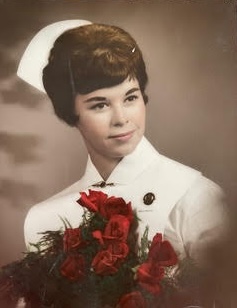
When Corinne (Cori) Chapman (nee McLean), ’64 Nurs, was growing up, most young women were directed toward one of two possible careers: teacher or nurse. As Chapman says, “I wasn’t inclined to pursue teaching. And my dad always encouraged me to go into nursing; he thought it was such an honourable profession.” The path for her was clear — leave her hometown of Athabasca for the big city, and embark on nursing studies at the University of Alberta.
Perceived career options for women are not the only things that have changed since the early 1960s. Back then, the path to becoming a nurse was a three-year diploma, not necessarily a bachelor’s degree — that was more for nursing students who planned a career in teaching or public health. And, at the U of A, all nursing students were required to live in residence, Chapman recalls. There, they were subject to a strict curfew (although, she laughs, “We found ways to work around that!”). They also trained together six and a half days a week. For her and her friends, this immersive atmosphere resulted in unique and lasting bonds.
“We still have regular reunions, although there are fewer and fewer of us that get together,” she says. “There have been many lifelong friendships forged through the shared experience of our nursing education.” After all these decades she is still best friends with classmate Doris George (nee McCauley). “We just came back from a three-week trip together to South Africa in the fall,” she says. “We got married at the same time, had our first children two weeks apart, even got divorced at the same time — we couldn’t have scripted it!”
Chapman’s fondest memories include her final rotation in the 14-suite, well-equipped operating room at the U of A, where she ended up staying for her first job. She also enjoyed participating in the first postgraduate course in operating-room technique and management when it was developed at the U of A hospital. “I thought I’d be an OR nurse forever,” she recalls.
Her husband’s job soon took them to Toronto, where she began work in the OR at Toronto Western Hospital. It was the early days of cardiac surgery and she was fortunate to be the scrub nurse for Donald R. Wilson, chief of surgery, who led the first heart transplant in Toronto — an opportunity she has no doubt was influenced by the U of A’s stellar reputation and her experience there.
Once her children came along — including daughter Leigh, who is currently chief nursing officer of Canada — Chapman stayed home to raise them until a phone call inviting her to return part time. “I had three young children at home, but was able to flex my part-time work schedule and return to the OR at Toronto Western Hospital. It was so rewarding. I remember thinking, ‘I can’t believe they’re actually paying me for this,’” she says.
Not long after this part-time return to work, Chapman was asked to interview for a new role. At this point she was a single mom and was concerned about balancing a new full-time job with raising three children. But it was an opportunity she could not pass up. She would have responsibilities setting up an operating suite for the first new hospital Ontario had seen in years — ordering equipment, hiring staff, and collaborating with a group of colleagues who all shared her youthful enthusiasm and passion for the work. It was a fortuitous move that led to opportunities “beyond what I ever envisioned” she says.
For the last 30 years of her career, until her retirement in 2008, Chapman moved beyond surgery and the OR to executive management and responsibilities in many other clinical areas. The work took her beyond the hospital walls as well, to work on local, regional and even national committees and boards. Through these years she also earned a BA and master of health science.
Looking back, Chapman credits the U of A for much of her lengthy and fulfilling career. “I’ve always been very proud of my education; the U of A gave me such a good foundation,” she says. “I believe my nursing background gave me credibility and breadth of experience to advance my career and I’ve loved every new opportunity.”
While daughter Leigh found her own way into nursing, approaching the career in a more circuitous route than her mom took, she fully believes in the power of generational legacy. Reflecting on her mother’s influence, Leigh notes, "Maybe her legacy is that early exposure to all of the things you can do." She echoes her mother’s experience that the field of nursing offers a wide array of opportunities to learn and go in new directions, encouraging future nurses to “never say never” to those opportunities.