Microsystems and Nanodevices
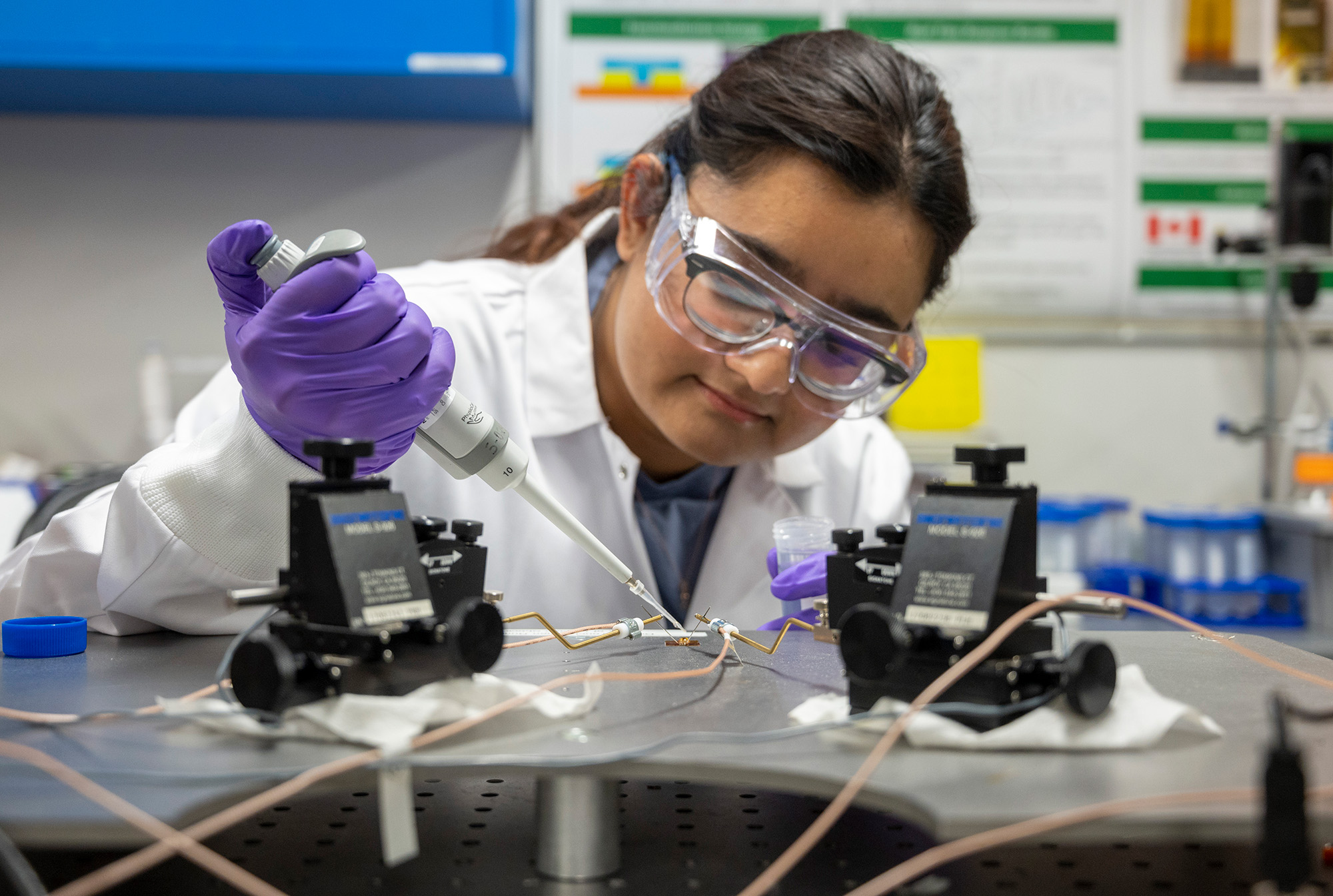
Engineers working at nanoscale take emerging breakthroughs in materials science, chemistry and physics, and turn them into practical applications for new on-chip functionality or improved performance of devices and materials.
The microsystems and nanodevices research at our university spans a diverse spectrum of nanotechnology applications, including nanomaterial engineering, nano- and micro-electromechanical systems (NEMS and MEMS), lab-on-chip devices, photonics and photovoltaics.
Our strength in this field is grounded in state-of-the-art fabrication and characterization facilities like the Micromachining and Nanofabrication Facility and the on-campus National Institute for Nanotechnology. As a student, you’ll engage in research that bridges the gap between theory and practical applications, contributing to the transformative advancements in nanotechnology and microsystems that shape the future of science and technology.
Find faculty members who specialize in Microsystems and Nanodevices.
Possible Careers
- MEMS design engineer
- MEMS process Engineer
- Sensor Engineer
- Nanofabrication Engineer
- Nanotechnology Researcher
- Nanoelectronics Engineer
Areas of Specialization
Electrical and computer engineering Microsystems and Nanodevices focuses on the design, fabrication, and integration of extremely small devices and systems, often at the micro- and nano-scale. This specialization covers areas like Micro-Electro-Mechanical Systems (MEMS), nanoelectronics, photonics, and biosensors. It's about translating breakthroughs in material science into practical applications that power everything from medical implants to consumer electronics.
Current research in Microsystems and Nanodevices
Microsystems and Nanodevices research advances next-generation electronics and biomedical tools. Core areas explore novel device physics like carbon nanotube and molecular transistors, spintronics, and quantum devices. Research also focuses on nanoengineered films for photovoltaics and advanced manufacturing (nanoimprinting). Crucially, the field enables healthcare breakthroughs via nanostructures for therapy, microarrays for DNA analysis, and microfluidics/lab-on-a-chip diagnostics, alongside specialized MEMS/NEMS sensors and actuators.