New textbook offers a "complex web" of solutions for population health
Kalyna Hennig Epp - 17 March 2026
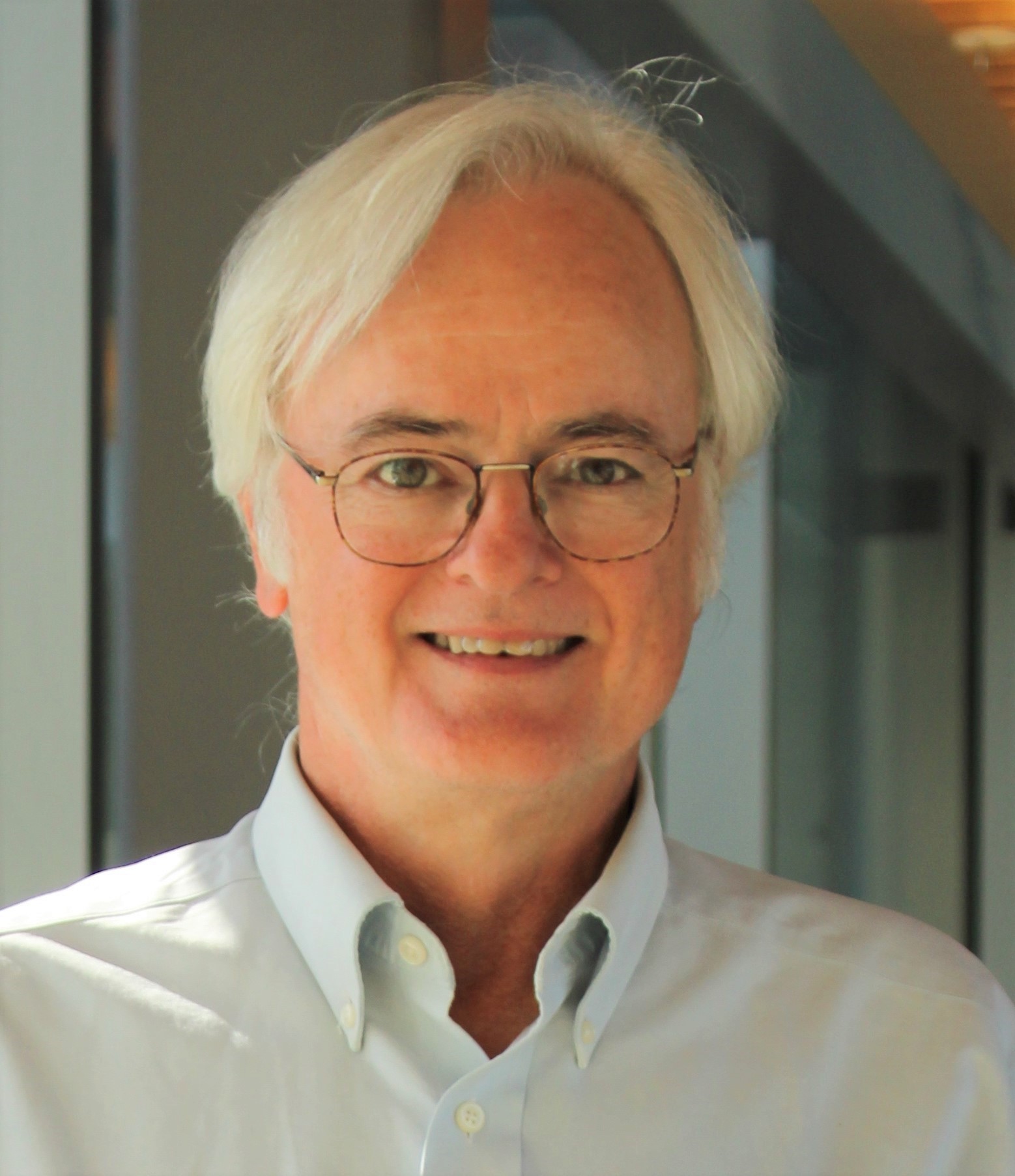
Stephen Hodgins
When it comes to understanding why some populations are healthier than others, the conversation often gets stuck in silos. Some may argue it’s about access to doctors, while others might say it’s about social conditions like housing and income.
In his new book, Understanding the Health of Populations: A Canadian Perspective (Brush Education), Stephen Hodgins, professor in the School of Public Health, argues that we need to look at the whole "complex web." Born out of a need for more comprehensive teaching materials for the master of public health (MPH) program, the textbook serves as a vital map for students and practitioners to navigate the many drivers of health in Canada.
Recently, Hodgins shared his new book with us and explained how he hopes it will change the way we teach public health.
What was the "light bulb moment" or the specific gap in existing literature that made you realize this book had to be written?
Early versions of the book’s material were prepared for a new course we added to the MPH program in 2023. At that time, one important area of public health that hadn’t been well covered in our curriculum was the broad determinants of population health. Reviewing books available in Canada, it was evident that although the social determinants of health have recently been well covered, other important drivers of population health — like behaviour, physical environment, biology and social environment — were getting less attention.
How long has this project been in the works? Did your perspective change throughout the process?
I began working on this material early in 2023 for the course. As I taught the course for the first time, I was approached by an editor from Brush Education to see if I’d be interested in developing the material into a textbook. I agreed and began that work early in 2024. I’ve been reflecting on these issues for decades so, in broad strokes, I had a pretty good sense of how the material needed to be presented. Work on the book reinforced for me the complex web of factors that drive population health.
If a reader only remembers one concept from this book, what do you hope it is?
That a complex web of factors drives the patterns of health and ill health we see in populations. It’s not either biological or social/structural; it’s both and lots more.
Does the book challenge any "common wisdom" in health sciences or public health?
Yes. The book challenges siloed thinking that would distill everything down to a single category of cause, whether that be biomedical or social.
What are the practical or clinical implications of your work?
The rationale for a book like this is that to develop effective solutions to population health problems, we need to get a handle on what the key causal drivers are. So, I see the understanding coming out of this kind of inquiry as eminently practical. One of the areas the book gives attention to is how issues related to health care (including quality, access and integration) impact population health, and it gives an overview of how the Canadian health-care system(s) works (or doesn’t). So, in that sense, the book has clinical implications.
How do you see this book influencing the way we teach health sciences?
My hope is that it brings together perspectives that are often in conflict or competition with each other, namely those privileging just one discipline or one major area of influence but denying others. We see this in competing discourses on health care versus the social determinants.
What is the "call to action" for the reader once they close the back cover?
With the enriched understanding readers should have upon finishing the book, they can seek out key points of leverage where effort can be applied to alter the performance of the system and achieve improved population health.
Is there anything else you would like to share?
In every chapter, I have included lists of useful articles, books and other resources. I strongly encourage readers to go down numerous rabbit holes, exploring these issues in greater depth. The book can be seen as a gateway.