Building a future with and for rural communities
Karen Sherlock - 8 December 2025
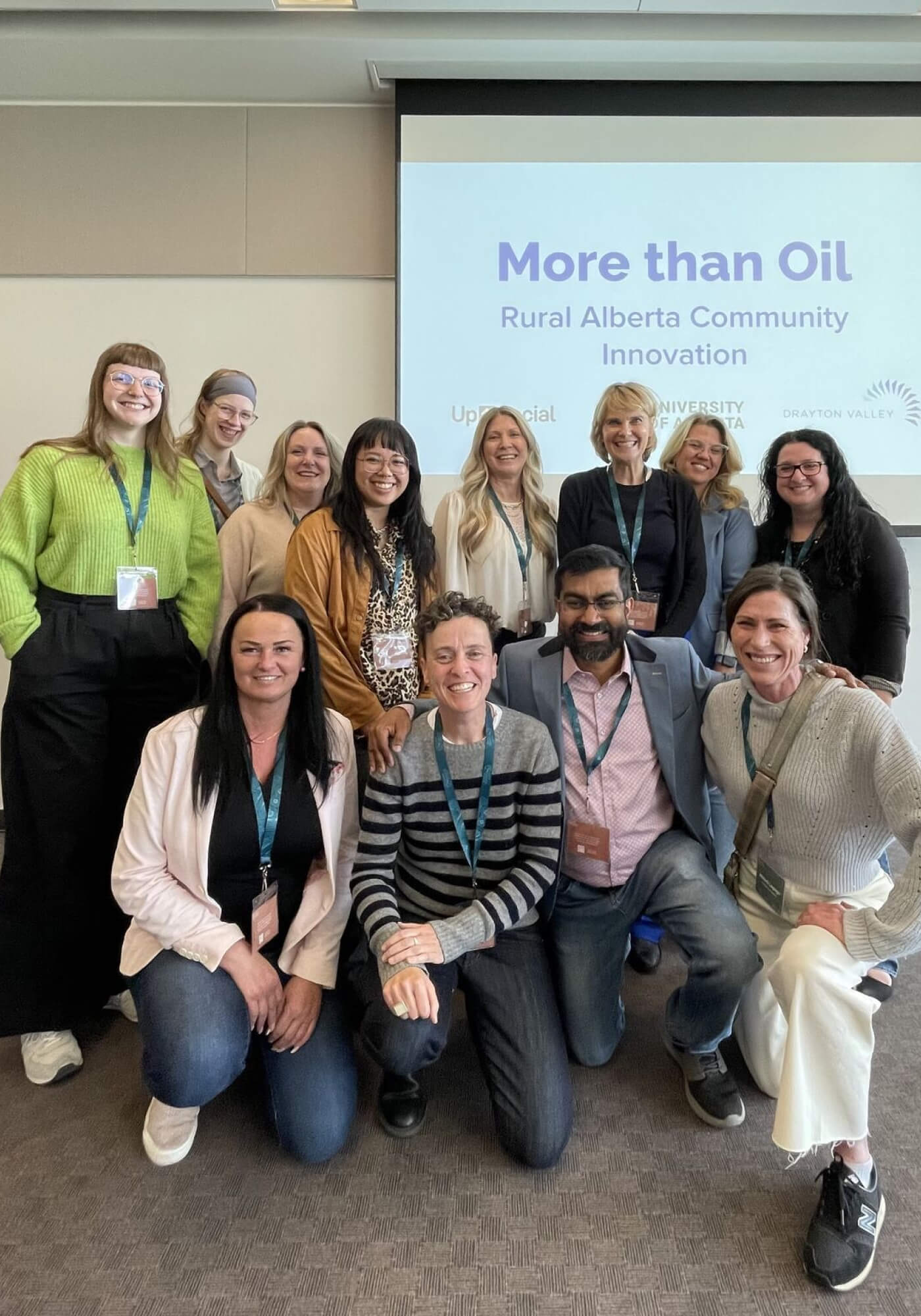
Among its many partners and projects, the Community-University Partnership (CUP) is particularly proud of its longtime collaboration with the Town of Drayton Valley, Alta.
The partnership began in 2019, when it partnered with the municipality to evaluate its Tuition Assistance Bursary (TAB) Program, the first of its kind in Canada, says Maria Mayan, public health professor and researcher. TAB provides financial support to residents who wish to pursue post-secondary education, addressing barriers to education in a rural setting and enabling residents to achieve their career goals while remaining in their community.
Since then, the partnership has grown in scope and scale. The CUP teams have developed relationships with town staff and elected officials, local non-profits, businesses, residents and others to address a range of social and economic determinants of health.
The goal of the close collaboration is to target the root causes of inequities, says Mayan, using a systems-wide approach that includes education, workforce issues, business needs, early learning and child care, immigration, mental health, and the incorporation of local economic models, such as Community Wealth Building.
Evidence-based models of resiliency
This work is vital given the multitude of challenges affecting resource-dependent communities like Drayton Valley, which face significant economic precarity due to the boom-and-bust cycle of the oil industry and rural outmigration, says Mayan. Economic instability is linked to a range of negative health outcomes, including high levels of substance use, depression and suicide.
As Canada transitions to net zero, rural communities need strong, evidence-based and replicable models that can ensure resilient rural economies, says Mayan. The CUP-Drayton Valley partnership is developing and testing approaches to economic resilience that can be adapted in other rural, resource-dependent Canadian communities.
Tangible benefits
The CUP-Drayton Valley partnership emphasizes deliverables that have tangible benefits for affected communities, says Mayan. Successes so far include:
Replicable model for tuition assistance
As a result of Future Skills Canada funding and CUP’s research and knowledge-sharing, the TAB model has been introduced to the communities of Brazeau County, Edson, Hinton and Whitecourt in Alberta. CUP will evaluate the rollout and implementation of TAB in those communities.
Community wealth-building plan
CUP contributed to the development of a CWB plan for Drayton Valley, which outlines priorities and strategies for the town’s economic future. CWB is a place-based economic development approach that focuses on maintaining control of local assets and keeping wealth in the community.
Pathways to sustainable jobs
CUP is engaged with a cross-section of business and political actors in the Drayton Valley region, including employers, economic development co-ordinators, regional municipalities, a youth hub and a recovery centre in gathering data to inform efforts to build a sustainable local job ecosystem.
Knowledge sharing
While producing academic publications is not the end goal of community-engaged research, CUP has contributed to numerous peer-reviewed papers based on our partnership with Drayton Valley, which have contributed to scholarly discourse on rural development.
Benefits to researchers and students
Like many community-engaged projects, the partnership has benefits for student and non-student researchers, who gain hands-on experience in project planning, working with community partners and bridging theoretical knowledge to practice.
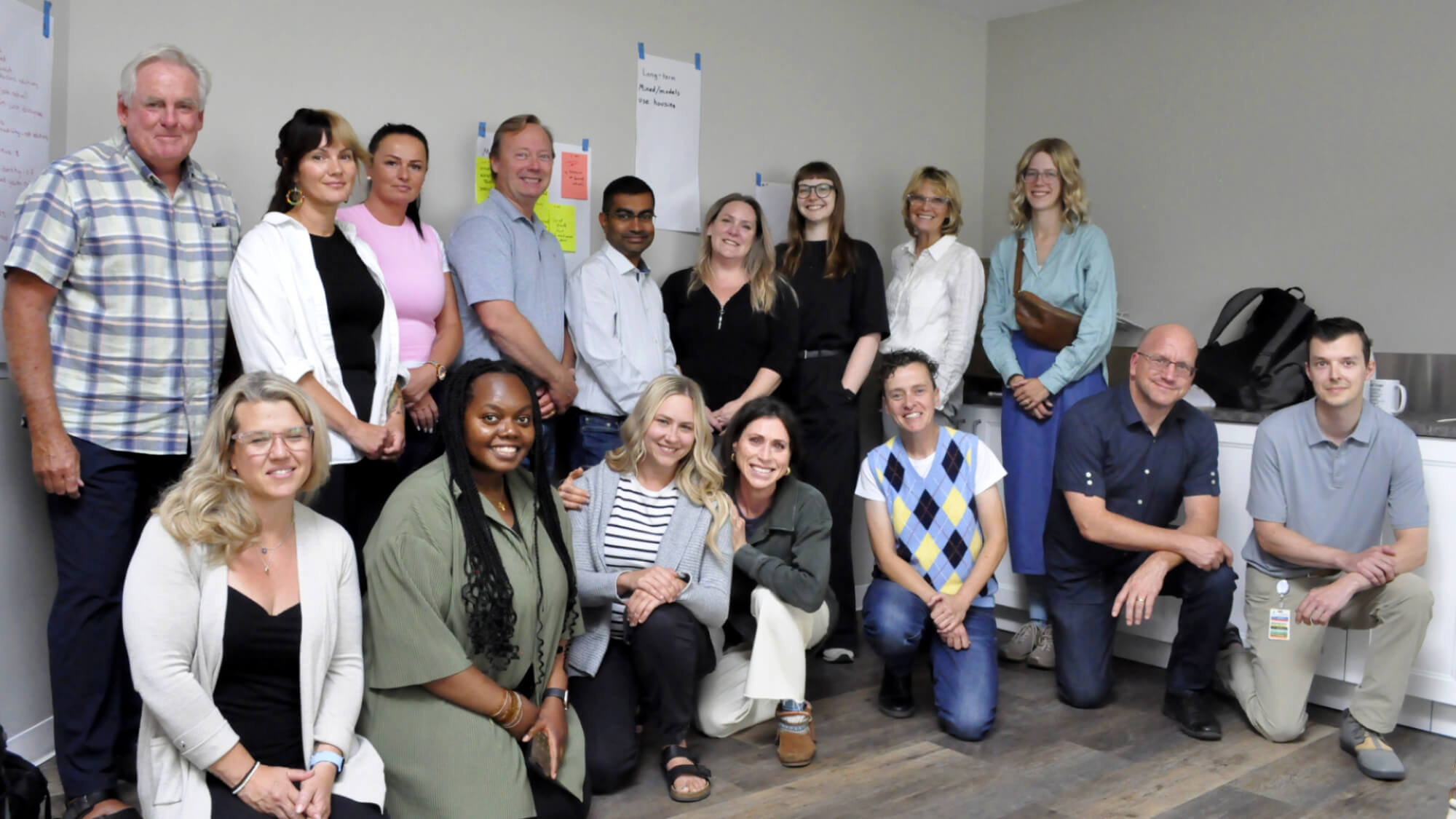
The CUP team engaged in a workshop in September 2025 with community members and partners in Drayton Valley, Alta., including members of the Drayton Valley town council, town administrators and service providers, Brazeau County council, Primary Care Alberta, Kickstand Youth Hub, Opportunity Home Treatment and Recovery Centre and UpSocial Canada. (Photo: Supplied)
Learn more about the important research happening in the School of Public Health in the 2024-25 Research Impact Report »