How community gardens can grow social connection, health and well-being
Karen Sherlock - 8 December 2025
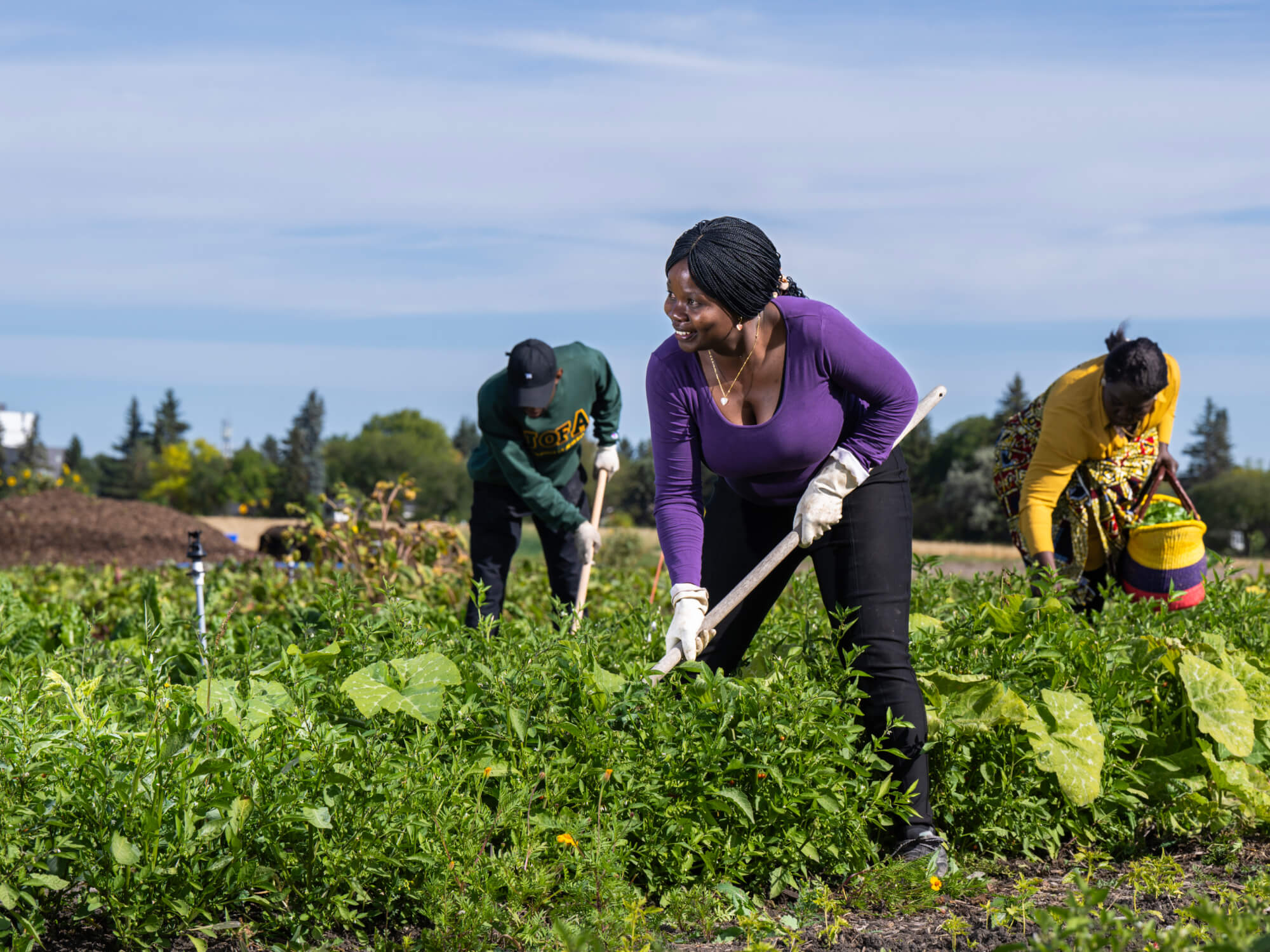
Through a project called a Taste of Home, Elizabeth Oyango (middle) explored how a community garden can contribute to cultural food security, mental well-being and intergenerational learning. Photo: John Ulan
Elizabeth Onyango remembers talking to her mother about how she had to drop out of school because her father, Onyango’s grandfather, didn’t see value in a girl’s education.
“That choice paved a trajectory for my mom’s life but also acted as a motivation for her to be the best cheerleader, not only to her daughters, including me, but also to other girls in our community,” says Onyango, assistant professor in the School of Public Health.
That experience influenced her own trajectory, from growing up in a rural community in western Kenya to a career researching community-based health and well-being
among immigrant communities.
“Having been raised by such a powerful social equity advocate, coupled with my lived experiences, my biggest impetus today is to work alongside marginalized groups
with the goal of empowering them to increase their power to choose,” she says.
Most recently, her research has focused on food security and how collective community gardening can support social connection, mental health and well-being, intergenerational and intercultural knowledge exchange and local production of culturally familiar vegetables and fruits.
Onyango says food insecurity is an ongoing reality and a public health issue affecting the many diverse ethnocultural immigrant communities in Canada, but cultural
food security is an aspect of food security that isn’t often talked about.
“Cultural food security — that is, being able to acquire, afford and eat traditional foods of one’s ethnic origin — is an important aspect of integration and meeting the
health and nutritional needs of oneself and/or one’s family.”
She has been working alongside the cities of Edmonton and Calgary and community-based immigrant service organizations Multicultural Health Brokers Co-Op and Sinkunia Community Development Organization to explore the topic “on the ground,” so to speak. A project called Taste of Home invited immigrant communities,
students and others to take part in a community garden growing traditional foods of different cultures at the University of Alberta’s South Campus.
The team has already reported on a number of important findings from this work. The study is part of the Bridging Divides research program funded by the federal government through the Canada First Research Excellence Fund and will continue and expand with additional funding from a Social Sciences and Humanities Research Council Insight Grant.
“By continuing to practice one’s food traditions and customs, we foster cultural identity and societal connections,” Onyango says. “Doing so also creates spaces for learning and building cultural humility and safety, not only for immigrants but also for the mainstream Canadian population.”
Learn more about the important research happening in the School of Public Health in the 2024-25 Research Impact Report »