Student Spotlight: Carrying Identity into Care
Erika Nakatsui - 29 July 2026
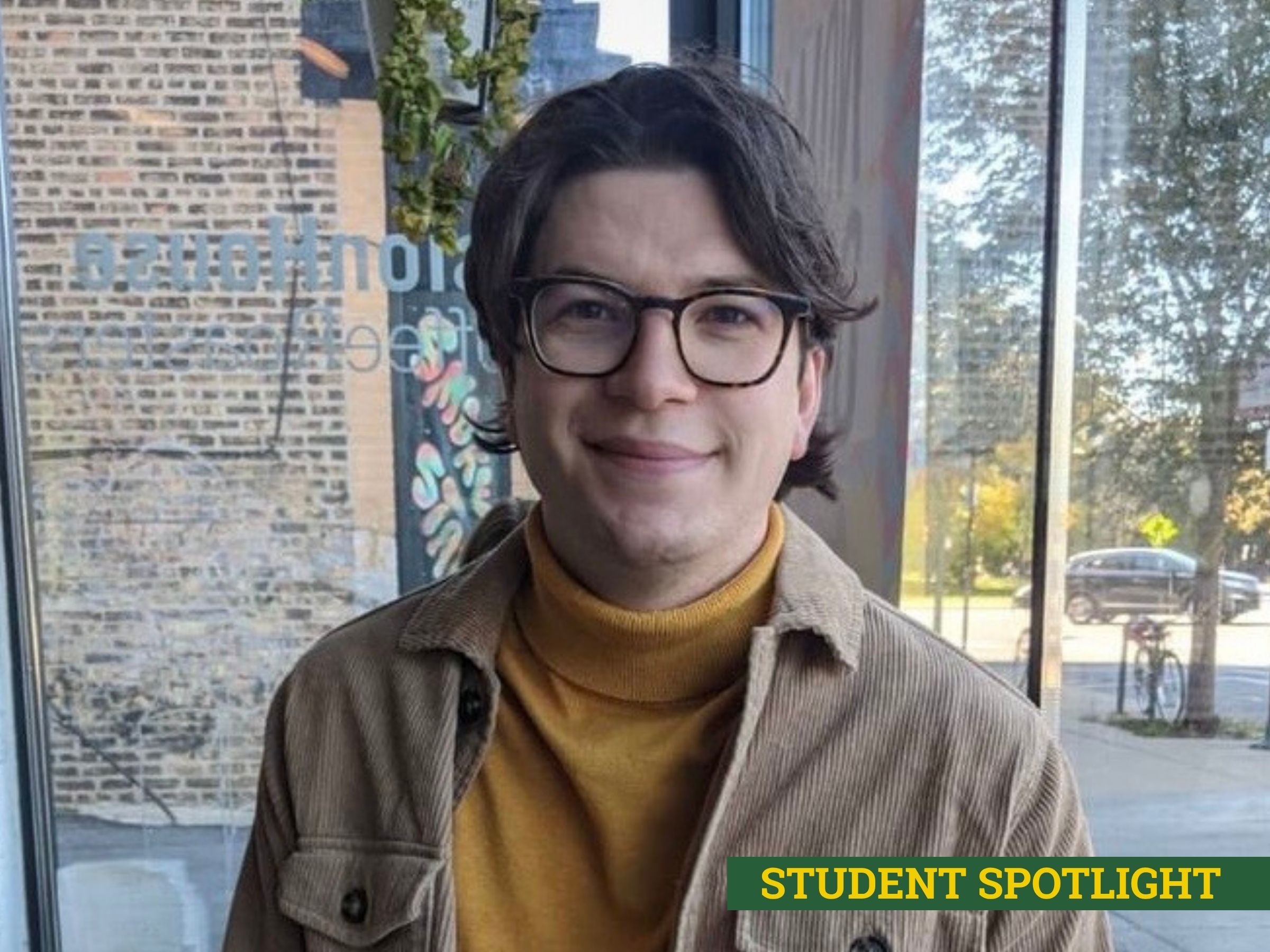
Andrew Smith, MScPT Student
Andrew didn't always talk openly about being Indigenous.
Growing up in a stable, middle-class home — parents still together, no obvious markers of hardship — he sometimes wondered whether he had the "right" to claim his ancestry. He's Yukon First Nations, Tlingit, with family roots outside Whitehorse. But he's also white-passing. And in rooms where people say things about Indigenous people without realizing how they land, it can feel easier to stay quiet.
"If you didn't grow up on a reserve, you can feel ashamed to talk about your background," he says. "You worry people will think you're only in the program because you're Indigenous."
He's working through that. And he's decided that speaking up — even when it's uncomfortable — matters more than the alternative.
“I think it's better to just talk about it, with the hope that you're making others feel comfortable to do the same.”
Andrew came to physical therapy the long way around. After a business degree and nearly nine years in corporate sales and marketing, he tried law school. One year was enough to tell him it wasn't right — too adversarial, too consuming, too far from the kind of work that actually felt meaningful.
Physical therapy had always been in the background. He played competitive hockey growing up and had racked up a serious injury list — three broken wrists, knee surgery, more sprained joints than he can easily count. Through all of it, he'd had physiotherapists who genuinely changed how he felt about the profession. One played Junior B hockey. They were cut from the same cloth.
"More personal careers — you chase business and law because you want money and prestige," he says. "I realized that wasn't as important as I thought. I just wanted to enjoy my work."
Now finishing his first year in the MSc PT program at the University of Alberta's Faculty of Rehabilitation Medicine, he's found a cohort that surprised him — intellectually rigorous, deeply collaborative, nothing like the competitive silos he'd experienced in law school.
But it's the Indigenous dimension of his path that he reflects on most carefully.
He's been active in Indigenous-focused events on campus and thinks often about what representation actually means in a health profession — not just being present, but being willing to be visible.
His grandmother attended residential school. He's heard enough careless comments in enough professional spaces to understand why many Indigenous students disengage from their identity rather than risk the scrutiny.
"You come off as white, and you hear things," he says. "It makes you want to disassociate."
A moment from a class exercise stayed with him. Students were asked to write about their connection to the land and any stereotypes they'd experienced. He wrote about his grandmother, residential school, the weight of that history. Others wrote about camping trips.
He's not bitter about it — but he noticed it. And it's shaped how he thinks about his responsibility going forward.
One of his instructors framed it in a way that resonated: as a healthcare professional, you have a duty to be a good person. To show up for causes beyond your own. To hold yourself to a higher standard in public life than you might in private. Andrew has taken that seriously. He attended a Pride event this year and found himself the only PT student in the room — a detail he mentions not with judgment, but with a quiet sense of what's still possible.
He's hopeful about establishing a more formal Indigenous student association within FRM — something with a constitution, funding, and genuine representation in faculty spaces.
"It would be nice to have an official one. Maybe have students participate in faculty meetings. Something people can actually see."
After graduation, Andrew wants to work with neurological patients — stroke rehabilitation pulls at the problem-solver in him, and he loves the complexity of how the brain responds to injury. He also wants to eventually work up north, closer to his family's home territory near Whitehorse. He's already signed on to volunteer as a PT at Alberta Aphasia Camp this summer.
He knows his path has been non-linear. Business. Law. Now this. But he's made peace with the winding road — and with being more open about who he is along the way.
"I came from a well-off home with no obvious challenges. I know that. But I've heard enough to know that staying quiet doesn't help anyone."
He's choosing to talk about it instead.