Experiential Learning (EL) for Instructors, Faculty + Staff
EL spectrum
Co-op programs are what many people associate with EL, but there is a much broader EL spectrum to be considered. Instructors, faculty, staff and students can benefit from a range of options. To meet the University of Alberta’s SHAPE plan to expand EL in all program areas, a first step is to quantify the level of EL in courses. Defining the EL spectrum allows for a standardized assessment that can be communicated with greater clarity.
The ALES EL spectrum defined
Experiential learning (EL) opportunities within ALES courses come in all sizes. When planning your courses, consider utilizing the spectrum on your course syllabus to help students identify the level of experiential learning in a course.
- Small: when EL endeavours count for 20 to 34 per cent of the final grade
- Medium: when EL endeavours count for 35 to 49 per cent of the final grade
- Large: when EL endeavours count for 50 to 64 per cent of the final grade
- Extra Large: when EL endeavours count for 65 per cent of the final grade
Download JPGs of the icons for your syllabus
Test your EL knowledge
In addition to quantity, we must think of the quality of the EL opportunities on offer. To understand best practices, test your knowledge below.
TRUE: Not all active learning is EL. Understand the differences here ».
- I aim to get students in micro or low stakes experiences that may be “safe-to-fail” applications of knowledge and lead to reflections on theory and practice.
- I plan activities that actively engage students and encourage their participation, in contrast to passive listening, and make them work independently or in small groups, in both small and large classes.
- I create activities like developing policies based on real-world contexts after meeting people with lived experience followed by a reflection component.
- I support students in macro or high-impact experiences like internships and practicums where they draw meaning from their activities.
- I insist that students take ownership of their learning by exploring, making decisions, solving real problems, reflecting, and applying knowledge in practical contexts.
- I require intentional reflection on experiences—simulations of industry practices or interactions in and out of the classroom—as triggers for learning.
(Answer: B)
- offer opportunities for students to connect theory to practice
- engage students in open-ended, less structured learning environments
- enable students to take ownership of their learning by exploring, making decisions, solving real problems, reflecting, and applying knowledge in practical contexts
- place greater responsibility on students to navigate ambiguity and assess their own learning process
- all of the above
(Answer: E)
- higher student engagement
- increased student confidence
- higher-order skill development
- it will change your life and solve all the world’s problems
(Answer: D)
- Task that leads to a description of the activity conducted
- Task encouraging students to connect theory (the course material) and practice (the experience)
- Task that can evaluate learning during the experience, not just afterward, by using reflection as a core component
(Answer: A)
Both experiential and active learning can include discussions, polling, problem-solving, collaborative tasks, or other participation-based techniques. EL is a type of active learning that entails learning by doing but also involves active participation and reflection to connect theory and practice. EL engages students in authentic scenarios that can mirror professional and community practices. According to Dobbs-Oates (2025) there are three key components that are at the core of EL:
- Planned pedagogy (intentional design)
- Authentic experience (practice-based application)
- Student reflection (meaning-making from experience)
Enhancing and expanding experiential learning in your course(s)
As an instructor, you can integrate, enhance and expand EL opportunities in your course to improve student engagement, increase their confidence and develop higher-order skills. The best EL practices aim to have students take ownership of their learning by exploring, making decisions, solving real problems, reflecting and applying knowledge in practical contexts. EL means active engagement and direct experience, but it also requires a context that is situated in or mirrors a real-world situation. It should also incorporate a reflective component that allows one to critically examine their experiences to make meaning, connect to broader concepts and translate experiences into knowledge.
Bolster your EL goals
1. Keep in mind multiple pathways for reflection
Try to offer diverse reflection options — such as written journals, audio and video diaries on Canvas, or peer discussions — to help students connect their experiences with course theory. This approach aligns with Universal Design for Learning (UDL) principles, creating a more inclusive and equitable learning environment. An excellent resource is Tools for Formative Assessment where you can find 24 examples, such as:
- Think-pair-share: Students formulate individual responses to the directions, and then turn to a partner to share their answers. Call on several random pairs to share their answers with the class.
- 3-2-1: 3 things you found out/3 key words; 2 interesting things/2 new ideas; and 1 question you still have/1 though to think about.
- Exit card: Exit cards are written student responses to questions posed at the end of the lesson.
Consult the University of Alberta’s Centre for Teaching and Learning “Guided Reflections for Experiential Learning” for tools to help students make deep connections.
2. Aim to develop authentic, applied assessments
Use assessments that reflect the applied nature of EL, such as portfolios, community presentations or product prototypes, to demonstrate practical and meaningful learning outcomes. Resources can include Authentic Assessment, which lists examples in different fields, such as:
- Business: Develop a business/marketing/sales plan for an imaginary (or real) company in a student's area of interest.
- Biology/Chemistry: Draw a diagram of how a process works, indicating what happens if X occurs.
- History: Engage in a role play of a particular event in history; Describe what might have happened if one element of a historical event had changed.
Consult the University of Alberta’s Centre for Teaching and Learning “Assessing Experiential Learning” for assessment methods that make learning visible in ways that are clear, supportive, and fair.
3. Make your EL activities align with your course outcomes
Tie activities directly to course learning outcomes and assessment criteria so students see the relevance of their experience. For example, students work in teams to develop a proposal for improving a process or system, applying course concepts and demonstrating problem-solving. Assessment includes a graded report and presentation aligned with the learning outcomes.
4: Foster choice, responsibility, and collaboration
Provide students with meaningful choices and opportunities to take ownership of their learning. Encourage collaboration with peers, partners, and/or community members to enhance engagement and real-world connections.
5. Prioritize ethics, well-being, and supportive environments
Set clear ethical expectations and uphold confidentiality. Schedule regular well-being checks, and conclude activities with reflective debriefs to support active participation, critical thinking, and student well-being. Ensure you are aware of institutional guidance on student safety, care, and accountability during experiential learning.
6. Decolonize learning through story and land-based practices
Aim to integrate narrative and oral histories as central teaching methods, recognizing stories as knowledge. Beaudry et al., (2024) share the benefit of including personal stories into your content delivery to build community and enhance understanding.
Try, when possible, to include land-based assignments, such as visiting a specific place and reporting back, to connect learning to the physical environment.
Support
Consult the University of Alberta’s Centre for Teaching and Learning “Designing Experiential Learning” for more EL design principles.
For additional support in enhancing and expanding EL in your courses, please refer to the resources in the accordions below.
- University of Alberta Centre for Teaching + Learning (CTL)
- Career Integrated Learning (CIL) Program: supports instructors by enhancing their awareness of employability skills developed through academic coursework. The program is offered in English and French.
- Community Service-Learning
- Experiential Learning at the U of A
- Experiential Learning Resources for Faculty + Staff
- Undergraduate Research Initiative (URI) information for mentors & supervisors
ALES Experiential Learning Award
This award recognizes an individual achievement in experiential learning in a curricular or co-curricular project attended by ALES students.
- Individuals within or outside of the Faculty of ALES must have conducted their experiential learning project with ALES students within the academic year covered by the award.1
- Nominations for individuals or groups should be made to the Faculty of ALES Awards Committee. Self-nominations are accepted.
- A winner is ineligible for reconsideration for the award for the following three years.
- Nominators should consider the University of Alberta’s Access, Community + Belonging (ACB) and the Dimensions Charter when developing nominations.
1 An academic year is July 1 to June 30.
The project submitted for review will exhibit a superior command of experiential learning defined as a type of active learning that involves a reflection component to connect theory and practice and engages students in authentic scenarios that can mirror professional and/or community practices. To better understand the differences between active and experiential learning, visit the CTL site.
- Demonstrates outcomes that include increased student engagement and knowledge retention in comparison to traditional lecturing, skill development and employability.
- Allows students to apply knowledge, test concepts, make mistakes and improve their critical thinking.
- Reduces the gap between academic theory and professional practices and fosters personal growth and self-awareness via the structured reflection component.
- Name of nominee(s) and nominator(s).
- A description of the project and evidence to support excellence in learning outcomes for ALES students.
- A description of how the nominee has incorporated ACB into their experiential learning project.
- At least three letters of support: these may come from colleagues, community and industry partners and/or ALES students (former and/or current). Letters should emphasize the quality of the experiential learning approach and the impact of the nominee’s efforts.
Besides the letters of support, the package should not be longer than 4 pages of text. The inclusion of supplementary materials, such as photographs, is encouraged.
- This award will be adjudicated by the ALES Awards Committee
- All nominations/applications are to be sent electronically to ales.awards@ualberta.ca
- Deadline for submission: November 30, 2026
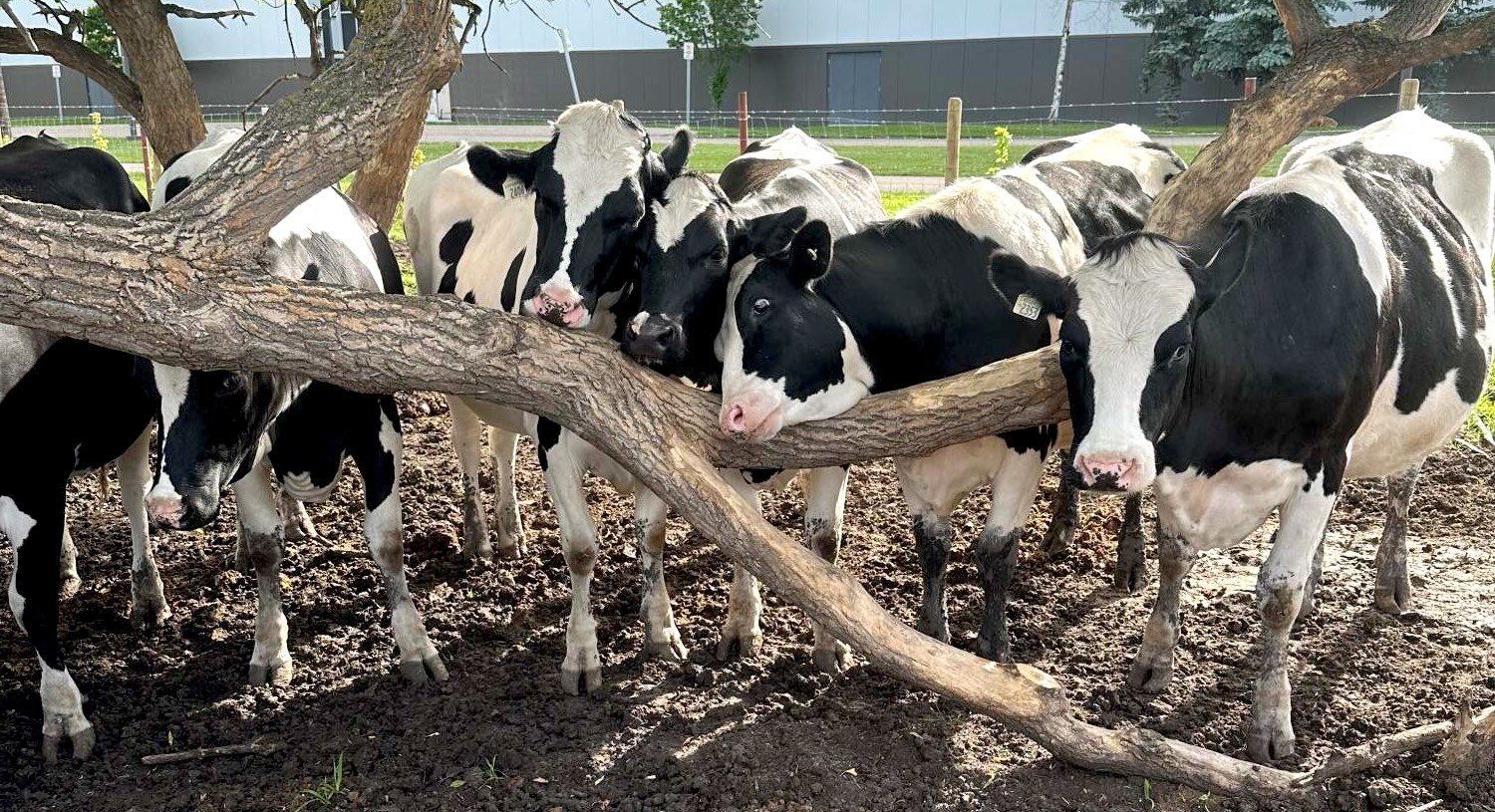
Develop a Student Volunteer Program
Follow the herd and think along the Devin Dittmer train of thought to develop your own student volunteering program! In his “Hands-on A Holstein” program Devin provides students with meaningful experiential learning opportunities that connect classroom theory with practical dairy management skills.
Can you work with colleagues, undergraduate students, graduate students and/or postdoctoral researchers to develop a program in your area of expertise?
Please email ales.el@ualberta.ca if you’re interested.
If you need supplies and resources to develop your program — especially if funding can sustain your program in the long term — consider applying to the ALES Experiential Learning Excellence Fund (ELEF).