Meet Alexa Ferdinands: A researcher and dietitian serving up good health
3 November 2025
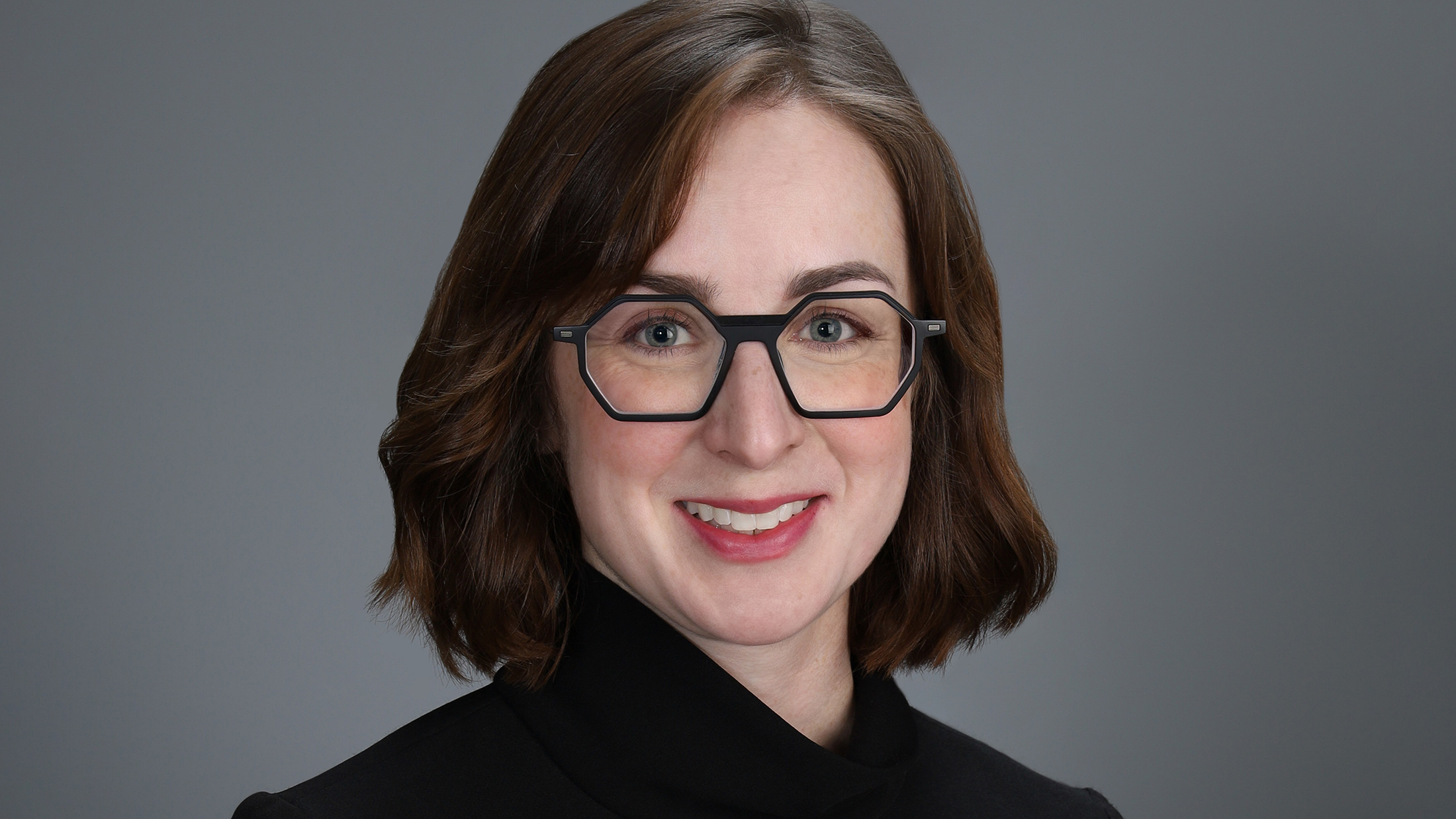
Alexa Ferdinands was a great resource as a practicing Registered Dietitian, but still felt like her patients and clients needed more. That experience fuelled her graduate studies in public health, including PhD research on reducing weight stigma in interactions with youth in healthcare settings. She’s now joined the U of A as an assistant professor in the division of human nutrition in the Department Agricultural, Food & Nutritional Science.
Her passion for community-engaged research and dedication to well-being through food and nutritional sciences makes her an asset to the department and role model to students in her courses. Get to know her background and interests, then stay tuned for the start of her research program.
Meet Alexa Ferdinands.
Tell us about your current role and the work you are involved in.
I’m an Assistant Professor in Dietetics and Nutritional Science within the Department of Agricultural, Food and Nutritional Sciences. I am also a Registered Dietitian and a Scientist with the Centre for Healthy Communities in the School of Public Health.
I primarily do qualitative, community-engaged research with youth to examine and co-create recommendations to improve their food environments. This work involves collaborating with community organizations like the Girl Guides of Canada.
I’m still in the early stages of developing my research program, and am always open to new collaborations. I’m excited to be working in a department and faculty with such diverse research.
What led you to pursue a career in your field?
I was working clinically as a dietitian, and felt frustrated that I couldn’t help patients and clients in the way that I most wanted to. Most of them needed more money and stronger social and structural supports, not more nutrition education. So I decided to pursue graduate training in public health to better understand how upstream determinants of health, like employment and income, can impact people’s nutritional health.
Was there a particular moment or influence that sparked your interest?
An experience that sparked my interest in research was working as an undergraduate dietetics student to support Dr. Kelly Mulder (a UBC PhD student at the time) at BC Children’s Hospital Research Institute one summer. I loved discovering the breadth of roles in which dietitians could work, and I really enjoyed the lab’s team environment. That summer piqued my interest in starting a lab of my own one day.
How does your work or research contribute to the high-level goals of your department or unit, or even the UN Sustainable Development Goals?
The applied and interdisciplinary nature of my research program supports a key outcome within ALES’ strategic plan: increasing ALES’s relevance to, and impact on, society. The research that I do is grounded in the desires and needs of community partners.
Beyond the university, my research on food environments contributes to the UN SDG 2: Zero Hunger and SDG 3: Good Health and Well-being.
What do you find most rewarding about your field?
What I find most rewarding is getting to work directly with youth in research. When young people are treated as experts in their own experiences and have a say in shaping the project, the process itself can be really empowering. I love doing community-engaged research because it means connecting face-to-face, hearing people’s stories, and mutual learning with each other. One of the best parts is sharing the findings back, so participants can see how their voices helped shape the research and made an impact.
Can you share a project or initiative you are particularly proud of? What was its impact?
I am most proud of my PhD research, which involved working with a group of youth to develop recommendations for healthcare providers, educators, and parents on ways to reduce weight stigma in their interactions with youth. Resources we created have been shared and used by researchers and practitioners affiliated with Alberta Health Services Nutrition Services and Obesity Canada. In this project, I had the privilege of working with these youth over the course of several months. Through this process, I witnessed how community-engaged research can be health-promoting for participants, as a sense of community and friendship developed within the group. Collectively, we learned how weight stigma was embedded into social structures that we all encounter on a near daily basis (like education and media), which made it nearly impossible to avoid.
What skills or experiences have been most valuable to you in your work?
Having brilliant friends and colleagues to bounce ideas back and forth with has been essential to my work. I am very lucky to have made some great “critical friends” in graduate school, who I continue to talk to regularly about various aspects of the research design and implementation process. Their input has been pivotal, especially when I’m in the exploratory, brainstorming phase of a new research proposal.
What advice would you give to someone considering working in your field?
For anyone interested in doing community-engaged research, I would encourage them to be open to working with people who think differently than them. My graduate and postdoctoral supervisors (Dr. Kim Raine and Dr. Maria Mayan) taught me the importance of this skill. Questioning taken-for-granted ways of approaching public health nutrition issues is the first step to making real change.
I would also encourage them to be creative in terms of how they approach their research topic, and reflect on how they can incorporate things they already like doing into their research. For instance, I love baking and cooking, so I recently experimented with integrating these activities into the qualitative research process with youth. This process led us to some novel findings, and I had a ton of fun collecting data.
What is one thing that people would be surprised to know about you?
I’m not sure that this would be a surprise, but I’m a dog fanatic. Since adopting my dog, Roger, a few years ago, I’ve become very interested in animal welfare and behaviour. I’m still brainstorming how I might be able to merge these interests into a nutrition research project one day.